
Vandaag of morgen in huis

Kwaliteit gegarandeerd

Welkomstaanbiedingen ontgrendelen: GRATIS bezorging | Tot 80% korting | Gratis 30 dagen JoyPlus-proefperiode
Download de app
A kitchen bin takes a lot of daily wear and tear. Yet many households choose one based on colour or looks alone. As a result, the bin often turns out to be too small after a few weeks, the lid doesn’t fit properly under the worktop, or separating waste becomes impractical.
The following pitfalls are common:
Match the capacity to your household and how often you take out the rubbish. A 30-litre bin often suits a flat, a single-person household or a kitchen where waste is emptied regularly. A 40-litre bin offers more room for daily general waste. For families or households that empty less frequently, a 60-litre bin can be more practical.
Always check, beyond the litres:
A tall bin can offer plenty of capacity without taking up much floor space, but it won’t always fit under a worktop. A compact wall-mounted bin can be handy in a small kitchen, provided the cupboard door and fixings are suitable.
A waste separation bin or recycling bin can divide general waste, plastic, paper or organic waste within one housing. Pay attention to the capacity of each compartment, not just the total.
A double bin with two compartments is clear and straightforward for, say, general waste and recycling. A triple bin offers more separation options, but usually takes up more space and has smaller individual compartments. Check whether the inner buckets are removable. That makes emptying and cleaning much easier.
Also think ahead about which waste streams your local council actually collects separately. A large number of compartments isn’t automatically more convenient if you don’t use them regularly.
A stainless steel bin often has a sleek look and can be cleaned with a damp cloth. Do watch out for fingerprints and avoid using an abrasive sponge. A plastic bin is generally lightweight and easy to move. The product description should clearly state which material is used for the exterior, lid and inner bucket.
For hygienic use, there are several options:
Brand claims about rust resistance, lifespan or the number of pedal operations come from the product description or the brand’s own testing. Treat them as product specifications, not as a guarantee for every use case.
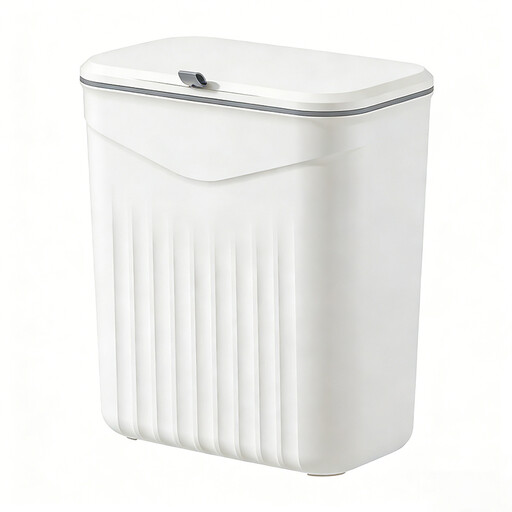
Why this fits the profile: The wall mount is ideal for small kitchens, flats and places where a freestanding kitchen bin would take up too much room.
The dimensions are clearly stated and the design stops you from reserving a large floor area for a small amount of waste. Do check beforehand whether the hooks fit your cupboard door.
PP plastic, a flap lid and a handle. According to the product description, the bin can be fitted with hooks or self-adhesive fixings.
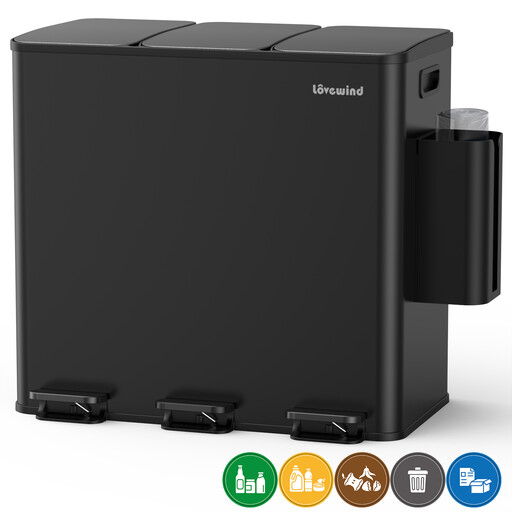
Why this fits the profile: This 60-litre recycling bin is designed for households that want to collect three waste streams in one freestanding bin.
The three separate inner buckets make the division clear. Do check whether 20 litres per compartment matches your waste volume.
Stainless steel, three lids, magnetic labels and a soft-close function according to the product description.
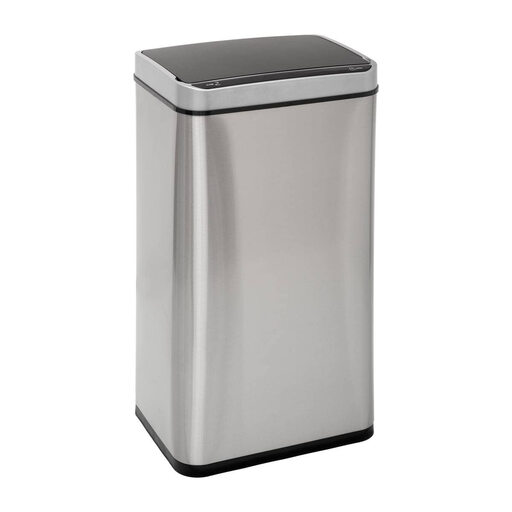
Why this fits the profile: The automatic opening is practical when you’re cooking often and would rather not touch the lid.
The 40-litre capacity and dimensions of 33 x 24 x 66 cm are stated. Leave enough clearance around the sensor.
Stainless steel housing, removable inner bucket and a sensor-operated lid with soft close according to the product information.
Place your kitchen bin on a level surface and avoid overfilling the inner bucket. Clean up any spilled liquids straight away. For steel, a soft, damp cloth is usually enough; for plastic, a mild cleaning agent can be used. Abrasive products can damage the finish.
Do not force a soft-close lid by hand. Keep the mechanism of a pedal bin free from dirt and moisture. Check the batteries of a sensor bin regularly. Do not use the bin for hot ash, flammable liquids or other hazardous waste, unless the product information explicitly allows it.
We’ve put together a full, up-to-date list of products that fully meet these strict selection criteria and comply with current European safety regulations.
For a small household, 30 litres is often enough if you empty it regularly. Families are more likely to need 40 to 60 litres. When separating waste, look at the capacity per compartment, not just the total number of litres.
Both a pedal bin and a sensor bin reduce direct hand contact with the lid. A pedal bin doesn’t need batteries. A sensor bin can be convenient, but requires correct placement, clearance around the sensor and regular maintenance.
That depends on the material, how often it’s used, moisture, load and maintenance. A removable inner bucket and a sturdy operating mechanism make daily upkeep easier. Claims about a specific number of pedal operations come from the manufacturer and are not a fixed lifespan for every household.
