
Vandaag of morgen in huis

Kwaliteit gegarandeerd

Welkomstaanbiedingen ontgrendelen: GRATIS bezorging | Tot 80% korting | Gratis 30 dagen JoyPlus-proefperiode
Download de app
Picking out a new kitchen bin might seem simple, until you find the lid malfunctioning after three months, the bin bag never fitting, or the material constantly covered in stains. Many bins look great in the shop but prove frustrating in practice. We'll outline the most common pitfalls and highlight what to look for, so you can choose a model that perfectly suits your kitchen and your household.
Before you make a choice, it's wise to know what often goes wrong. Many models are designed for aesthetics, not for daily use.
To avoid the problems above, focus on a few key specifications. These determine how practical the bin will be in daily life.
The mechanism determines ease of use and hygiene.
The material and shape determine maintenance and where the bin will fit.
The required capacity depends on the size of your household.
For a recycling bin, there are duo or trio models with separate compartments for general waste, organic waste, and plastics, for example. This makes sorting at the source effortless.
Not every bin is suitable for every situation. Below are several options tailored to specific user profiles.
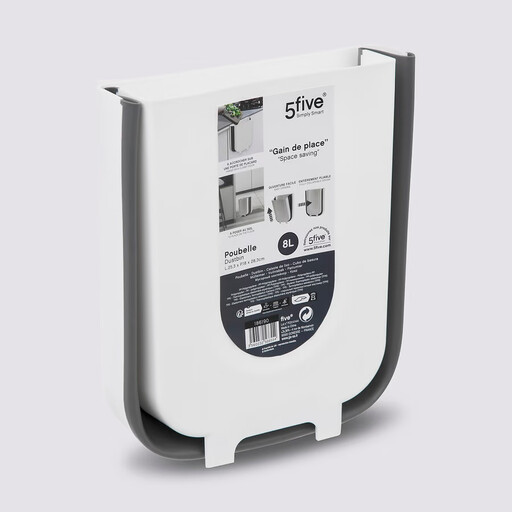
Why This Fits Their Persona: Perfect for those living in an apartment or with a compact kitchen. This bin hangs on a cabinet door, so no precious floor space is wasted. Ideal for disposing of food scraps directly while cooking.
Its simple, manual design has no fragile mechanism. Its specific function as a compact waste bin prevents frustration over a misleading capacity.
Keeps the countertop clear and is collapsible when not in use. Made from easy-to-clean polypropylene and TPE.
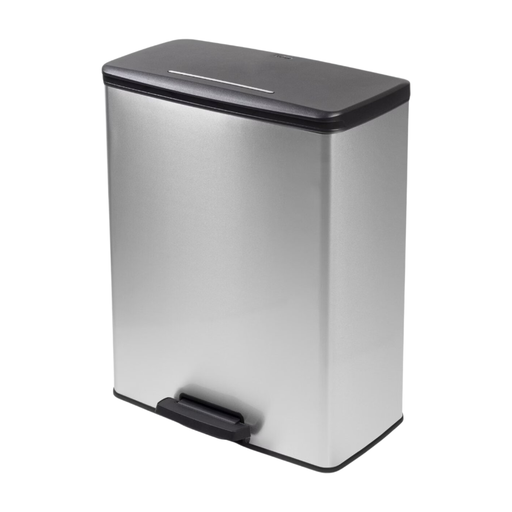
Why This Fits Their Persona: With a 65-litre capacity, this bin is ideal for larger households. The wide pedal ensures hygienic use, and the large volume means the bin bag needs changing less frequently.
According to the manufacturer, the material is rust-proof, dent-proof, and fingerprint-resistant, avoiding the maintenance pitfalls of metal bins. The soft-close mechanism is designed for durability.
Very large capacity and an odour-proof lid. Made from 70% recycled plastic, making it a conscious choice for the environment.
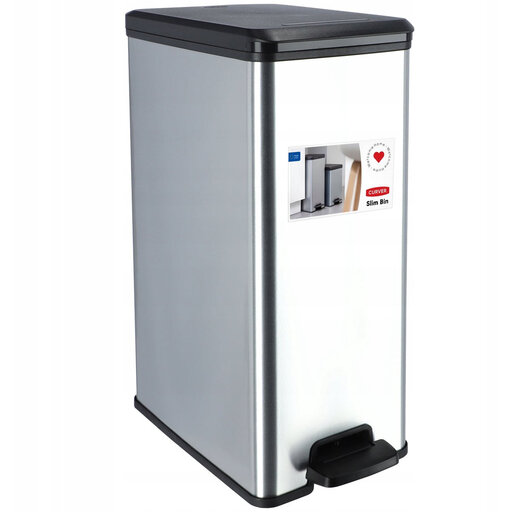
Why This Fits Their Persona: This slim bin combines a sleek, metallic look with practical benefits. Its slender profile fits perfectly in a modern kitchen where design and efficient use of space are important.
According to Curver, the material is fingerprint-resistant and won't dent, bypassing the disadvantages of real metal. The soft-close mechanism and wide pedal are designed for comfort and durability.
Offers the look of a metal designer bin with the low-maintenance convenience of plastic. Made from 90% recycled plastic.
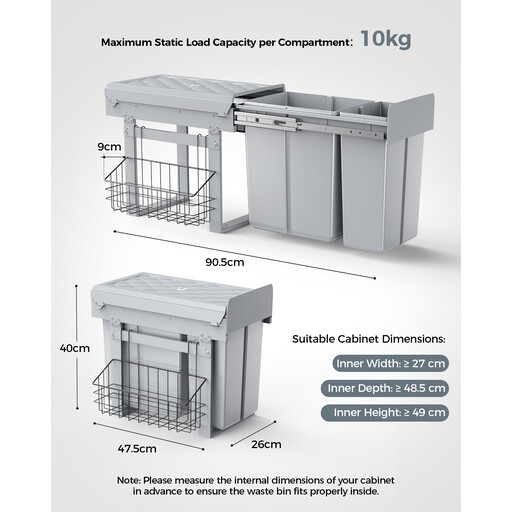
Why This Fits Their Persona: For those who want to keep waste completely out of sight and separate it efficiently. This built-in system fits inside a kitchen cabinet (from 30 cm wide) and offers two separate bins for waste separation.
As a built-in system, external flaws or high-maintenance materials are not an issue. The capacity (10L + 20L) is clearly defined for waste separation, which prevents misunderstandings.
A fully integrated and invisible solution for waste separation. The pull-out rail system provides easy access to both bins.
We have compiled a complete, up-to-date list of products that meet these strict selection criteria and UK regulations.
A good guideline is based on the size of your household. For one or two-person households, a 20 to 30-litre bin is often sufficient. A family of three or four will typically find a 40 to 50-litre model adequate. For larger families, or if you want to change the bag less often, a capacity of 60 litres or more is recommended.
Both have their advantages. A pedal bin is completely hands-free, which many people find more hygienic. A touch bin opens with a light touch, which is useful if you can't use your hands to press a pedal. The choice depends on personal preference. For both types, pay close attention to the quality of the mechanism.
Start by using well-fitting, good-quality bin bags to prevent leaks. Clean the bin regularly with soapy water and let it dry completely before placing a new bag inside. Models with a tight-fitting lid, sometimes with a special rim, help to contain odours. For stubborn smells in a plastic bin, a mixture of water and vinegar can help.
