
Vandaag of morgen in huis

Kwaliteit gegarandeerd

Welkomstaanbiedingen ontgrendelen: GRATIS bezorging | Tot 80% korting | Gratis 30 dagen JoyPlus-proefperiode
Download de app
A new food processor, blender or bread maker often looks appealing because of its high wattage, many programmes or a long list of accessories. Yet an impressive product description doesn't always tell you enough about everyday use. An appliance might, for example, be too large for your worktop, be difficult to clean, or turn out to be less suitable for the quantities you usually prepare.
With this guide, you can compare kitchen appliances on verifiable points. This way, you can make a more targeted choice between a food processor, stand mixer, blender, stick blender, bread maker and other multi-functional kitchen appliances.
A power rating of 1,000 or 1,300 watts sounds powerful, but it doesn't automatically tell you how well a food processor performs. The gearing, blades, speed control and maximum capacity also play a role. A stand mixer with a large bowl might, for example, be suitable for larger quantities, while a compact food processor is handier for chopping and slicing.
So pay attention to the combination of:
A 6-litre bowl doesn't mean you can always process 6 litres of batter or dough. With the Monsga SM100, for example, a 6-litre bowl is described, with a recommended capacity of 5 litres. The space you can safely use depends on the type of preparation. Dough expands and ingredients can splatter during mixing.
For a household with several people, a 5 to 6-litre bowl is practical for larger preparations. For sauces, pesto or chopped herbs, a food processor of 0.9 to 2.1 litres can be sufficient and take up less space.
An appliance with many functions only saves space if you actually use the accessories. So check beforehand:
With electrical kitchen appliances that have blades or moving parts, you must unplug the appliance from the mains before removing or cleaning accessories. A CE marking indicates that the product must comply with relevant European regulations for market access, but it doesn't mean the appliance is suitable for every kitchen or preparation.
Measure your worktop and kitchen cupboard before you order. A food processor that is about 40 centimetres high can be difficult to fit under wall units. Also look at the weight: a heavier appliance often stays more stable, but is less easy to move.
A compact food processor like the Kenwood MultiPro Compact has a bowl of 2.1 litres and a blender capacity of 1.2 litres. This offers various functions without the size of a large food processor. A mini chopper of 0.9 litres is more suitable for small portions of herbs, nuts, dips and pesto.
Use the wattage as one part of the comparison. A stand mixer for bread dough particularly benefits from a stable drive and a low speed with sufficient torque. A blender for smoothies or crushed ice, on the other hand, needs sharp blades, a suitable jug and short pulse actions.
A pulse function delivers short bursts of power. This allows you to chop ingredients more coarsely or prevent a preparation from becoming too fine. Multiple speeds are useful when you want to whip cream as well as mix dough or thick sauces.
Stainless steel, such as a stainless steel mixing bowl, is practical for intensive use and contact with food. Always check the care instructions: not every part may be dishwasher-safe, even when a product has several dishwasher-safe accessories.
Pay extra attention to the blades with a blender or chopper. The product information for the ochama Multifunction Blender, for example, warns about sharp blades and advises not to let the motor run continuously for longer than one minute during heavy mixing cycles. Such usage limits are more important than just the maximum wattage.
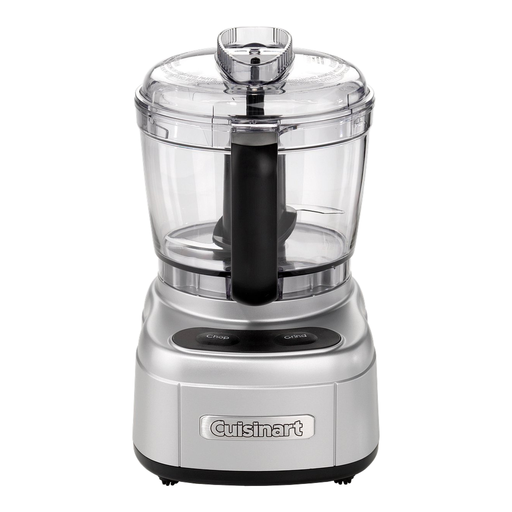
Why this fits the profile: The 0.9-litre bowl takes up little space and is suitable for small portions, dips, herbs and nuts.
The clear capacity prevents you from buying a small chopper for large family portions. According to the product information, the parts are dishwasher-safe.
900 ml bowl, two pulse functions, drip openings in the lid and a blade lock.
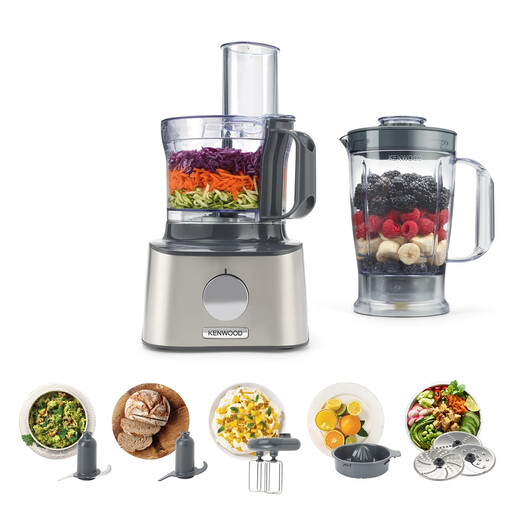
Why this fits the profile: This food processor combines chopping, slicing, grating, kneading, whisking and juicing in one base unit.
The capacity and functions are clearly stated: a 2.1-litre bowl, 1.2-litre blender and an 800-watt motor. This makes comparing easier than relying on isolated marketing terms.
800 W, two speeds, double metal whisk and dishwasher-safe accessories.

Why this fits the profile: If you regularly make bread or dough, you get an appliance with 610 watts, 12 programmes and a maximum loaf size of 1 kg.
The maximum loaf quantity is specified, so you can match the machine to your household rather than just looking at the number of programmes.
12 programmes, delayed start, keep-warm function and a bread capacity of up to 1 kg.
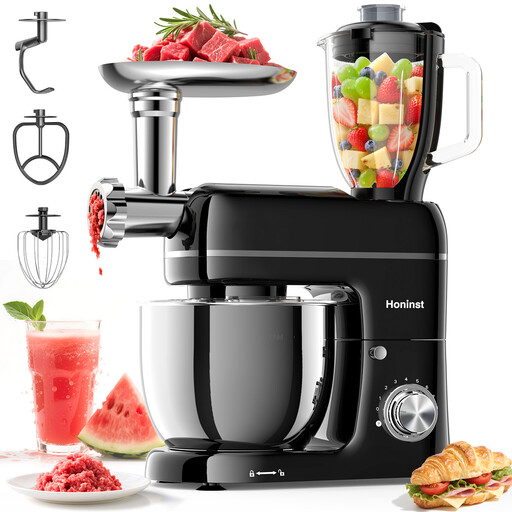
Why this fits the profile: This food processor combines mixing, kneading, whisking, grinding and blending for households that want multiple functions in one appliance.
The product description states a 6 QT bowl, eight speeds, pulse function and a safety switch when the head is lifted. Do check beforehand whether you need all the accessories.
1300 W maximum motor power, blender jug, meat grinder, eight speeds and tilt-back head.
We have compiled a full, up-to-date list of products that fully meet these strict selection criteria and comply with current European safety regulations.
For basic preparations, a stick blender, chopper or blender is often sufficient. Hobby bakers are better off with a stand mixer with a dough hook and whisk. If you slice vegetables, grate and prepare dough, a food processor can replace several separate kitchen accessories.
The lifespan depends on frequency of use, load, maintenance and the availability of spare parts. Use an appliance within its specified capacity, let a motor cool down when the manual advises it, and clean blades immediately after use. Also check the warranty and your legal rights. In the EU, many consumer products have at least the statutory conformity protection; a manufacturer's warranty may have additional conditions.
The electricity consumption is mainly determined by the power and the duration of use. An appliance of 600 watts running for five minutes uses less energy than the same appliance working for a long time at high speed. So don't just look at the wattage, but also at the preparation time, rest intervals and the quantity you make each time.
