
Vandaag of morgen in huis

Kwaliteit gegarandeerd

Welkomstaanbiedingen ontgrendelen: GRATIS bezorging | Tot 80% korting | Gratis 30 dagen JoyPlus-proefperiode
Download de app
A new kitchen appliance often seems more versatile than it turns out to be in practice. A blender that’s also expected to chop, a small food processor that doesn’t have enough capacity, or a food mixer with so many accessories that it barely fits in a kitchen cupboard: these are common disappointing purchases.
So watch out for three marketing pitfalls:
By comparing your options carefully, you can find a kitchen appliance that suits your cooking routine, available space and preferred portion size.
A chopper with a 500 to 600 ml bowl is suitable for garlic, herbs, onion, pesto, dips and small quantities of vegetables. For a family or weekly meal prep, a larger food processor is more practical. The Kenwood MultiPro Go, for example, has a 1.3-litre bowl, while the Severin KM 3867 has a 1,000 ml glass bowl.
Look out for the difference between total capacity and recommended working capacity. The Philips HR3020/20 has a 2-litre jug, but a stated working capacity of 1.5 litres. This helps prevent spillages and gives ingredients enough room to circulate.
Higher power can be useful for hard ingredients, nuts, ice or heavy dough, but don’t use it as your only selection criterion. A 650-watt food processor may be powerful enough for slicing, grating and chopping. A 1,200-watt hand blender offers more power for thicker mixtures, depending on the attachment you use.
Check the controls, too:
Always use an appliance according to the instructions. Let the motor cool down between heavy-duty tasks, and don’t process more than the recommended quantity.
A glass bowl is relatively resistant to odours and discolouration. Plastic is often lighter and easier to store. Stainless steel blades are suitable for many chopping and slicing tasks, but they stay sharp: always unplug the appliance before removing parts or cleaning it.
Also check:
According to the product information, many of the products mentioned come with a statutory warranty of at least two years. Any additional manufacturer’s warranty may differ.
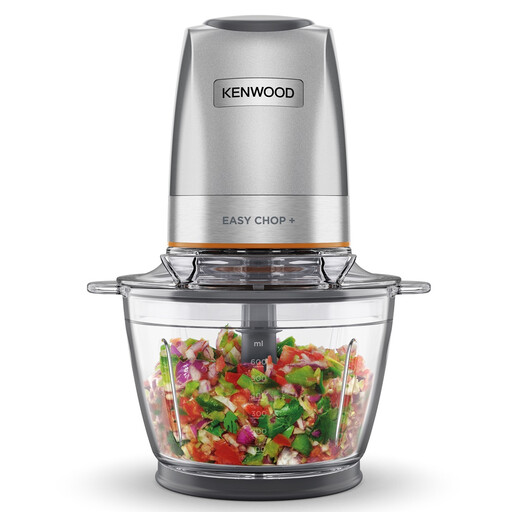
Why it suits this profile: This compact chopper has a 600 ml bowl, two speeds and simple one-button controls. It’s ideal for everyday small-scale prep, without taking up the space of a large food processor on your worktop.
The specifications make it clear that this is primarily a chopper, not an all-in-one food processor. That way, you won’t pay for accessories you never use or functions you don’t need.
600 ml glass bowl, two speeds, QuadBlade blade system and, according to the product information, suitable for crushing ice.

Why it suits this profile: Ideal if you regularly slice bread, vegetables or fruit and value a stable, precise setup. According to the product description, the slice thickness can be adjusted from wafer-thin up to 20 mm.
Its purpose is clearly defined: this is an electric food slicer, not an appliance with dozens of accessories. So you know exactly what you’re paying for.
Removable carriage, metal construction, safety switches and an 18 cm cutting path, according to the product information.
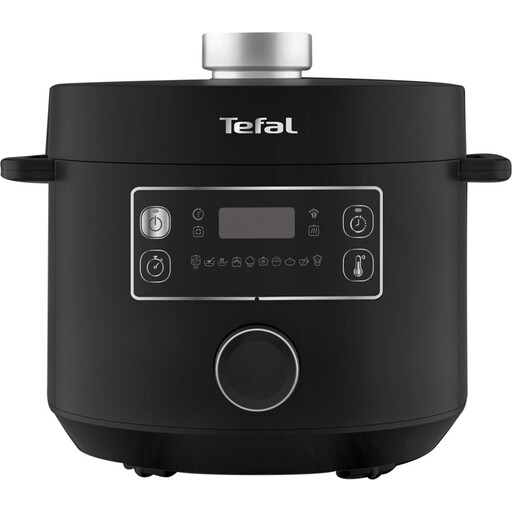
Why it suits this profile: This multicooker is designed for families and home cooks who want to combine several cooking methods in one appliance. Its 5-litre capacity is suitable for larger portions.
The functions and capacity are clear from the outset: 10 automatic programmes, a manual function and a ceramic non-stick inner pot.
5-litre capacity, keep-warm function, overheat protection and dishwasher-safe parts, according to the product information.

Why it suits this profile: This model combines chopping, slicing and grating in a relatively compact food processor. The Express Serve function sends ingredients straight into a bowl or pan.
Its dimensions of 23,9 × 15,8 × 29,7 cm and built-in cord storage give you a clear idea of how much space you’ll need before you order.
650 watts, 1.3-litre bowl, reversible slicing and grating disc, and dishwasher-safe removable parts, according to the product information.
We’ve put together a complete, up-to-date list of products that meet these strict selection criteria and comply with current European safety regulations.
Choose a compact model with several functions you’ll actually use. A chopper, hand blender or small food processor takes up less space than a food mixer with separate accessories. Check the dimensions, cord length and storage options. In practice, an appliance that stays on the worktop is often used more frequently than a large model that’s awkward to store.
Lifespan depends on how often you use the appliance, the workload, maintenance and storage. Stick to the maximum quantities and recommended operating times. Let motors cool down after heavy-duty use, remove food residue straight away, and check the blades, seals and cords regularly. The statutory warranty is a separate right, not a fixed prediction of how long the appliance will last.
Energy use depends on the power rating and how long you use the appliance. A 1,000-watt appliance running for one hour would theoretically use a maximum of 1 kWh, but kitchen appliances usually run for much less time. So even a multicooker or blender with a higher power rating may make only a limited contribution to your overall energy use if you only use it for short periods. As well as the wattage, consider the preparation time and how often you’ll use the appliance.
