
Vandaag of morgen in huis

Kwaliteit gegarandeerd

Welkomstaanbiedingen ontgrendelen: GRATIS bezorging | Tot 80% korting | Gratis 30 dagen JoyPlus-proefperiode
Download de app
A food processor that ends up in the cupboard after just a few weeks, a blender that proves too small for the family or a contact grill that is difficult to clean: when it comes to kitchen appliances, choosing the right product is not just about power or the number of functions. The best choice depends on your cooking habits, the space available and how the parts are cleaned.
Joybuy Product Recommendation Officer helps you translate marketing language into verifiable specifications. This helps you avoid paying for features you are unlikely to use.
A 1,300-watt motor sounds powerful, but real-world performance also depends on the bowl capacity, blades, accessories and permitted operating time. A compact mini chopper with 400 or 500 watts may be sufficient for herbs, onions and small portions. For heavy dough or larger quantities, a stand mixer with a larger bowl is more practical.
Also pay attention to cooling instructions. Some blenders and food processors should not be run continuously for extended periods. Always check the manual rather than looking at the wattage alone.
A multifunctional food processor can chop, slice, grate, mix and knead. This may save space, but only if you actually use the accessories. Every extra part requires storage, assembly and cleaning.
So compare the functions with your regular routines:
An appliance may seem convenient for everyday use, but become less appealing when blades, lids and discs are difficult to reach. Check which parts are dishwasher-safe and which need to be washed by hand. The motor base should generally never be submerged in water.
Non-stick plates require extra care. According to Fritel’s product information, hand washing is recommended to help maintain the coating, even though the wok is dishwasher-safe. Do not use metal utensils with grill plates and stop using the appliance if the coating is damaged.
A 500–600 ml bowl is suitable for smaller portions, dips and herb mixtures. For a family or meal prep, kitchen appliances with a capacity of around 1.3 to 2.3 litres are more practical. Pay attention to the difference between total capacity and usable capacity. A blender, for example, may have a 2-litre jug but specify a lower maximum filling level during use.
Look at the power in combination with the functions:
A pulse function delivers short bursts of power. This is useful for coarse chopping and prevents ingredients from becoming too fine straight away. Two speeds may be sufficient for simple preparations; more settings give you greater control when baking and mixing.
Measure not only the appliance, but also the space above and beside it. A food processor with a large bowl may fit on the worktop but be difficult to store in a cupboard. Also check the cable length, cord storage and vertical storage options.
Look for a CE marking, a securely closing lid, non-slip feet and a locking mechanism. Sharp blades and hot plates always require supervision. European consumer rules generally provide a minimum of two years’ legal guarantee for new products, in addition to any extra terms offered by the manufacturer or seller.
The following selection is based on the listed product specifications, capacity, functions, dimensions and maintenance information. Suitability depends on how you intend to use the product.

Why it suits this profile: A compact choice for small kitchens and simple everyday preparation. The bowl has a capacity of 1.3 litres and, according to the specifications, the appliance measures 23.9 × 15.8 × 29.7 cm.
The range of functions remains manageable: chopping, slicing and grating without a large collection of separate appliances. Parts such as the bowl, blade and disc are dishwasher-safe according to the product information.
650 watts, 1 + pulse and an Express Serve function for grating ingredients directly into a bowl or pan.

Why it suits this profile: For anyone who regularly wants to slice bread, vegetables, fruit or cold meats evenly, and values a metal construction with removable parts.
The slicing thickness can be precisely adjusted from very thin up to 20 mm. The carriage is removable for cleaning.
Serrated blade, safety switches and an 18 cm cutting path according to the product description.
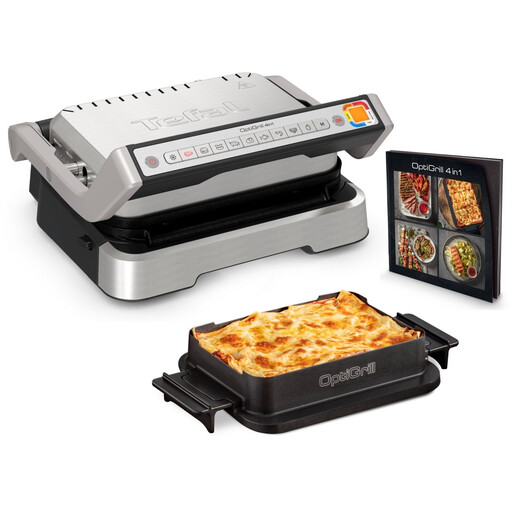
Why it suits this profile: Designed for households that often grill, make toasties and want to prepare different ingredients using one appliance.
The product information lists nine automatic programmes and removable, dishwasher-safe plates. Check in advance which baking accessories are included with your version.
Grilling, barbecuing, baking and preparing complete meals; the stated power is not specified.

Why it suits this profile: A countertop blender for larger portions of smoothies, sauces and soups. The jug has a total capacity of 2 litres and a usable capacity of 1.5 litres.
The maximum usable capacity is stated separately. The blades are removable and, according to the product information, the separate parts are dishwasher-safe.
1,000 watts, three speeds plus pulse and a manual cleaning setting.
We have put together a complete, up-to-date list of products that fully meet these strict selection criteria and the applicable European safety regulations.
A compact mini chopper, hand blender or small food processor takes up little space and is suitable for smaller portions. Choose an appliance with simple controls, a bowl of around 500 ml to 1.3 litres and parts that are quick to clean. A multifunctional food processor only saves space if you use the extra functions regularly.
Consumption depends on the power and how long the appliance is used. A 1,000-watt appliance running for 6 minutes theoretically uses around 0.1 kWh. The formula is: power in watts ÷ 1,000 × usage time in hours. Actual consumption may vary. So consider how often you use the appliance rather than looking only at the wattage on the packaging.
Lifespan varies depending on the appliance, workload, maintenance and materials. Follow the maximum operating time stated in the manual, allow motors to cool down and regularly check blades, cables, lids and non-stick coatings. Keep your proof of purchase and guarantee details. If a product develops a fault within the statutory guarantee period, you can discuss your rights with the seller.
