
Vandaag of morgen in huis

Kwaliteit gegarandeerd

Welkomstaanbiedingen ontgrendelen: GRATIS bezorging | Tot 80% korting | Gratis 30 dagen JoyPlus-proefperiode
Download de app
A food mixer, blender or simple garlic press can save time every day. Even so, many consumers choose a product based on a high wattage, a long list of accessories or an attractive offer. That does not always tell you enough about how easy it is to use.
The main pitfalls when choosing kitchen tools and appliances are:
By checking the right specifications in advance, you can avoid a poor purchase and make a more informed choice between a food mixer, stand mixer, hand mixer, blender, hand blender or food processor.
You will often see a wattage stated on the packaging of electrical appliances. Use this as one part of your comparison, not as proof of quality on its own. A stand mixer for bread dough needs different features from a hand blender for soup.
Pay attention to:
For example, the AUCMA stand mixer lists a 450W motor, six speeds plus a pulse function, and a maximum continuous operating time of six minutes. The ROUNY hand blender has a rated power of 1000W, a maximum power of 1200W and a recommended cycle of one minute of operation followed by one minute of rest. These operating limits matter more than simply choosing the highest figure on the box.
For graters, vegetable slicers, choppers and meat slicers, the material used for the blade or grating surface is important. Stainless steel is commonly used for parts that come into contact with food and is generally easy to clean. Also check whether the bowl, handle and protective cover feel sturdy.
Also look out for:
A manual vegetable slicer or grater works without electricity, but requires extra attention to hand protection. A garlic press is compact and straightforward, while a smooth surface and removable parts make cleaning more practical.
First measure the available space on your worktop and in your kitchen cupboards. A mixer with a 6-litre bowl may be suitable for several loaves of bread or large quantities of batter, but takes up more room than a hand mixer.
Choose accessories based on the recipes you actually make:
A multifunctional kitchen tool can be useful, but check whether the parts are available separately and how they need to be cleaned.
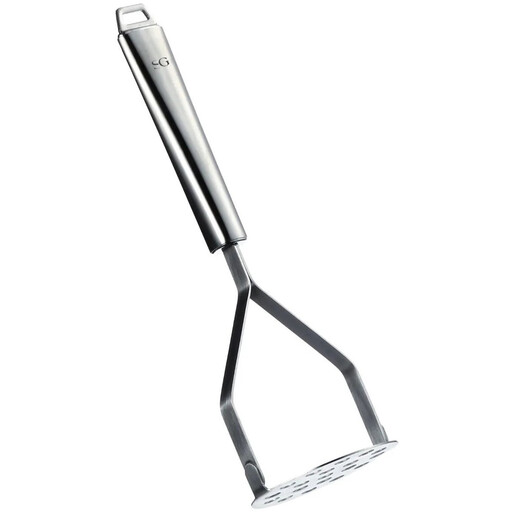
Why it suits this profile: Ideal for anyone who wants to mash potatoes and cooked vegetables without using a plug-in appliance. It is simple to use and the size is well suited to everyday cooking.
There are no unnecessary motor functions or loose accessories. The product description states a length of 27 cm and dishwasher-safe construction.
Stainless steel construction, a comfortable length and suitability for manual mashing.
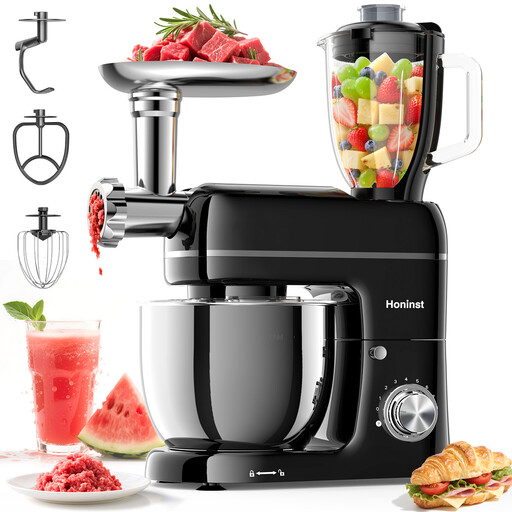
Why it suits this profile: Suitable for keen home bakers and families who want one appliance for mixing, kneading, whisking and additional preparations.
The product description specifies a 6 QT bowl, eight speeds and a tilt-head design. Always check the maximum quantities in the manual.
According to the product description, this model combines a 1300W motor with a mixing bowl, blender and meat grinder.

Why it suits this profile: Handy for anyone who regularly chops onions, herbs, vegetables, nuts or meat in small or larger quantities.
The two glass bowls, measuring 0.6 and 2 litres, mean you do not have to use the same size for every quantity. The product information also mentions a safety lock.
300W power, two stainless steel blade sets and dishwasher-safe glass bowls, according to the product description.
Not every task calls for an electrical appliance. A garlic press, potato masher, grater or vegetable slicer is quick to grab and uses no electricity. For small quantities, a manual chopper can also mean less washing-up.
When choosing these kitchen tools, pay particular attention to:
For grating and slicing, the PLYS four-sided grater, the 5five vegetable slicer with five cutting techniques and the BJ vegetable slicer with three blades are examples of different designs. Compare the number of cutting settings with your own recipes. More settings are only useful if you actually use them.
We have put together a complete, up-to-date list of products that fully meet these strict selection criteria and the applicable European safety regulations.
Look at the bowl capacity and the recommended quantity of dough or batter, not just the maximum volume. A bowl of around 5 to 6 litres can be practical for family-sized portions, but check the maximum load in the manual. A larger bowl does not automatically mean that small quantities will mix well.
Energy consumption depends on the power and operating time. A 500W appliance running for ten minutes theoretically uses less energy than a 1200W appliance running for the same length of time. Manual kitchen tools, such as a grater or garlic press, do not use electricity. Also compare the purchase price, the accessories required and any replacement parts.
Only use the appliance within the stated capacity and operating time. Unplug it before changing accessories or cleaning it. Do not immerse a motor unit in water, and regularly check the blades, cables, locking mechanisms and bowls for damage. Only use parts approved by the manufacturer for the relevant model.
