
Vandaag of morgen in huis

Kwaliteit gegarandeerd

Welkomstaanbiedingen ontgrendelen: GRATIS bezorging | Tot 80% korting | Gratis 30 dagen JoyPlus-proefperiode
Download de app
A kitchen appliance can take a lot of work off your hands, from kneading dough and whipping cream to making smoothies, chopping vegetables and puréeing soup. But a versatile appliance won’t necessarily suit every kitchen. A large stand mixer, for example, takes up space, while a blender isn’t designed for bread dough.
If you focus only on wattage or the number of accessories, you could end up paying more than you need to. Use this practical guide to compare a stand mixer, hand mixer, blender, hand blender and multifunctional food processor by the features that really make a difference in everyday use.
A motor rated at 1,000 watts sounds impressive, but that figure alone tells you little about the maximum amount of dough, how long the appliance can be used for or how power is transferred to the attachments. So always check:
For example, the Monsga SM100 has a peak power of 1,000 watts, but a recommended working bowl capacity of 5 litres and a maximum capacity of 6 litres. That distinction matters if you regularly make bread or pizza dough.
A stand mixer with a whisk and dough hook is mainly suited to baking. A blender handles liquids and soft ingredients, while a hand blender can be used directly in a pan. So check that the included accessories are right for the recipes you make.
A chopper, for example, is useful for herbs, nuts or small quantities of vegetables, but it won’t replace a food processor with a large work bowl. On the other hand, a large food processor is less practical if you only occasionally make a smoothie or soup.
Attachments that are difficult to remove, a heavy glass jug or a motor unit that can’t be exposed to water can make everyday use less enjoyable. Look for:
Take care around blades, as they can cause cuts. Always unplug the appliance before removing blades, whisks or dough hooks.
For a dough mixer, low speeds and sufficient torque matter more than a high peak power rating alone. A hand mixer with 5 or 6 settings is suitable for cake mixtures, whipped cream and light doughs. For heavy yeast dough, a stand mixer with a sturdy bowl and dough hook offers greater stability.
For a smoothie blender, the blade design, jug shape and recommended fill level are at least as important as the power. A model with a pulse function can deliver short bursts of powerful blending for ingredients such as ice or frozen fruit.
Choose a capacity to suit your household:
Check the difference between the total capacity and the recommended working capacity. For example, a 2-litre jug may have a lower maximum fill level when blending.
A stand mixer usually comes with a whisk, flat beater and dough hook. A mixer with a bowl can be useful if you want to add ingredients while mixing without having to hold the appliance.
Blenders commonly have stainless steel blades. A glass jug is heat- and scratch-resistant, but it is heavier and more fragile. Tritan and other plastics are lighter; check the product information for details about BPA-free materials and whether the parts are dishwasher-safe.
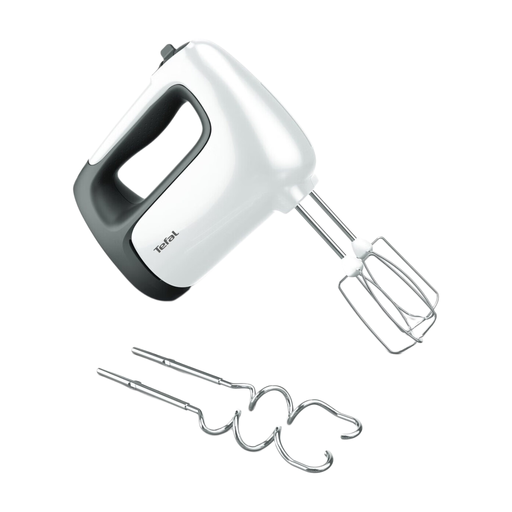
Why it suits this profile: This hand mixer takes up little space and comes with beaters, dough hooks and a hand blender attachment. It’s a good fit for small kitchens and novice home bakers.
The product information lists 5 speeds, a turbo function and a motor power of 500 watts. However, check the technical specifications, which also state 450 watts.
Compact design, 5 speeds, a turbo function and dishwasher-safe parts according to the product description.

Why it suits this profile: Ideal for households that often make smoothies, iced drinks and larger portions, and want to keep control of the manual settings.
As well as automatic programmes, the product information lists 14 manual speeds. This means you’re not limited to automatic settings.
According to the product specifications: 1,200 watts, a 2.1-litre jug, a 700 ml cup and the ability to crush ice.
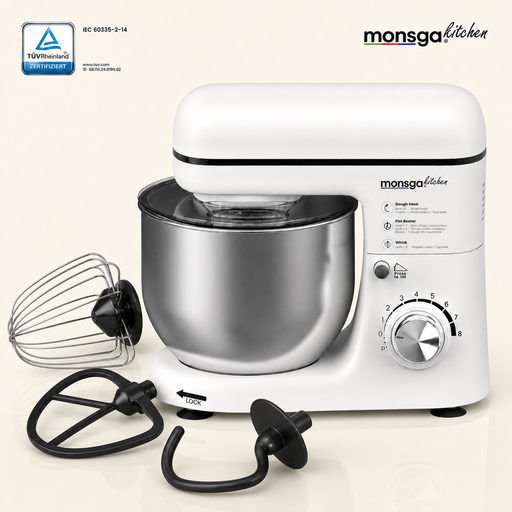
Why it suits this profile: A good choice for home bakers who regularly make bread, cakes, biscuits or large batches of cake mixture, and want to keep their hands free.
The recommended working capacity of 5 litres is clearly stated alongside the maximum bowl capacity of 6 litres. For heavy dough, use a low to medium setting and don’t exceed the capacity.
Recommended working capacity of 5 litres, 8 speeds, a tilt-head design, dough hook, whisk, beater and splash guard.

Why it suits this profile: This hand blender is easy to store and combines puréeing, whisking, chopping and blending for everyday food preparation.
The set includes a whisk, chopper and measuring beaker. That means you don’t need a separate appliance for every small task.
600 watts, 2 speeds, a 500 ml chopper and an 800 ml measuring beaker according to the product information.
Always place your kitchen appliance on a flat, dry surface. Fit the bowl and attachments before plugging it in. When using a blender, add liquid as instructed in the manual and don’t fill it above the maximum mark.
Also bear the following in mind:
We’ve put together a complete, up-to-date list of products that meet these strict selection criteria and the applicable European safety requirements.
Yes, a stand mixer with a dough hook can be suitable, as long as you follow the recommended quantity and operating time. Pay particular attention to the working capacity: a large bowl doesn’t automatically mean you can knead large quantities of heavy dough.
A hand mixer is lightweight, takes up little space and is suitable for cake mixtures, whipped cream and smaller tasks. A mixer with a bowl is more convenient if you often make dough or want to add other ingredients while mixing.
Energy use depends on the power rating and how long the appliance is used. A 500-watt appliance running for ten minutes uses less energy than a 1,000-watt model used for a long time. So don’t look at wattage alone; also consider preparation time and the right capacity.
