Who is this choice relevant to?

Label checkers shopping for King's Day

You're looking for biscuits to serve to visitors, have with a coffee or take with you, and compare the sugar content per 100 g rather than relying on the wording on the front of the pack. The Netherlands Nutrition Centre recommends comparing labels on this basis.

Shoppers who weigh up ingredients carefully

You're considering an option with no sugars, but want to know which sweeteners, polyols and allergens are in those particular biscuits before sharing them.

Party planners looking for a familiar treat

You might want to serve syrup waffles or speculoos, for example. In that case, you weigh up the familiar type of biscuit against its sugar content per 100 g and the portion size.

What should you look for when choosing?

Start by comparing the sugar content per 100 g of similar biscuits. Then check whether the ingredients and type of biscuit suit when you plan to eat or share them.

What to consider What to check Who it's important for
Sugars per 100 g Compare the ‘of which sugars’ figure per 100 g. If a product claims ‘less sugar’, also check which product it is being compared with. I mainly want to know how much sugar a biscuit actually contains, not just whether it carries a reduction claim. For around 36% of consumers, the sugar content is the top priority.
Polyols and allergens Read the ingredients, allergen information and any warnings on the packaging of the option you've chosen. When I eat biscuits on the go or share them with guests, I want to know which ingredients matter to us. For around 29% of consumers, checking this is the most important consideration.
Taste and sharing occasion Choose a type of biscuit and pack that suit a coffee break or a trip out; check the portion size too. When I have visitors, I want to serve a familiar treat, even if it doesn't have the lowest sugar content. For around 21% of consumers, the occasion for sharing is the deciding factor.
Other nutritional information As well as sugars, compare energy, saturated fat, fibre and salt per 100 g. I don't want to base my choice on just one number; I want to look at the nutritional information as a whole. For around 14% of consumers, this is the first thing they consider.

Common mistakes

  • Assuming ‘less sugar’ means ‘virtually sugar-free’

    Albert Heijn says its AH Butter Less Sugar syrup waffles have 32% less sugar than the regular version, but they still contain 23 g of sugars per 100 g.

    When you see a sugar-reduction claim, compare the actual sugar content with that of a similar type of biscuit.

  • Assuming ‘zero’ means low in energy or fat

    According to Albert Heijn, AH Digestive 0% sugar contains 0.3 g of sugars, but also 465 kcal and 20 g of fat per 100 g.

    Check the full nutrition table if anything beyond sugar matters to your choice.

  • Overlooking sweeteners and warnings

    Some biscuits with very little sugar contain polyols. According to the Netherlands Nutrition Centre, large amounts of polyols can cause digestive problems.

    Read the ingredients and any warnings, especially if you plan to take several biscuits with you or share them.

  • Relying only on online allergen information when sharing

    Different biscuit varieties may contain different allergens, and recipes can change. A product name doesn't tell you which ingredients are in the pack you're buying.

    Check the packaging and keep it to hand when offering the biscuits to guests.

Brands and product ranges to consider

Albert Heijn

The range includes AH Digestive 0% sugar and AH Butter Less Sugar syrup waffles: two different ways to choose biscuits based on sugar content.

  • Albert Heijn lists 0.3 g of sugars per 100 g for its Digestive biscuits; for the syrup waffles, it states the sugar reduction compared with the regular version.
  • According to Albert Heijn, the syrup waffles still contain 23 g of sugars per 100 g. For the Digestive biscuits, check the listed polyols and ingredients too.

Céréal

The coconut, chocolate and speculoos varieties reviewed offer different types of biscuit with low stated sugar content.

  • For the varieties reviewed, Jumbo lists between 0 and 0.5 g of sugars per 100 g, depending on the biscuit chosen.
  • Those same varieties list polyols. Check the allergens on each pack too; the almond speculoos variety is not interchangeable with the coconut variety.

Verkade

San Francisco Zero is a biscuit option for anyone looking for a traditional-style biscuit with no added sugars, according to the product information.

  • The product information at Albert Heijn lists 1.7 g of sugars per 100 g.
  • This variety contains maltitols and carries a warning about a laxative effect if consumed in excess. Check the allergens on the pack too.

Lotus Biscoff

Lotus Biscoff Original is a useful reference if you want to compare classic speculoos to have with coffee against varieties with less sugar.

  • Lotus Bakeries offers the Original variety in several pack sizes.
  • Lotus Bakeries lists 38.1 g of sugars per 100 g. This regular speculoos is therefore not suitable if your priority is choosing a biscuit with as little sugar as possible.

Biscuit bars on Joybuy

These biscuit bars are an option if you'd like to take a bar with you for King's Day. Check the ‘Less Sugar’ claim against the nutritional information on the packaging; this is a different type of biscuit from the syrup waffles and biscuits above.
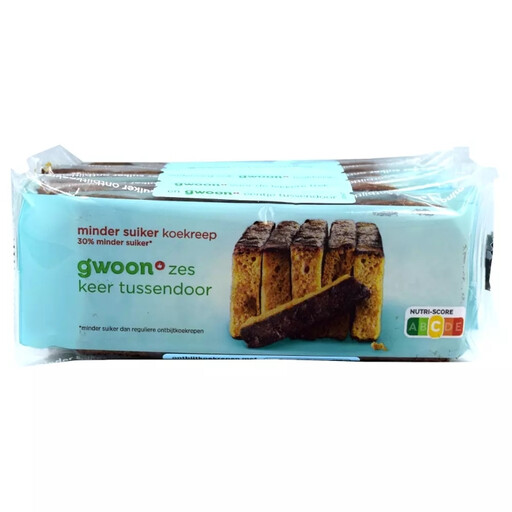
g'woon Cookie Bars Less Sugar, pack of 6

g'woon Cookie Bars Less Sugar, pack of 6

A pack of six biscuit bars for anyone who wants to take a bar with them. If the pack says ‘Less Sugar’, compare the sugar content per 100 g and check the ingredients and allergens on the packaging before sharing the bars.

View on Joybuy

Frequently asked questions

Does ‘less sugar’ mean the same as ‘no sugars’?

No. Albert Heijn lists 23 g of sugars per 100 g for its Butter Less Sugar syrup waffles, despite the reduction compared with the regular version. To make your choice, check the ‘of which sugars’ figure per 100 g rather than relying on the claim on the front of the pack.

Why do some low-sugar biscuits carry a warning?

Some of these biscuits contain polyols, which can cause digestive problems in large amounts, according to the Netherlands Nutrition Centre. Read the ingredients and the warning on the packaging of the variety you're buying.

Does ‘0% sugar’ also mean low in calories?

No. Albert Heijn lists 465 kcal and 20 g of fat per 100 g for AH Digestive 0% sugar. So, if they matter to your choice, compare energy and other nutritional values too.

What should I check if I'm sharing biscuits with guests?

Check the ingredients and allergens on the packaging of the exact variety you've chosen. According to Jumbo, Céréal's almond speculoos biscuits list ingredients including wheat, almond, egg, milk and soya; this information doesn't apply to other types of biscuit.
