
Vandaag of morgen in huis

Kwaliteit gegarandeerd

Welkomstaanbiedingen ontgrendelen: GRATIS bezorging | Tot 80% korting | Gratis 30 dagen JoyPlus-proefperiode
Download de app
Kimchi instant noodles are a firm favourite among Korean ramen enthusiasts, students and anyone who needs a quick, hot meal. But not all spicy noodle soups are created equal. Some packs are designed for the hob, others for a bowl. The portion size, allergens, cooking time and intensity of the kimchi flavour can vary too.
Product descriptions often throw around words like “authentic”, “extra spicy” or “rich broth”. These terms don’t always tell you what you’re actually getting. As a Joybuy Product Recommendation Officer, I focus on the verifiable details on the product page: weight, cooking method, ingredients, packaging and nutritional information.
A cup noodle product is handy at the office, during a study session or on the go. However, the contents are usually around 75 to 112 grams. A multipack of individual sachets typically contains several portions, but you’ll need a pan or a heatproof bowl.
So check:
A product labelled “5 x 120 g” is not the same as five cups. The preparation and when you’d use them are different.
Kimchi ramen and spicy Korean noodles often contain wheat and soya. Depending on the recipe, they may also include sesame, fish, mustard or shellfish. For example, the Nongshim Kimchi Ramyun cup lists wheat, soya, sesame and fish as allergens. Another variant lists wheat, soya and mustard instead.
Always read the label on the packaging before you buy. Product information on a website can change, and packaging may contain more or different details. If you have an allergy or intolerance, the physical pack is what counts.
“Extra spicy”, “rich flavour” and “authentic” aren’t standard European measurements. How hot or flavourful it tastes depends on the kimchi powder, dried vegetables, chilli, oil and the amount of water you use.
Instead, look at the ingredients list. You can search for:
According to Nongshim’s own product description, the Kimchi Instant Noodle Soup combines a spicy, tangy kimchi flavour with Korean radish and vegetables. That’s the brand’s description, not a universal guarantee for every taste preference.
For a classic spicy noodle soup, choose a product where the seasoning stays in the cooking water. The Nongshim Kimchi Instant Noodle Soup is prepared with 550 ml of water and a cooking time of 4 to 5 minutes, according to the instructions.
A cup is simpler: add boiling water and wait the stated time. The Nongshim Kimchi Ramyun Noodles cup at 75 grams is designed for this. Just make sure the cup is actually suitable for hot water and follow the instructions on the pack.
A stir-fry variant contains little or no broth. With Nongshim Shin Ramyun Kimchi Stir-Fry, you boil the noodles first, drain the water and then mix in the sauce. This is a different preparation from kimchi ramen in soup form.
For a quick lunch, 75 to 98 grams may be enough, depending on when you’re eating and what you add. A pack of 120 or 130 grams is a more generous portion. For stocking up in a student house or household, multipacks are more practical.
Examples from the range include:
When comparing multipacks, look at the total weight, not just the price per box.
Many instant noodles contain around 400 to 465 kcal per 100 grams, depending on the brand and preparation method. The salt content varies too. In the product information provided, for example, a Nongshim pack of 120 grams has 4.5 grams of salt, while other variants list around 4.8 to 5.4 grams per 100 grams.
Pay attention to the unit: per 100 grams is not the same as per portion. Also check whether the nutritional information refers to the dry product or the prepared meal. If you add egg, tofu, vegetables or extra sauce, the overall nutritional values will change.
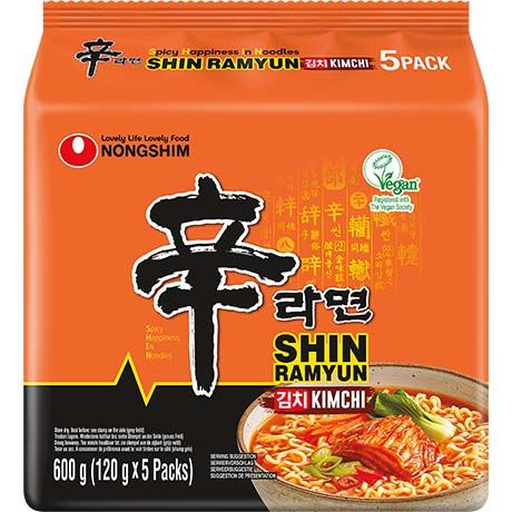
Why this fits: A straightforward multipack for students, store cupboards and fans who want several portions of Korean ramen on hand.
The product page lists five separate 120 g portions and a preparation using 550 ml of water. This makes the pack easier to compare.
Hearty wheat noodles, vegetable flakes and a cooking time of around 4 to 5 minutes.
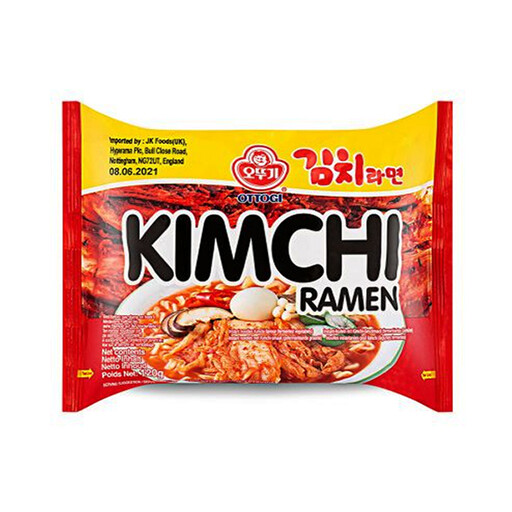
Why this fits: For those who want a 120 g portion and prefer to cook a classic Korean noodle soup in a pan.
The instructions mention around 550 ml of water and a cooking time of 3 to 5 minutes. You don’t have to guess based on the front of the pack alone.
The ingredients list includes kimchi powder, dried kimchi, red pepper and garlic.
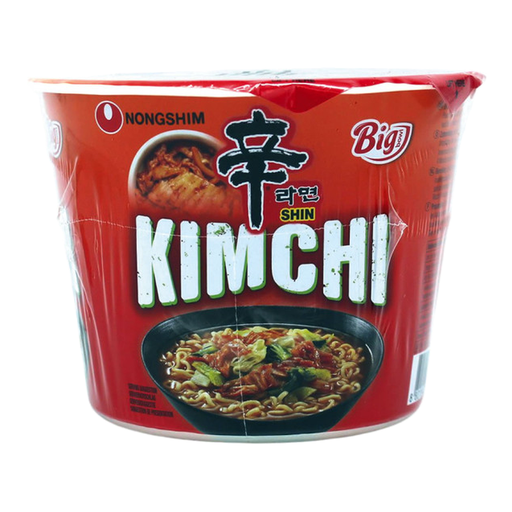
Why this fits: A cup for the office, student room or times when you only have a kettle to hand.
The 112 g content is clearly stated. This means it’s not a small snack cup that you accidentally order as a full meal.
Cup format and a generous portion, with noodles and kimchi flavour for a quick preparation.
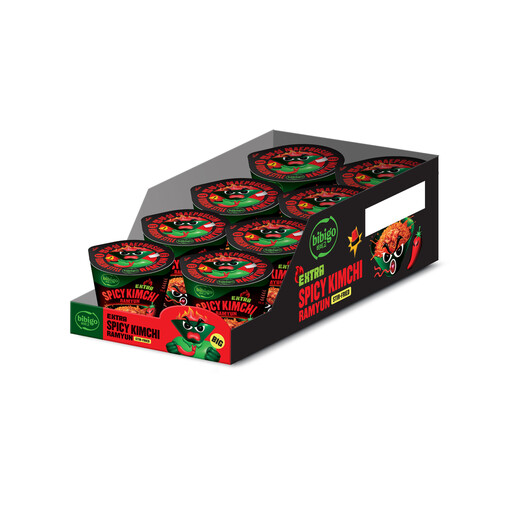
Why this fits: For households and ramen fans who want to stock up on cups and are specifically looking for a variant with “extra spicy” in the product name.
The product information states 8 cups of 98 g. This means you can check the total stock and portion size in advance.
Contains kimchi, red pepper, kimchi sauce and chilli powder according to the ingredients list.
Browse a current selection of products and compare packaging, flavour profile, portion size and preparation method before you order.
Always follow the cooking instructions on the pack. For sachets, it usually goes like this:
You can add extra spring onion, egg, tofu or fresh vegetables. If you add several extras, check the allergen information again. Don’t automatically use all the seasoning or oil if you want a milder flavour; with some products, these are packed separately.
No. Many Korean instant noodles come from South Korea, such as Nongshim and Ottogi. There are also kimchi-flavour noodles from Vietnam, China and other countries. Check the country of origin if that matters for your purchase.
The best-before date is on the pack. Store the noodles as instructed: cool, dry and out of direct sunlight. Don’t use any product where the packaging is damaged. Once opened, seal the contents properly and follow the instructions on the label.
That depends on the price per portion and the total weight. Cups offer more convenience, but sachets are often more practical for stocking up and cooking in a pan. So compare price per portion, gram weight and the number of packs in the box.
