
Livraison le jour même et le lendemain

Qualité garantie

Débloquez vos offres de bienvenue: Livraison GRATUITE | Jusqu'à -80 % | 30 jours d'essai gratuits à JoyPlus
Téléchargez l'application
Fancy a quick bowl of noodle soup with heat, tang and savoury flavour? Kimchi instant noodles are popular with students, busy professionals and Korean ramen fans. Yet many packages look alike. A cup of kimchi noodles is not the same as a multipack for stocking up, and “extra spicy” says little about the exact flavour or ingredients.
This practical guide will help you avoid a disappointing purchase and make it easier to choose between kimchi ramen, Korean instant noodles and varieties made with pickled cabbage.
Some products use kimchi powder or dried kimchi flakes, while others include a sachet of kimchi sauce and vegetables. This creates differences in tanginess, texture and spiciness. Products labelled “pickled cabbage” are also often inspired by Taiwanese or Chinese pickled cabbage and are not automatically Korean ramen.
So check the ingredients list. Look for terms such as kimchi, Chinese cabbage, red chilli, garlic, ginger and, where applicable, kimchi sauce.
A cup of kimchi noodles is practical at the office, on the go or in a student room without a hob. However, the contents can vary considerably. A 75 g serving is different from a large 112 g bowl or a 120 g pack. Also check how much water is needed and whether you need a bowl or saucepan.
Korean instant noodles often contain wheat and gluten. Depending on the recipe, they may also contain soya, mustard, sesame, fish or shellfish. Always read the label on the packaging, especially if you have an allergy or intolerance. Recipes and packaging may change.
Salt content also varies from one product to another. For example, Nongshim Kimchi Instant Noodle Soup lists 4.5 g of salt per 120 g serving, while other varieties state different amounts. Use the nutritional information on the product as your guide.
Choose an individual serving if you want to try a flavour first. A multipack of five or six packs is more practical if you regularly eat kimchi noodle soup. Cups are more convenient for workplaces without a hob, as they usually only require boiling water.
Also check the total contents. A box with 20 servings may appear good value, but it only suits your needs if you eat the flavour regularly and have enough dry storage space.
Most Korean ramen is prepared in a saucepan with around 550 ml of water and requires four to five minutes of cooking. Some cup varieties only need to stand for a few minutes. Always follow the instructions on the packaging.
A short preparation time is particularly convenient during a busy lunch break. Cooking in a saucepan gives you more control over the texture and makes it easier to add egg, spring onion, tofu or extra vegetables.
At a minimum, check:
A product with multiple sachets may offer a more layered preparation, while a single powder sachet is quicker and simpler. Neither format is automatically the right choice; it depends on how much time you have to cook and the texture you prefer.
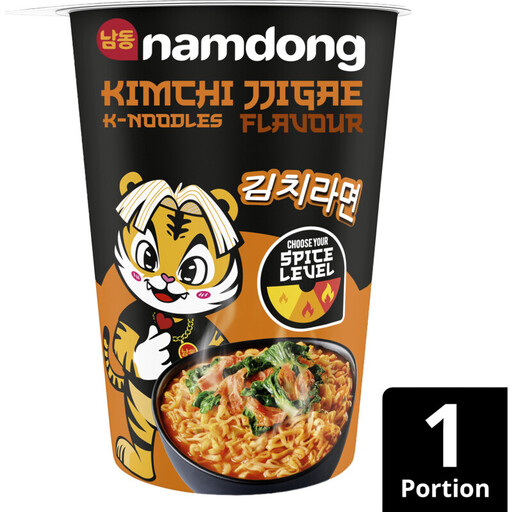
Why it suits this profile: A single 83 g serving is ideal for trying kimchi ramyun without immediately buying a large stock. The compact packaging is suitable for a cupboard or student room.
You do not need to buy a multipack before knowing whether the kimchi stew style suits you. According to the product description, this variety contains none of the 14 main EU allergens; always check the current label.
An individual 83 g serving that is easy to store in a dry place. Suitable as a quick snack or light noodle soup.
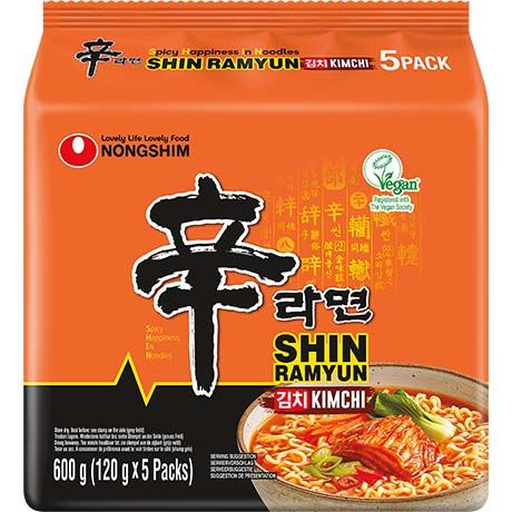
Why it suits this profile: This five-pack is ideal for anyone who wants to keep a regular supply of Korean instant noodles. Each pack contains noodles, vegetable flakes and a separate seasoning powder.
The preparation instructions clearly specify 550 ml of water and four to five minutes of cooking. The ingredient and allergen information lists, among other things, wheat, soya and mustard.
Five 120 g servings, with firm wheat noodles and dried kimchi cabbage, pak choi, carrot and spring onion.
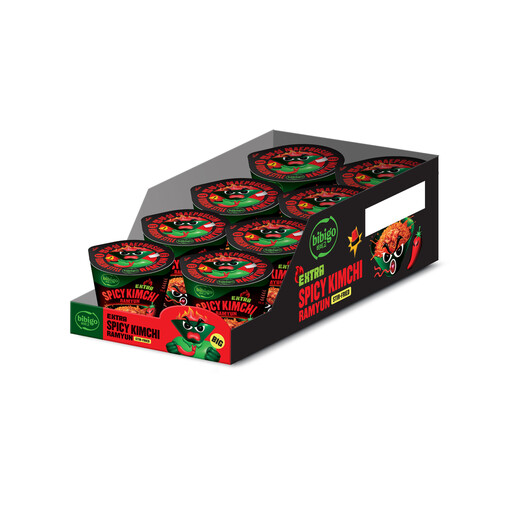
Why it suits this profile: The cup format and eight servings are ideal for offices, households and fans who regularly want to prepare a quick, spicy noodle soup without using a saucepan.
The variety is explicitly labelled “extra spicy”, making the flavour profile clearer from the outset. The product contains kimchi, kimchi sauce and a topping; check the listed allergens, including wheat, soya and sesame.
Eight 98 g cups, with kimchi in the sauce and dried cabbage, sesame and seaweed as a topping.
We have put together a complete, up-to-date list of products that fully meet these strict selection criteria and the applicable European safety regulations.
You can top up the bowl with spring onion, a boiled egg, pak choi or tofu. Only add extra chilli after tasting. This gives you more control over the level of heat.
No. The intensity varies by brand and recipe. Products labelled “extra spicy” are a clearer choice if you want heat, but also check ingredients such as red chilli and chilli powder. A kimchi stew variety may taste more tangy and savoury than hot.
The best-before information is shown on the packaging. Store unopened noodles in a cool, dry place, away from direct sunlight and moisture. Do not use damaged packaging, and check the date before preparing them.
That depends on the packaging and the number of servings. Packs and multipacks are often convenient for keeping in stock, while cups offer extra convenience because you do not need a saucepan. Compare the price per serving, net weight and preparation method rather than looking only at the price on the front.
