
Vandaag of morgen in huis

Kwaliteit gegarandeerd

Welkomstaanbiedingen ontgrendelen: GRATIS bezorging | Tot 80% korting | Gratis 30 dagen JoyPlus-proefperiode
Download de app
A kids' scooter is a fantastic way to encourage children to play outside. But with so much choice, it can be challenging to find a model that is both safe and durable. Many parents unwittingly fall into the same traps, causing the scooter to end up unused in the shed after just a few months. Below, we discuss the most common buying mistakes and how you can avoid them.
Pitfall 1: The "One-Size-Fits-All" Myth A common problem is a scooter with a fixed handlebar height. Children grow quickly, and a scooter that seemed perfect in the spring can be too small by the end of summer. This results in an uncomfortable and unsafe posture. A non-adjustable scooter is often obsolete after just one season.
Pitfall 2: Wheels That Rattle and Slip Cheaper scooters are often equipped with hard, plastic wheels. These offer poor grip on typical pavement, especially when it's damp. Moreover, they provide a shaky, noisy ride where every little stone is felt. This diminishes the fun and can even be dangerous.
Pitfall 3: The "Foldable Scooter" That Never Gets Folded A foldable scooter sounds convenient for storage or taking it in the car. In practice, many models have a clumsy or heavy mechanism. If you need tools or a lot of force to fold the scooter, chances are you'll give up after the second try. The scooter then remains permanently unfolded, taking up significant space anyway.
To avoid a bad purchase, it's helpful to check a few key specifications. These determine the safety, comfort, and longevity of the kids' scooter.
The choice between a two-wheel or three-wheel model depends entirely on your child's age and sense of balance.
A CE marking is a basic requirement, but also pay attention to the following practical features:
Small details can have a big impact on usability and enjoyment.
Based on these criteria, we have selected a number of models that suit different ages and needs.
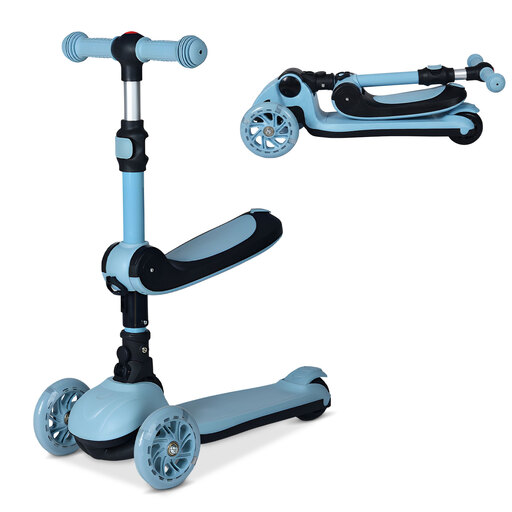
Why This Fits Their Persona: This model is ideal for the little ones. The fold-up seat allows toddlers to start seated and build confidence. The three wheels and wide deck provide maximum stability for their first rides.
The handlebar is height-adjustable, allowing the scooter to grow with the child and avoiding the "one-size-fits-all" pitfall. The 2-in-1 design with a seat extends its lifespan.
2-in-1 design (sitting and standing). Light-up wheels and a lit deck for extra fun and visibility.
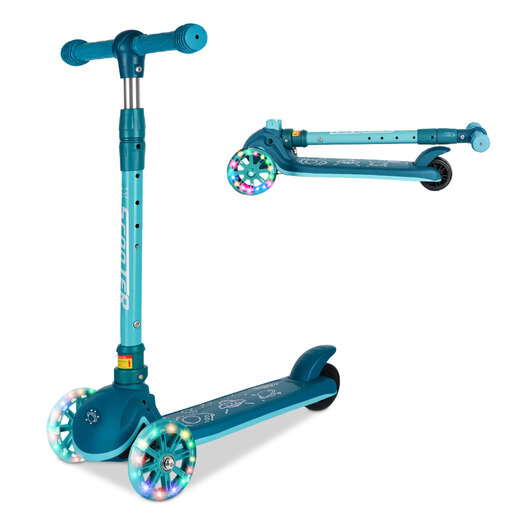
Why This Fits Their Persona: Perfect for kids who have mastered the basics but still benefit from the stability of three wheels. The foldable design is ideal for taking on holiday or to the park.
This model has a simple folding mechanism, which counters the "difficult-to-fold scooter" pitfall. The PU wheels prevent the rattling of cheap plastic wheels.
Easy to fold, height-adjustable handlebar, and a wide, non-slip deck for extra safety.
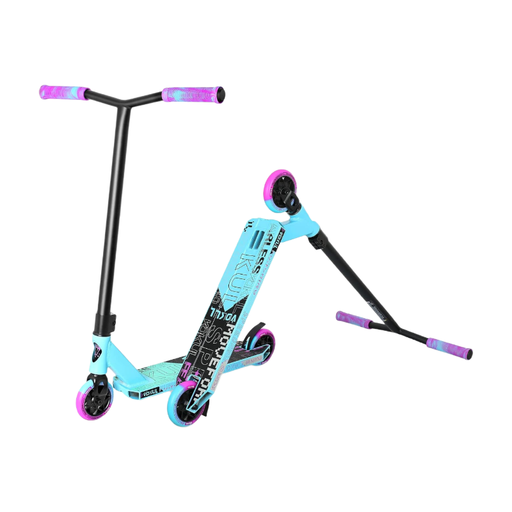
Why This Fits Their Persona: This is a specially designed stunt scooter for older kids who are ready for the skatepark. The construction is focused on withstanding the impact of jumps and tricks, something a regular kids' scooter isn't built for.
This scooter is not designed as a compromise. The focus is entirely on performance and durability for stunts, with a steel alloy frame and an aluminum deck.
Robust construction. High-quality ABEC-9 bearings and 110mm PU wheels for a smooth, fast ride.
We've compiled a complete, up-to-date list of products that meet these strict selection criteria and Dutch safety standards.
Generally, children can start on a scooter for toddlers from 2 or 3 years old. For this age, choose a stable 3-wheel scooter, possibly with a seat to start with. Around the age of 5 or 6, when their balance is more developed, most children can transition to a two-wheel scooter.
A good rule of thumb is that the handlebar should be at a height between your child's hip and navel while they are standing on the scooter's deck. This height ensures a comfortable, slightly bent posture and provides sufficient control over the steering. A handlebar that is too high or too low can disrupt balance.
A scooter with light-up wheels is primarily for the fun factor, which encourages kids to get outside and be active. A practical benefit is that the lights increase your child's visibility in low light. Most of these wheels run on kinetic energy (a dynamo), so you don't need batteries.
