
Vandaag of morgen in huis

Kwaliteit gegarandeerd

Welkomstaanbiedingen ontgrendelen: GRATIS bezorging | Tot 80% korting | Gratis 30 dagen JoyPlus-proefperiode
Download de app
Picking out a kids' scooter might seem simple, but the sheer number of options can be overwhelming. You want something that's safe, durable, and, of course, a lot of fun. As a parent, grandparent, or family member, you're looking for an outdoor toy that won't end up collecting dust in the shed after just one summer. This guide is designed to help you make an informed decision based on the practical specifications and features that truly matter. We'll skip the marketing jargon and focus on what makes a scooter the right fit for your child.
Before we dive into specific models, here are a few key factors to consider. By thinking about these features, you can significantly narrow down your options.
For young children, especially toddlers and preschoolers, stability is crucial. A 3-wheel kids' scooter (two in the front, one in the back) offers significantly more balance than a traditional two-wheel scooter. This helps children build confidence as they develop their balance and coordination. Also, pay attention to the deck—the platform where the child stands. A wide deck with an anti-slip surface provides extra grip and stability, even during unexpected movements. Many modern kids' scooters use a ‘lean-to-steer’ mechanism, where children steer by shifting their weight. This is an intuitive way to steer that supports motor skill development.
Kids grow fast, and you don't want to buy a new scooter every year. A model that is height-adjustable is therefore a smart choice. Check the handlebar's adjustment range and the maximum weight capacity. A scooter that adjusts from, for example, 60 cm to 80 cm and supports up to 50 kg can last from the toddler years well into primary school. This makes the investment more sustainable and ensures the scooter is always at a comfortable and safe height.
Besides safety and durability, a scooter should obviously be fun. A scooter with light-up wheels is often a huge hit with kids. The lights are activated by motion, so no batteries are required. This not only increases the fun but also enhances visibility at dusk. For families who often take the scooter in the car or on holiday, a foldable kids' scooter is very practical. A simple mechanism allows you to fold the scooter into a compact size. For the very youngest, a kids' scooter with a seat can be a great solution. This makes the scooter suitable as a scooter for toddlers, allowing them to start seated and later remove the seat to ride standing up.
Based on the criteria above, we have selected a few popular choices that stand out for their specifications and functionality.
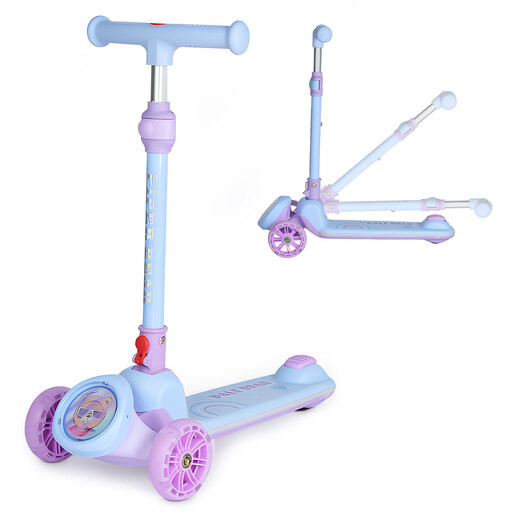
Why it stands out: This model is a solid all-rounder that combines many key features. The lean-to-steer mechanism, three wheels, and wide anti-slip deck make it a stable and intuitive choice for children learning to ride.
Advantages:
Who is this scooter for?: Ideal for parents looking for a reliable and fun first scooter that will last for several years. Suitable for a wide age range and perfect as a general outdoor toy.

Why it stands out: The addition of a foldable seat and four wheels makes this an exceptionally versatile model, especially for the youngest riders. It offers a smooth transition from a balance bike to a full-fledged scooter.
Advantages:
Who is this scooter for?: Perfect for toddlers from 3 years old who are still getting used to the idea of scooting. The seat provides security and can be removed later when the child is ready to stand.

Why it stands out: This foldable kids' scooter combines practical convenience with extra visual flair. In addition to the standard light-up wheels, this model features dynamic LED modes on the side of the deck, making it a real eye-catcher.
Advantages:
Who is this scooter for?: For families who are often on the go and need a scooter that's easy to bring along. Also a great choice for kids who love lights and gadgets.
Has your child outgrown the basics and is ready for the skatepark? Then the requirements for a scooter change. Performing tricks and stunts requires different specifications, such as a fixed handlebar and durable, hard-wearing wheels. The wheels, in particular, are crucial for performance and durability.
If you're looking for parts for a more advanced scooter, check out our range of stunt scooter wheels.
Most children can start on a scooter from around 2.5 to 3 years old. A 3-wheel kids' scooter or a model with a seat is most suitable for this, as it provides the stability needed to learn how to balance.
Not necessarily 'better', but different. A 3-wheel scooter is ideal for young children (3-6 years) because it's more stable and helps develop balance. A 2-wheel scooter is more agile and faster, making it more suitable for older children (from 6-7 years) who have already mastered their balance.
A good rule of thumb is to adjust the handlebar to the height of the child's navel or hips. When the child is standing on the scooter, their arms should be slightly bent at about a 90-degree angle. A handlebar that is too high or too low can reduce control and comfort.
