
Vandaag of morgen in huis

Kwaliteit gegarandeerd

Welkomstaanbiedingen ontgrendelen: GRATIS bezorging | Tot 80% korting | Gratis 30 dagen JoyPlus-proefperiode
Download de app
Choosing a kids' scooter seems simple until you see the options: three wheels, four wheels, with lights, electric, or a foldable model. It's understandable that as a parent or grandparent, you're looking for a scooter that is not only fun but also safe and durable. You want a model that suits the child's age and skill level, and perhaps even one that can grow with them for a few years.
As a Joybuy Product Recommendation Officer, I'm here to help you navigate the choices. In this guide, we'll cut through the marketing jargon and focus on the specifications that really matter. This way, you can make an informed decision for a kids' scooter that will provide years of outdoor fun.
Before we look at specific models, here are a few practical points to consider that will help you compare your options.
For the youngest children, stability is paramount. A scooter for kids aged 3 years or 4 years often has three wheels (two in the front, one in the back). This design provides a stable platform and uses a lean-to-steer mechanism. With this, the child steers by shifting their weight, which helps develop their balance and coordination. Models with four wheels or a scooter with a seat offer even more support for toddlers who are just starting out.
Children grow quickly. A scooter with a height-adjustable handlebar is a smart investment. It allows the scooter to grow with the child, significantly extending its lifespan. Also, pay attention to the maximum weight capacity to ensure the scooter will be suitable for years to come. A foldable scooter is also very practical. You can easily store it in the shed, hallway, or the boot of your car.
Scooter with Lights to an Electric Kids' ScooterAbove all, a scooter should be fun. A scooter with lights in the wheels or on the deck is often a huge hit with kids. These wheels are usually powered by motion, so no batteries are needed. For older children, an electric kids' scooter can be an exciting next step, while a scooter with a seat gives younger children the option to start seated and transition to standing later on. The wide variety of available colours and themes ensures that there's a perfect scooter for girls or scooter for boys.
Based on functionality, adaptability, and popular features, we've highlighted some interesting options for you.

Why it stands out: This scooter combines the most popular features into one model: it's foldable, grows with your child, and has spectacular light effects.
Pros:
Who is this scooter for? Ideal for children who love a scooter with lights and for parents looking for a practical, foldable scooter that will last for several years.

Why it stands out: The combination of four wheels and a removable seat makes this a very versatile entry-level model for the little ones.
Pros:
scooter with a seat can be used like a ride-on toy. When the child is ready, the seat can be easily removed to turn it into a regular scooter.Who is this scooter for? An excellent choice for young children (from 3 years old) who are still getting used to scooting. The seat offers a chance to rest and builds confidence before they start riding while standing.
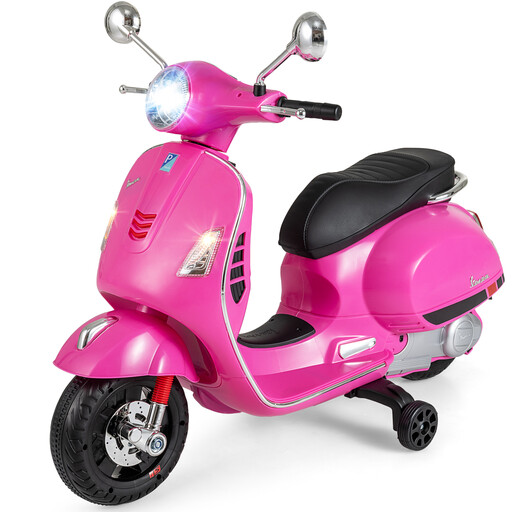
Why it stands out: This electric kids' scooter combines the iconic Vespa design with child-friendly features for a first, safe introduction to electric riding.
Pros:
Who is this scooter for? For children aged 3 to 6 who dream of having their own scooter. The training wheels and controlled speed make it a safe start in the world of electric toys.
Is the perfect scooter for your child not listed here? Every child is different and has different preferences. Sometimes a simpler model without all the extras is exactly what you're looking for, or perhaps just a different colour.
Check out our extensive range of 3-wheel scooters for more models and colours.
Generally, children can start scooting from the age of 2 or 3. Models with a seat or four wheels are ideal for the very youngest. From age 3 or 4, most children are ready for a three-wheeled scooter with a lean-to-steer system.
Yes, for toddlers and preschoolers, a three-wheeled scooter offers significantly more stability than a traditional two-wheeled scooter. It helps them develop their balance and coordination safely, without the frustration of constantly falling over.
In the Netherlands, a helmet is not legally required for children on a non-electric scooter. Different rules may apply to an electric kids' scooter, depending on its speed. Regardless of legal requirements, wearing a helmet and possibly other protective gear (knee and elbow pads) is strongly recommended for the child's safety.
