
Parents comparing calories per amount
You want to keep offering crisps, but are looking for a variety with fewer calories per 100 g than the standard ready-salted crisps you’re comparing it with. Then decide how much you’ll actually serve.


If you want to serve crisps with fewer calories for the same amount, compare the nutritional information per 100 g: Albert Heijn lists 428 kcal for Lay's Oven Baked Naturel, compared with 517 kcal for Lay's Naturel at Jumbo and 528 kcal for Jumbo Chips Naturel. For a children’s party, how much you serve each child matters too. If any guests have allergies or other dietary requirements, check the ingredients on the exact pack you’re buying. A lower calorie count doesn’t automatically make crisps suitable for everyone.
You want to keep offering crisps, but are looking for a variety with fewer calories per 100 g than the standard ready-salted crisps you’re comparing it with. Then decide how much you’ll actually serve.
You prepare separate bowls for several children or hand out small bags, so one open party-size bag doesn’t determine how much each child takes. The Netherlands Nutrition Centre recommends small portions for children’s party treats.
You ask about allergies and other dietary requirements in advance, then check the label for each flavour you choose. For example, Jumbo lists wheat as an allergen in Pringles Original 165 g; this tells you nothing about the ingredients in other crisps.
Start by comparing calories per 100 g when weighing up different types of crisps. Then decide how much to serve each child and, before handing them out, check that each flavour is suitable for your guests.
| What to consider | What to check when buying | Who is this important for? |
|---|---|---|
| Calories per 100 g | Compare the same amount, then check the nutritional information on the pack. Albert Heijn lists 428 kcal per 100 g for Lay's Oven Baked Naturel; Jumbo lists 517 kcal for Lay's Naturel and 528 kcal for Jumbo Chips Naturel. | If I’m serving crisps anyway, I want to know which of these varieties has fewer calories for the same amount. For around 39% of consumers, this comparison comes first. |
| Portions and serving | Check the pack size and portion the crisps in advance. The portion size shown on a bag is a guide, not automatically the amount you should give each child. | When serving a group of children, I want to stop an open bag from determining the portions without anyone noticing. Around 23% of consumers give portioning in advance the highest priority. |
| Ingredients and allergens | Ask about dietary requirements and read the current label for each flavour. The allergens in one variety won’t necessarily be the same as in another. | If a guest has an allergy, I need to be able to check what’s in the crisps I’ve chosen. This check comes first for around 23% of consumers. |
| Party spread | Decide how many crisps you want to put out for the group and whether you’ll offer other snacks too. The Netherlands Nutrition Centre suggests fruit and a small cup of plain popcorn as examples of children’s party treats. | I want to serve crisps without making them the only snack on the table. For around 15% of consumers, the overall party spread is the first thing they consider. |
Lay's says its Oven Baked range contains 50% less fat than regular potato crisps. This is a brand claim about fat, not proof that a particular bag can be described as low in calories. EU rules on nutrition claims set separate conditions for claims about reduced energy value.
Compare the calories per 100 g of the exact products and make a factual comparison rather than a general claim.
A lower energy value doesn’t tell you how much salt a product contains. Albert Heijn lists 0.85 g of salt per 100 g for Lay's Oven Baked Naturel; Jumbo lists 1.1 g per 100 g for both Lay's Naturel and Jumbo Chips Naturel.
Check the calories and salt in the same nutrition table, then decide separately how much you want to serve.
Even with crisps that have fewer calories per 100 g, how much each child eats depends on what you put out and allow them to help themselves to. The Netherlands Nutrition Centre recommends small portions for children’s party treats.
Fill bowls in advance or choose a pack that’s easy to divide between your guests.
Ingredients and allergens can vary between products. According to Jumbo, Pringles Original 165 g contains wheat and may contain milk and soya; you can’t assume the same is true of another flavour or brand.
Ask about allergies and other dietary requirements before the party, then check every pack you’re actually going to serve.
These examples can help you compare specific product varieties. Always check the nutritional information and ingredients on the label of the pack you choose, rather than relying on the brand name alone.
The Oven Baked range is worth considering if you want to compare calories per 100 g with regular ready-salted crisps. Lay's also makes standard crisps and multipacks.
Jumbo Chips Naturel is a standard ready-salted crisp for anyone planning portions for a group and comparing nutritional values.
The range includes several types of ready-salted crisps, including oven-baked, standard and formed varieties.
Snack Day is a Lidl own-brand range that includes ready-salted and paprika crisps.
Pringles Original is worth considering if guests specifically expect stackable crisps, not as an obvious lower-calorie alternative.
Below are oven-baked Lay's varieties to compare by flavour and pack size, plus a 40 g bag of Lay's Sensations if you’re looking for a smaller pack. When choosing based on nutritional values, always compare the exact flavour and the amount you plan to serve.
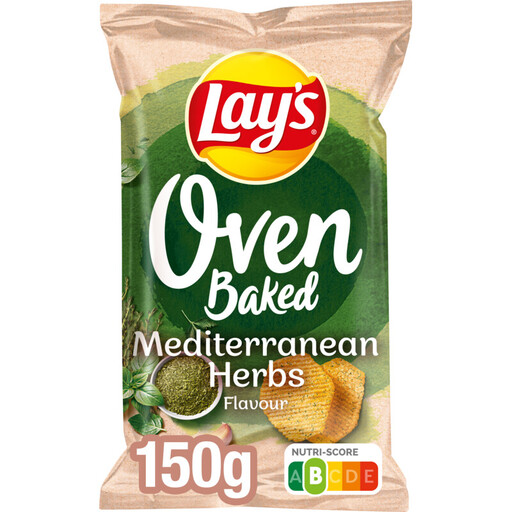 Image unavailable
An oven-baked flavour for sharing between several guests. The bag contains 150 g; when planning portions, check the nutritional information and ingredients for this flavour, including the milk listing.
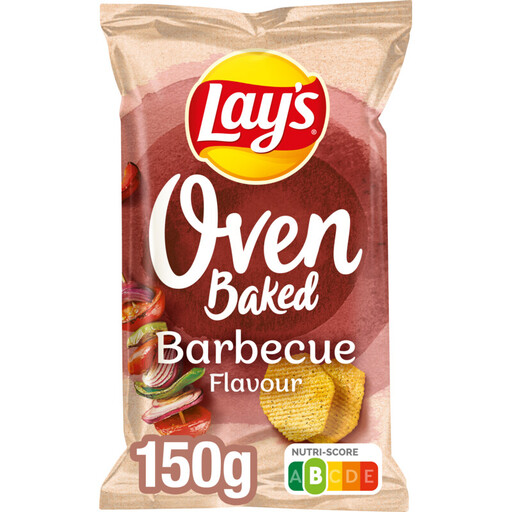 Image unavailable
An oven-baked barbecue flavour for serving in pre-portioned amounts. The bag contains 150 g; decide how much to put in each bowl, and check the label for soya if any guests have an allergy.
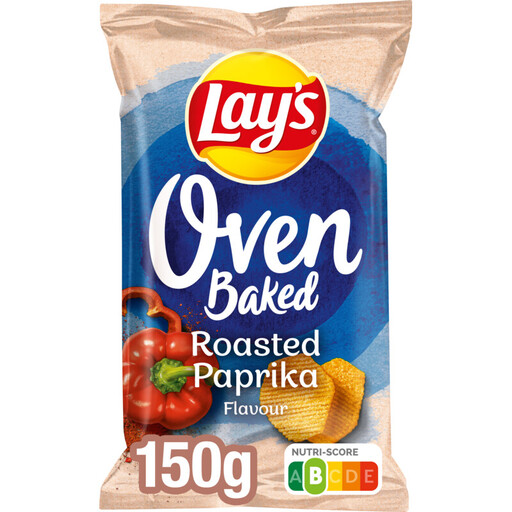 Image unavailable
An oven-baked paprika flavour for filling bowls for the group in advance. The pack contains 150 g; if anyone has an allergy, check the ingredients for this exact flavour, including the milk listing.
 Image unavailable
An oven-baked ready-salted variety to compare with regular ready-salted crisps by calories per 100 g. Joybuy lists 442 kcal per 100 g for this 150 g pack; Albert Heijn lists 428 kcal per 100 g for a similarly named Oven Baked Naturel. So check the nutritional information on the bag you buy and portion it in advance.
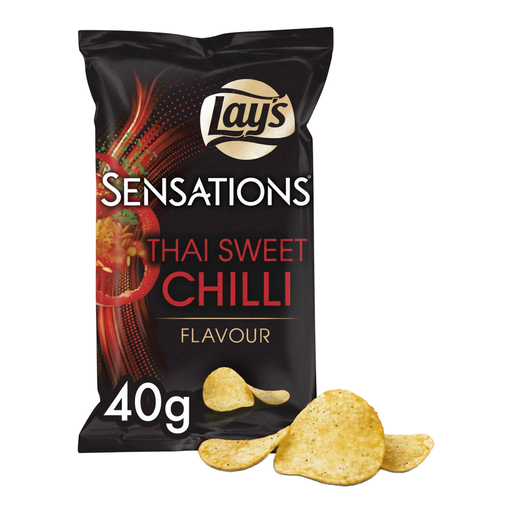 Image unavailable
A 40 g bag if you’re looking for a smaller pack to put out. The bag’s contents aren’t automatically the right portion for every child; check the ingredients too, including the wheat and soya listings, before serving.
No. The cooking method alone doesn’t tell you how many calories a product contains. Albert Heijn lists 428 kcal per 100 g for Lay's Oven Baked Naturel; compare this with the crisps you might otherwise choose, and consider the portion you’re serving too.
Portion out a small amount in advance rather than leaving an open bag on the table for everyone to help themselves. Lay's Oven Baked Naturel has a stated portion size of 30 g at Albert Heijn; use this kind of guide to help portion the crisps, and take the other party snacks into account. The Netherlands Nutrition Centre recommends small portions for children’s party treats.
Ask in advance which ingredients the guest needs to avoid, then read the label for every specific variety you plan to serve. Jumbo lists wheat, and possible traces of milk and soya, for Pringles Original 165 g; you shouldn’t apply this information to other crisps.
Not automatically: compare the calories per 100 g shown on the label to assess the energy value. Lay's claims that its Oven Baked range contains 50% less fat than regular potato crisps. EU rules on nutrition claims set separate conditions for claims about reduced energy value: the product must have at least 30% less energy and the reason for the reduction must be stated. A claim about fat doesn’t prove that these conditions have been met.