Choosing a kids' mountain bike can be a challenge. A bike that's too big is unsafe, one that's too small will be quickly outgrown, and a low-quality model leads to frustration and unnecessary repairs. The goal is to find a bike that not only fits your child's height but is also safe and durable enough for off-road adventures.
This guide will help you make an informed decision based on key specifications. We focus on the most important features to look for, ensuring you choose a model that matches your child's needs and skill level.
What to Look for When Buying a Youth Mountain Bike
Before making a choice, it's helpful to understand the key components of a kids' MTB. These specifications determine the bike's safety, comfort, and performance.
1. Wheel Size and Rider Height
Wheel size, measured in inches, is the primary factor in determining the correct bike size. A child should be able to stand over the frame with both feet flat on the ground.
- 20-inch wheels: Generally suitable for children from approximately 6 to 10 years old, with a height between 120 and 135 cm (47-53 in). A 20-inch mountain bike is often the first step towards a 'real' mountain bike with gears.
- 24-inch wheels: Suitable for children from around 10 to 14 years old, with a height of 135 to 155 cm (53-61 in). A 24-inch mountain bike offers more stability at higher speeds and is suited for more serious terrain.
- 26-inch wheels: For teens aged 13 and up, and over 155 cm (61 in) tall. This size is equivalent to adult mountain bikes and is suitable for the most demanding trails.
2. Brakes: Disc Brakes or V-Brakes?
Braking power is crucial for safety. Most standard kids' bikes come with V-brakes (rim brakes), but a kids' MTB with disc brakes offers significant advantages.
- Mechanical Disc Brakes: Provide consistent and reliable stopping power, even in wet or muddy conditions. They require less hand strength to operate, which is a major benefit for children. Additionally, they don't cause wear on the wheel's rim.
3. Suspension: For Comfort and Control
Suspension absorbs shocks from bumps and potholes, providing more comfort and control on rough terrain.
- Front Suspension (Hardtail): A suspension fork absorbs the biggest impacts. This is the most common configuration for a kids' mountain bike and is ideal for forest paths and light trails.
- Full Suspension: Both the front fork and the rear of the frame have suspension. This offers maximum comfort and control on very rough terrain but makes the bike heavier and more complex to maintain.
4. Gears
Gears help your child climb hills and build speed on flat sections. The number of gears can vary.
- 7 Speeds: Sufficient for most recreational rides and hilly terrain. Shifting is often done via a twist shifter, which is intuitive for children.
- 21 Speeds: Offers a very wide range for steep climbs and fast descents. Shifting is typically handled by trigger shifters, which offer greater precision.
Our Recommendations for 2026
Based on the criteria above, we've selected models with a clear focus on functionality and durability.
1. RoyalBaby EDGE 20-inch Mountain Bike
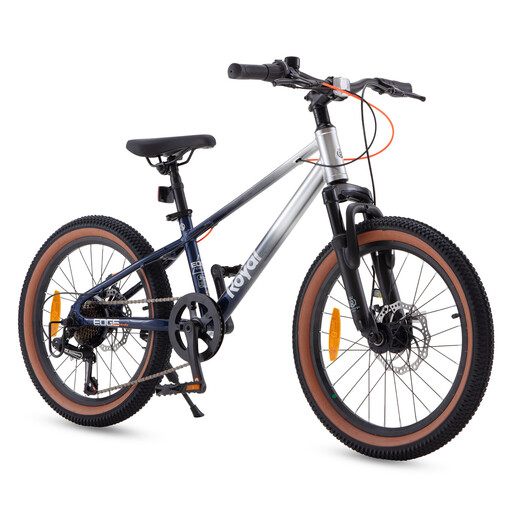
- Why this product: The RoyalBaby EDGE is a solid entry-level model for young adventurers. It combines a lightweight aluminum frame with essential mountain bike features like front suspension and 7 speeds. The dual disc brakes provide reliable stopping power in all conditions.
- Advantages:
- Frame: Lightweight aluminum alloy.
- Brakes: Dual disc brakes for consistent performance.
- Drivetrain: 7 speeds with an intuitive twist shifter.
- Suspension: Front suspension for shock absorption on unpaved trails.
- Who it's for: Children aged 6 to 10 who are ready for their first serious mountain bike with high-performance specs. Ideal for forest paths and hilly terrain.
View the RoyalBaby EDGE 20-inch
2. RoyalBaby Kingplus 24-inch Mountain Bike
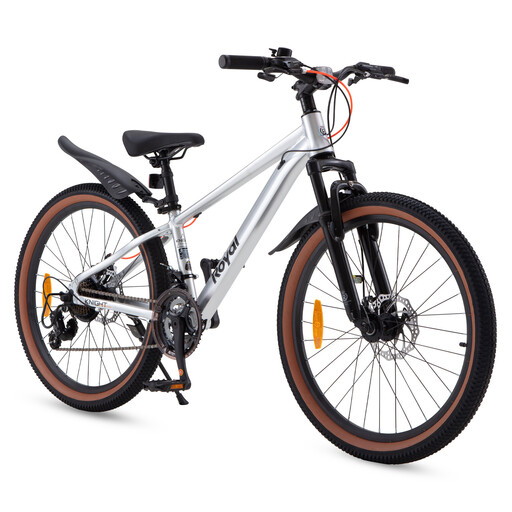
- Why this product: For the mountain bike for kids aged 10 and up, the Kingplus is a logical next step. With 24-inch wheels and an extensive 21-speed gear system, this bike is built for more challenging terrain. The trigger shifters provide precise control over the gears.
- Advantages:
- Frame: Durable and lightweight aluminum.
- Brakes: Dual disc brakes that are low-maintenance and perform in all weather conditions.
- Drivetrain: 21 speeds (3 front, 7 rear) with trigger shifters for a wide gear range.
- Suspension: Front suspension for comfort and control on bumpy roads.
- Who it's for: Kids and pre-teens from 10 to 14 years old who need a versatile mountain bike for both recreational rides and more technical trails.
View the RoyalBaby Kingplus 24-inch
3. RoyalBaby RS7 26-inch Dual-Suspension Mountain Bike
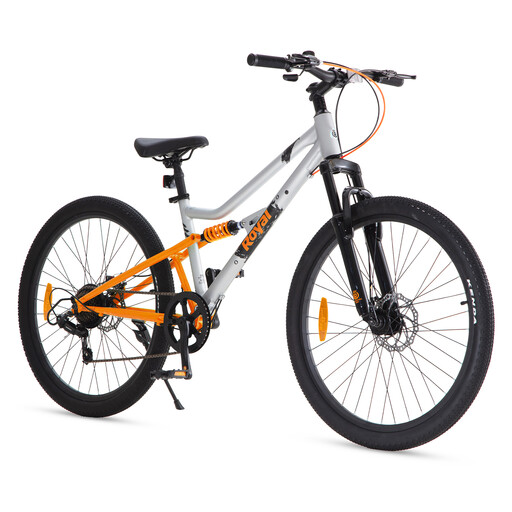
- Why this product: The RS7 is a youth mountain bike for teens who want to get the most out of their rides. Its key feature is the full suspension, which dampens shocks at both the front and rear. This ensures superior comfort and grip on rugged trails.
- Advantages:
- Frame: Lightweight aluminum frame with full suspension.
- Brakes: Reliable dual disc brakes.
- Drivetrain: 7 speeds with trigger shifters for quick adjustments.
- Suspension: Dual suspension (front fork and rear shock) for maximum control on rough terrain.
- Who it's for: Teens (13+) looking for a bike for adventurous trail rides who aren't afraid of technical terrain.
View the RoyalBaby RS7 26-inch
Alternative Considerations
Is your child not quite ready for a mountain bike, or are you looking for a practical way to bring a younger child along on your own bike rides? A sturdy city bike can be a great alternative. Explore our selection of bikes compatible with child seats, so you can ride together safely.
Discover our collection of bikes suitable for a child seat
Frequently Asked Questions (FAQ)
1. From what age is a kids' mountain bike suitable? This depends more on the child's height and motor skills than on age. Generally, children from 6 years old (around 120 cm or 47 in) can start on a 20-inch mountain bike, provided they are already confident cyclists.
2. What is the advantage of a kids' MTB with disc brakes? Disc brakes offer more consistent stopping power, especially in wet and muddy conditions. They require less hand strength to operate, which is safer for children. Furthermore, they prevent wear and tear on the wheel rims from braking.
3. How do I determine the right size mountain bike for my child? The most important measurement is inseam. Your child should be able to stand straddling the frame's top tube with their feet flat on the ground. Use the wheel size (20, 24, or 26-inch) as a guideline in combination with your child's height, as described in this guide.
Written by the Joybuy Product Recommendation Officer