
Vandaag of morgen in huis

Kwaliteit gegarandeerd

Welkomstaanbiedingen ontgrendelen: GRATIS bezorging | Tot 80% korting | Gratis 30 dagen JoyPlus-proefperiode
Download de app
Finding a helmet that not only protects your child but that they'll also love to wear can be a challenge. The choices can be overwhelming, and your child's safety is paramount. As a Joybuy Product Recommendation Officer, I'm here to guide you. This guide is designed to provide you with clear, practical information so you can make an informed decision on the right helmet for your child.
Before we look at some models, here are a few key points to help you choose a safe and comfortable helmet.
A safe kids' helmet complies with the European safety standard EN 1078. This certificate indicates that the helmet has been tested for shock absorption, construction, and the strength of the chin strap. A helmet with this certification mark is suitable for cycling, skateboarding, and roller skating. Always check that this standard is mentioned on the helmet or in the product description.
A helmet only provides protection if it fits properly. It should sit level on the head and not be able to slide forwards or backwards. An adjustable kids' helmet with a dial-fit system at the back is a practical solution for this. It allows you to precisely adjust the fit to your child's head circumference. Measure the circumference of your child's head (about 2 cm above the eyebrows) to determine the correct size.
Visibility is crucial, especially in traffic. Bright colours help your child stand out more. Some models go a step further with a built-in kids' helmet with a light. An LED light at the back can significantly increase visibility at dusk or on dark days.
Below is a selection of kids' helmets, based on their specifications and features.
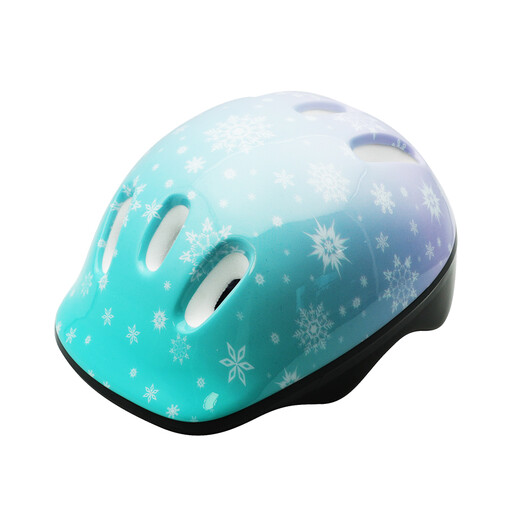
Why it stands out This helmet combines a cheerful design with essential basic safety. The construction consists of a PVC outer shell with an EPS inner lining for shock absorption, which complies with the EN 1078 safety standard.
Key features
Who is it for? For parents looking for an affordable and certified helmet with a kid-friendly design for general use, such as cycling and scootering.
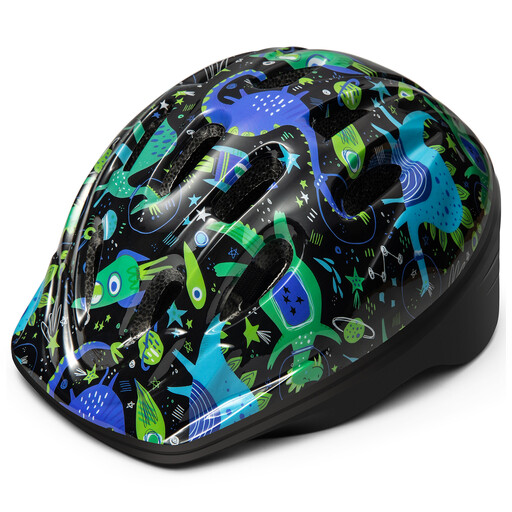
Why it stands out This model is designed with an extra-sturdy ABS outer shell and a thick, shock-absorbing EPS core. According to the manufacturer, the helmet complies with US CPSC safety standards for children aged 5 and up. A handy feature is the inclusion of two removable liners, which helps with size adjustment and washing.
Key features
Who is it for? A great option for a helmet for a child aged 5 years or older who is active in various sports, such as cycling, skateboarding, and scootering, and for whom a durable outer shell is desired.
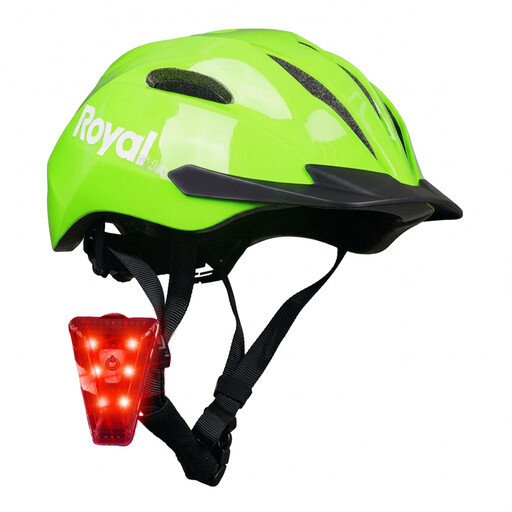
Why it stands out This helmet emphasises visibility and comfort. Its most notable feature is the built-in kids' helmet with a light: an LED rear light with three modes. Weighing just 250 grams, it is also very lightweight.
Key features
Who is it for? Ideal for parents who place extra value on visibility, for instance, because their child often cycles at dusk. Its light weight also makes it a comfortable choice for longer rides.
Every child is different, and the perfect helmet depends on personal preference and use. If the options above don't quite match what you're looking for, many more models are available.
? Check out our full range of kids' helmets for more styles and sizes.
1. How do I know what size kids' helmet I need? Measure the circumference of your child's head at its widest point, about 2 centimetres above the eyebrows and ears. Use a flexible measuring tape. The measured circumference in centimetres corresponds to the helmet size. Most kids' helmets are adjustable within a certain range (e.g., 50-54 cm).
2. When should I replace a kids' helmet? A helmet must be replaced immediately after a hard fall or impact, even if there is no visible damage. The internal structure may be compromised, causing its shock-absorbing properties to be lost. Additionally, most manufacturers recommend replacing a helmet after about 3 to 5 years, as the materials can degrade in quality due to exposure to sunlight and sweat.
