
Vandaag of morgen in huis

Kwaliteit gegarandeerd

Welkomstaanbiedingen ontgrendelen: GRATIS bezorging | Tot 80% korting | Gratis 30 dagen JoyPlus-proefperiode
Download de app
An electric scooter is a dream gift for many children. It's a modern and fun way to play outdoors. But as a parent, your top priority is safety and making the right choice. Furthermore, in the Netherlands, there are clear rules you need to consider.
As a Product Recommendation Officer at Joybuy, I'm here to help you get started. In this article, we'll cover the key points to consider and provide specific product recommendations, so you can make an informed decision that suits your child and your situation.
Before you choose a model, it's wise to consider a few things. The specifications determine not only the fun factor but, more importantly, the safety and ease of use.
This is the most important point. In the Netherlands, a kids' electric scooter is not allowed on public roads, sidewalks, or cycle paths. Its use is legally restricted to private property. This includes your driveway, an enclosed backyard, a courtyard, or the grounds of a holiday park (provided the owner permits it). Always check this carefully to avoid fines or unsafe situations. Safety comes first, so always ensure your child wears a helmet and other protective gear.
A kids' electric scooter is specially designed with limited power and a lower top speed than models for adults. For a child around 10 years old, a maximum speed of about 12 to 16 km/h is often sufficient. Pay attention to the motor power (expressed in Watts) and the maximum speed. Lower power provides smoother acceleration, which is more comfortable for younger or inexperienced riders.
Look at the materials and design. An aluminium frame is lightweight yet sturdy. A foldable electric scooter is practical, as you can easily store it or take it with you in the car. Also, pay attention to the following specifications:
Based on product specifications and features, we've listed some popular choices for you.
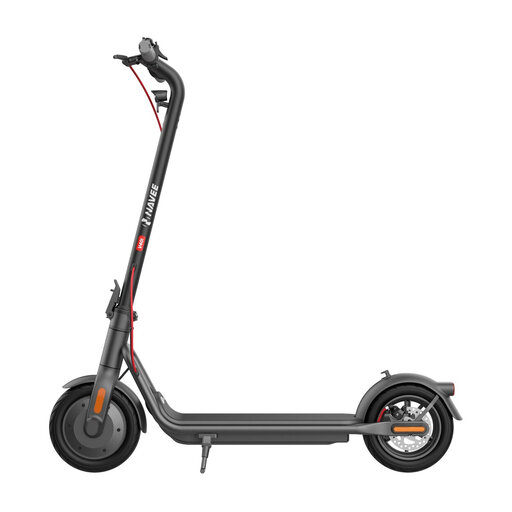
Why It Stands Out The Navee K100 Pro is an e-scooter for kids designed with ease of use and safety in mind. The design is fully geared towards young riders, from the child-friendly brake to the fun colour display that shows speed and battery status. The scooter grows with your child thanks to its three-position adjustable handlebars.
Pros
Who Is It For? For parents looking for a complete and well-thought-out electric scooter for ages 10 and up, intended for use on private property. It's a feature-rich option that grows with the child.
Are you looking for a more traditional scooter, or does your child want to get used to riding without a motor first? In that case, a robust, non-electric scooter is an excellent choice. These models are simple, durable, and can be used anywhere.
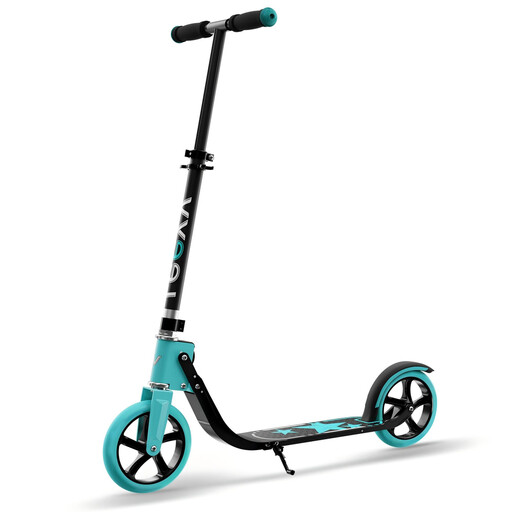

Why They Stand Out The LEEYV RV205 and LY205 models excel in simplicity and robustness. These scooters are made from a durable blend of aluminium and steel and feature large 205 mm wheels that ensure a smooth ride. They are classic, reliable scooters without any electric components.
Pros
Who Are They For? Ideal for families looking for a sturdy, reliable, and versatile scooter for daily outdoor play. An excellent entry-level model before upgrading to a kids' electric scooter.
Is this not quite what you had in mind? No problem. We have a wider range of scooters that might be a better fit for your child's wishes.
? Explore our full range of foldable scooters for kids and find the perfect match.
1. Can a child ride an electric scooter on public roads? No, this is not permitted in the Netherlands. Kids' electric scooters fall under the legal category of "special mopeds" but often lack the type approval required for public roads. Therefore, use is restricted to private property, such as a garden or driveway.
2. From what age is a kids' electric scooter suitable? This largely depends on the model and the child's development. Most manufacturers target an age range from around 6 to 8 years, always under adult supervision. Models like the Navee K100 Pro, with their adjustable handlebars, are suitable for a wide age range, for example, up to 14 years. Always read the manufacturer's recommendations.
3. What is the main difference between a regular scooter and a kids' electric scooter? The main difference is the propulsion: an electric scooter has a motor and a battery, so your child doesn't have to constantly push off. This also leads to the most important practical difference: the electric version may only be used on private property, whereas a regular scooter is permitted almost everywhere.
