
Vandaag of morgen in huis

Kwaliteit gegarandeerd

Welkomstaanbiedingen ontgrendelen: GRATIS bezorging | Tot 80% korting | Gratis 30 dagen JoyPlus-proefperiode
Download de app
Finding the perfect kids' bike can be a challenge. You're looking for a bike that is not only safe and durable but also suits your child's height and skill level. The options are overwhelming, from a first balance bike to a cool BMX. This guide is here to help. We provide clear, practical information on what to look for, so you can make an informed decision for your child or grandchild.
Before you choose a model, there are a few key points to consider. These will help you narrow down the selection and find a bike that's a perfect fit.
The size of a kids' bike is often indicated in inches, which refers to the wheel diameter. While this provides a guideline, your child's inseam is a much better measure. A child should be able to stand over the frame with both feet flat on the ground.
Measure your child's inseam (from crotch to floor) and compare it with the bike's saddle height and standover height.
Not every bike is suitable for every age or skill level. The choice of bike type depends heavily on your child's developmental stage.
Safety comes first. Pay attention to the following features:
Based on product specifications and functionality, we've selected some popular models for different ages and needs.
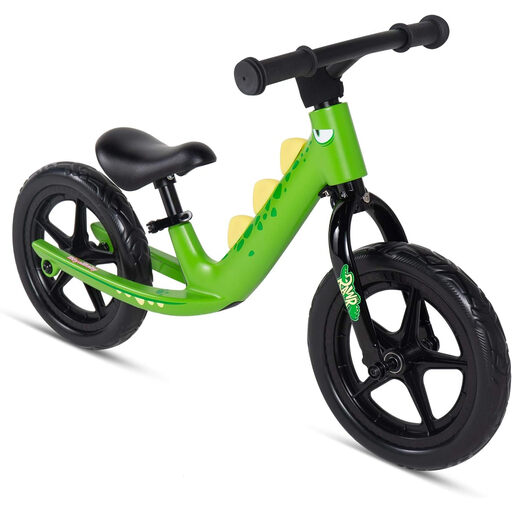
Why It Stands Out: This balance bike combines a playful dinosaur design with an ultra-lightweight magnesium alloy frame, making it easy for the little ones to handle.
Pros:
Who Is It For? This balance bike is an excellent choice for children aged 3 to 5 (with a minimum height of 86 cm) as their very first bike to learn balance.
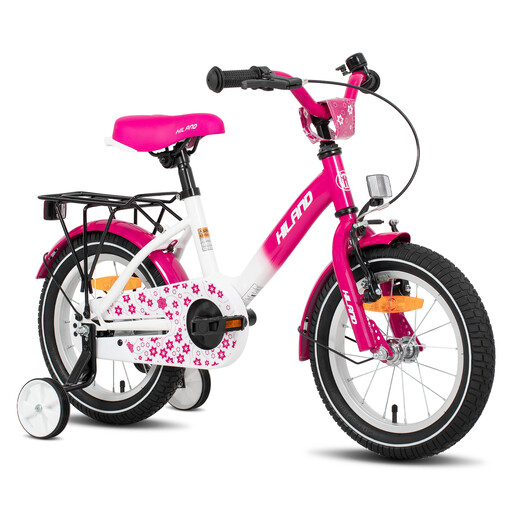
Why It Stands Out: This model is a complete package for the novice rider. It comes with training wheels, a basket, and a bell, and features a dual braking system for added safety.
Pros:
Who Is It For? This 14-inch kids' bike is ideal for children aged 3 to 6 (height 90-125 cm) who are transitioning from a balance bike to a pedal bike.
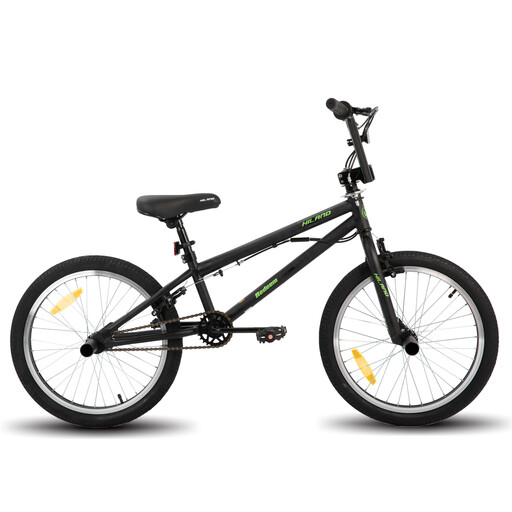
Why It Stands Out: This BMX bike is specially designed for freestyle and stunts. The 360° rotor allows the handlebars to rotate completely without the brake cables getting tangled.
Pros:
Who Is It For? This 20-inch kids' bike is perfect for older children and teenagers who have mastered the basics of cycling and are ready for the world of BMX and freestyle.
Is one of these models not quite what you're looking for? Perhaps you're searching for a different type, like a practical push trike for the littlest ones. Check out our full range for more options.
1. When is my child ready for a bike without training wheels? This varies from child to child. A good indicator is when your child can confidently pedal, steer, and brake with the training wheels on. Children who learned to balance on a balance bike often make the transition faster. You can start by raising the training wheels slightly, so they only touch the ground when leaning into a turn.
2. How do I determine the right inch size for a kids' bike? The best method is to measure your child's inseam. Ensure the child can stand over the top tube of the frame with their feet flat on the ground. The saddle height should be set so that the child can touch the ground with the balls of their feet while seated.
3. Is a balance bike really useful? Yes, a balance bike is widely considered a very effective tool. It focuses on the most crucial cycling skill: balance. Children who start on a balance bike often don't need training wheels at all when they move on to a pedal bike.
