
Vandaag of morgen in huis

Kwaliteit gegarandeerd

Welkomstaanbiedingen ontgrendelen: GRATIS bezorging | Tot 80% korting | Gratis 30 dagen JoyPlus-proefperiode
Download de app
As a Joybuy Product Recommendation Officer, I see the countless choices parents and grandparents face every day. One of the most significant is choosing a child's first bike. It's a major milestone, but the search can be daunting. What's the right size? Is the bike safe? Is it too heavy? In this guide, I'll walk you through practical tips and concrete recommendations to help you make a confident choice for a safe and perfectly fitting kids' bike.
Before we dive into specific models, there are a few key points to consider. These will help you filter your options and find the right bike for your child.
The size of a kids' bike is indicated in inches, which refers to the wheel diameter. The correct size is crucial for your child's safety and confidence. A child should be able to stand with both feet flat on the ground while stationary.
A general guideline:
Always measure your child's inseam for the most accurate sizing.
A good kids' bike has reliable brakes. Many beginner bikes combine a coaster brake (braking by pedaling backward) with a hand brake (V-brake) for the front wheel. This gives children multiple ways to stop. A fully enclosed chain guard is also a must-have. It prevents clothing or fingers from getting caught in the chain.
Pay attention to the bike's weight. A lightweight kids' bike is much easier for a child to handle, lift, and control. This is especially important when transitioning to riding without training wheels. Bikes with an aluminum frame are generally significantly lighter than those with a steel frame.
Based on product specifications, safety features, and ease of use, we have selected several popular choices for different age groups.
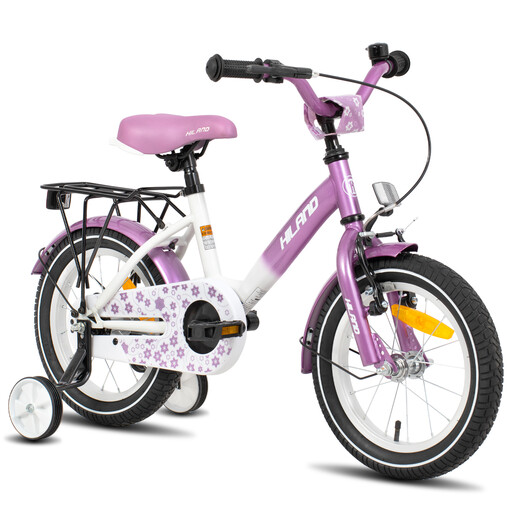
Why it stands out: This model is designed as a complete first bike. It comes with everything a novice rider needs, including training wheels and a basket.
The HILAND Starry combines a sturdy Hi-ten steel frame with a child-friendly design. The low step-through makes getting on and off easy. A key safety feature is the dual braking system: a V-brake at the front and a coaster brake at the rear. According to the manufacturer, the bike arrives 90% pre-assembled, making setup straightforward.
Pros:
Who is it for? Ideal for parents of children between 2 and 4 years old (80-105 cm) who are looking for a safe and complete bike to take their first ride on. Suitable as both a boys' bike and a girls' bike due to its universal design.
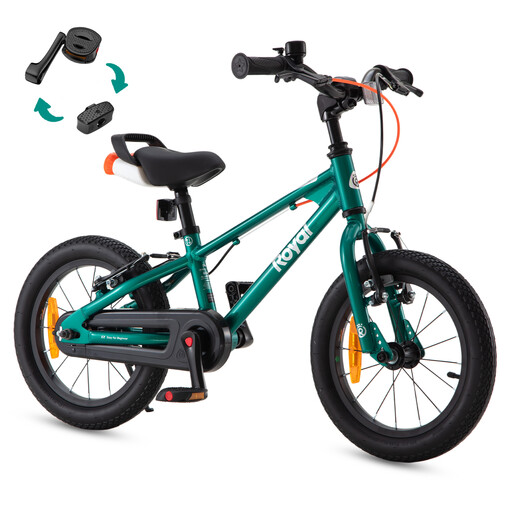
Why it stands out: This bike is distinguished by its innovative 2-in-1 design. According to RoyalBaby, a patented system allows the bike to be converted from a balance bike to a pedal bike without any tools.
The frame is made from a high-quality aluminum alloy, making the bike very light at 7.4 kg. This makes it easier for children to find their balance and control the bike. The bike is equipped with dual hand brakes, which prepares children for larger bikes.
Pros:
Who is it for? Perfect for children from 3 to 5 years old (95-115 cm) who are making the transition from a balance bike to a pedal bike. Its versatility and light weight support the learning process.
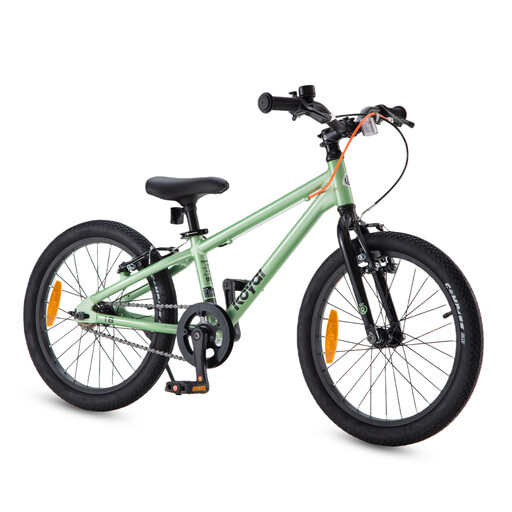
Why it stands out: This bike is built for performance and control. The frame is made from an aerospace-grade aluminum alloy and, according to the manufacturer, weighs only 0.9 kg. The total weight of the bike is exceptionally low at 6.9 kg.
The RoyalBaby Freestyle PRO is aimed at children who can already ride confidently. The sealed bearings ensure smooth and efficient pedaling, while the dual V-brakes provide powerful stopping performance. The all-terrain tires make the bike suitable for various surfaces, from pavement to forest trails.
Pros:
Who is it for? An excellent choice for children from 5 to 9 years old (115-130 cm) who have outgrown their training wheels and are looking for a light, agile bike for daily use and light adventures.
Is your child already an experienced cyclist and ready for more of a challenge? For kids who love to go off-road, a more robust model might be a better choice. Check out our selection of Kids' Mountain Bikes for models designed for adventurous trails.
The most important indicators are your child's height and inseam. Ensure your child can stand with both feet flat on the ground while sitting on the saddle at its lowest setting. The wheel size in inches (e.g., 12, 14, 18 inches) is a good guideline, but always check the manufacturer's specific size chart.
This varies for each child. A good indication is when your child can confidently pedal, steer, and brake with the training wheels on. A balance bike can help develop a sense of balance, which often makes the transition to a bike without training wheels easier.
For the youngest riders, a coaster brake is often more intuitive. Many beginner bikes combine a coaster brake with a hand brake. This is a good combination, as it allows the child to learn to brake in the way that feels easiest while also getting practice with a hand brake. Bikes for older children usually have two hand brakes, just like an adult bike.
