Joybuy Insights

Buying a Kids' Bike: A Practical Guide to Making the Right Choice

Choosing a new kids' bike can be a daunting task. What's the right size? Is a balance bike a better start, or should you go for a bike with training wheels? And what about safety? As a parent or guardian, you want to make a smart, safe choice that a child will genuinely enjoy.

This guide is designed to help you. We'll provide practical tips for buying a kids' bike and highlight several popular models for different ages and needs. This way, you can make an informed decision without getting lost in marketing jargon.

What to Look for in a Kids' Bike?

Before you make a choice, there are a few key points to consider. Paying attention to these will ensure the bike suits the child's development and safety.

1. The Right Size: Inches Matter, Not Age

The most common mistake is buying a bike "to grow into." A bike that's too large is unsafe and awkward, which can frustrate the learning process. The size of a kids' bike is indicated in inches, referring to the wheel diameter. The correct size depends on the child's height and inseam.

A good rule of thumb is that the child should be able to stand with both feet flat on the ground while seated on the saddle (at its lowest setting).

  • 12-inch kids' bike: Usually suitable for children with a height of approximately 85-105 cm.
  • 20-inch kids' bike: Often a good fit for children with a height of about 115-130 cm.

Measure your child's height before choosing a bike. This is more reliable than going by age.

2. The Right Type of Bike for Each Stage

Not every bike is suitable for every age. A child's developmental stage determines which type of bike is the best fit.

  • Balance bike: Ideal for toddlers (from around 2 years old). Without pedals or a chain, a child learns to develop balance and coordination intuitively. This often makes the transition to a pedal bike much easier later on.
  • Bike with training wheels: The classic beginner's bike. It gives a child the confidence to learn how to pedal and steer. Once their balance improves, the training wheels can be removed.
  • Kids' mountain bike / Kids' fat bike: For older, more adventurous children (from around 6-7 years old). These bikes often feature gears, sturdier frames, and wider tires for better grip on unpaved trails.

3. Safety Features

A safe kids' bike is equipped with several essential components:

  • Brakes: A coaster brake is often the easiest for young children to operate. Hand brakes (V-brakes or disc brakes) offer more stopping power and are good preparation for adult bikes. Some models combine both.
  • Chain guard: A fully enclosed chain guard prevents clothing or fingers from getting caught in the chain.
  • Grips: Opt for grips with a flared edge on the outside. This helps prevent hands from slipping off the handlebars.

Recommended Kids’ Bikes

Below is a selection of models that stand out for their specifications and are suitable for different stages of a child's cycling development.
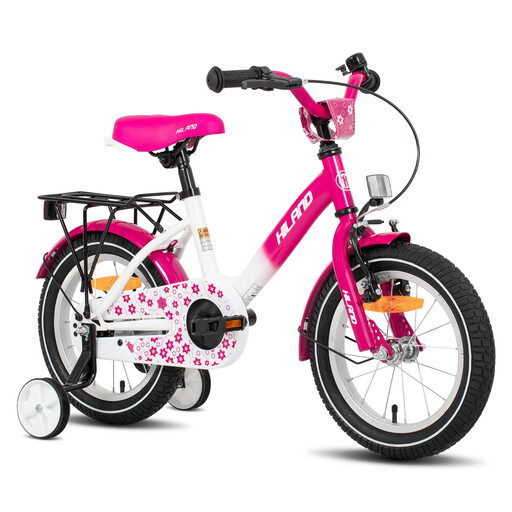
HILAND Starry 12-inch Girls' Bike with Training Wheels

HILAND Starry 12 inch Girls' Bike

  • Why it stands out: This bike combines a cheerful design with thoughtful safety features. The low step-through frame makes getting on and off easy for young children. The dual braking system, with both a front V-brake and a rear coaster brake, provides extra control.
  • Pros:
    • Durable Hi-ten steel frame.
    • Two independent braking systems for added safety.
    • Comes with training wheels, a basket, and an enclosed chain guard.
    • The bike arrives 90% pre-assembled.
  • Who is it for?: For children aged 2 to 4 (height 80-105 cm) who are ready for their first real girls' bike with pedals and training wheels.

Neuleb YFQ 12-inch Balance Bike

Neuleb YFQ 12 inch Balance Bike

  • Why it stands out: This balance bike is designed to build the foundation of cycling skill: balance. The lightweight frame is easy for small children to handle, and the puncture-proof tires give parents one less thing to worry about.
  • Pros:
    • The seat and handlebars are height-adjustable, so the bike grows with your child.
    • Puncture-proof tires suitable for various surfaces.
    • Lightweight, high-quality carbon steel frame.
    • Simple assembly in just a few steps.
  • Who is it for?: For toddlers aged 2 to 6 who want to develop their balance in a fun way. It's an excellent preparation for a kids' bike with pedals.

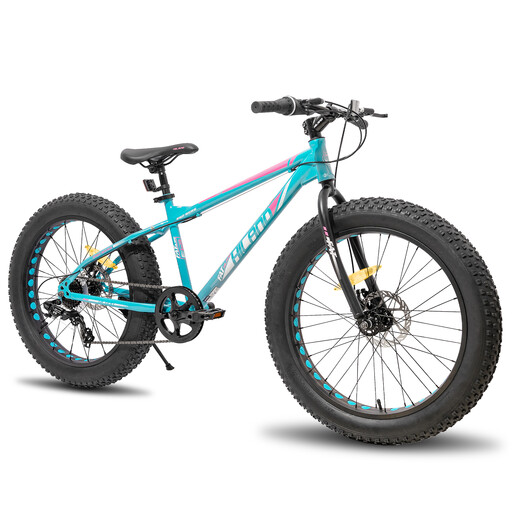
HILAND Roon 20-inch Kids' Mountain Bike

HILAND Roon 20 inch Kids' Mountain Bike

  • Why it stands out: This is a serious kids' mountain bike for adventurous children. The extra-wide 4.0-inch fat tires provide grip and stability on almost any surface, from sand and mud to forest trails.
  • Pros:
    • 7-speed Shimano gears for tackling hills and varied terrain.
    • Dual mechanical disc brakes for powerful and reliable stopping performance.
    • Robust Hi-ten steel frame that absorbs shocks.
    • The rugged look of a real kids' fat bike.
  • Who is it for?: For older children (usually 7+) who have mastered the basics of cycling and are ready for off-road adventures.

Haven't Found What You're Looking For?

The search for the perfect bike is a personal one. Are you specifically looking for a boys' bike or want to compare more models and sizes? Check out our full range.

? Explore more options in the Boys' Bikes category

Frequently Asked Questions about Kids' Bikes

1. What size kids' bike does my child need?

The right size is determined by your child's height, not their age. Measure their height and compare it to the manufacturer's size chart. Make sure your child can touch the ground with their feet when the saddle is at its lowest setting.

2. When is a child ready for a bike without training wheels?

This varies from child to child. A good indicator is when a child can ride confidently, steer and brake well, and has a good sense of balance. Children who started on a balance bike often make this transition faster. Start practicing on a soft surface, like grass.

3. Is a coaster brake or a hand brake better for a kids' bike?

For the youngest riders, a coaster brake is often more intuitive and easier to use. Hand brakes require more coordination and hand strength but offer more stopping power and prepare a child for adult bikes. A bike that combines both systems, like the HILAND Starry, offers the best of both worlds during the learning process.