If you write long passages and want to position your hands independently, compare an adjustable split keyboard with a compact or fixed-shape model that suits your workspace. A compact keyboard can free up desk space, while a split model gives you more freedom to position each half. In a shared office, check how loud the keyboard actually is when typing. None of these designs guarantees that you’ll avoid discomfort: adjust your workspace too, and take breaks from screen work.
Who is this relevant to?
Writers who want to adjust their hand position
If you type long passages and want to position your hands differently, you could compare a genuinely split keyboard with a fixed-shape model. Changing your setup is no guarantee that discomfort will disappear.
Writers working alongside colleagues
If you type for long periods in a shared space, consider how loud the keyboard actually is, as well as its layout and key feel. Kinesis describes the Freestyle2 as quiet, but that doesn’t provide a comparative noise measurement.
Writers at a desk they use for different tasks
If you want to leave room for documents and a mouse, or type at different workstations, consider the keyboard’s size and connection. The Arboportaal recommends setting up your workstation afresh at each location.
What should you look for when buying?
First decide which setup and layout suit your writing. Then consider the key feel, desk space and connection options for your shared workspace.
Adjustable split keyboard
Choose this if: you want to adjust the position of each hand independently while writing long passages.
Bear in mind: two separate halves need desk space and may take some getting used to; there’s no direct noise comparison for the models mentioned.
Compact straight keyboard
Choose this if: you mainly write text and want a more compact workspace, so you can keep your mouse closer.
Bear in mind: the S-board 840 doesn’t have a separate number pad. Check that this suits the way you enter numbers.
Fixed curved keyboard
Choose this if: you want to compare a fixed, shaped layout with two keyboard halves that can be positioned separately.
Bear in mind: the shape is fixed and may feel different from your current layout. Check the connection and layout of the model you choose.
| What to consider |
What should you check? |
Who is this important to? |
| Hand and wrist position |
Compare the space between the halves and the layout, and check whether you can type comfortably. |
When I write long passages, I want to position my hands in a way that suits my working posture. Around 36% of consumers prioritise hand position. |
| Typing noise |
Assess the noise made by the exact model; don’t assume a keyboard is quiet based on its type alone. |
When working alongside colleagues, I want to type without disturbing them unnecessarily, so I consider how loud the keyboard actually is. Around 29% of consumers give typing noise top priority. |
| Desk space |
Check the keyboard’s width, where your mouse will sit and whether you need a separate number pad. |
If I want to keep documents and a mouse close at hand, the space taken up by the keyboard matters. Around 21% of consumers prioritise desk space. |
| Connection and layout |
Check the exact key layout and connection, along with any workplace rules about devices. |
If I work on different computers, I want the connection and layout to suit those devices. Around 14% of consumers give device compatibility top priority. |
Things to watch out for when buying
-
Assuming an ergonomic label guarantees you’ll avoid discomfort
A keyboard’s shape alone doesn’t prove that it will prevent discomfort. Cochrane describes the effectiveness of many ergonomic interventions for office workers as uncertain.
Choose a layout and working posture that you can actually adjust to suit yourself, and vary your tasks. If discomfort starts, speak to your workplace health and safety representative or occupational health doctor if needed.
-
Assuming all compact keyboards are the same
The S-board 840 doesn’t have a separate number pad. Other compact layouts may differ; the word ‘compact’ alone doesn’t tell you which keys are missing.
Check the full key layout and think about where your mouse will go before choosing a model.
-
Assuming a different regional or connection variant is the same model
Product information distinguishes between US-QWERTY, other regional layouts, and wired or wireless versions. The wrong layout or connection may require extra adjustments or an alternative solution.
Before ordering, check the variant name, key markings and connection—not just the brand and model range.
Relevant brands to compare
R-Go Tools
The Split Break is designed for people who want to position two keyboard halves separately. The black wired version described has a US-QWERTY layout.
- R-Go Tools lists a light scissor-key action and a break indicator controlled by R-Go Break software.
- Check that the version and software are suitable for your work computer. Product specifications don’t prove that the model prevents discomfort.
BakkerElkhuizen
The S-board 840 is a compact, wired option without a separate number pad.
- BakkerElkhuizen lists scissor keys, shortcut keys and two USB ports.
- An integrated number field isn’t the same as a separate number pad, so consider how often you enter numbers. Claims about ergonomic benefits aren’t independent proof of health benefits.
Kinesis
The Freestyle2 is an adjustable split model. The international PC version has an ISO layout with country-specific key markings.
- Kinesis describes its membrane keys as quiet.
- Check the layout you choose. The product information cited doesn’t include a comparative noise measurement for a shared Dutch office.
Logitech
The Wave Keys has a fixed wave shape; the ERGO K860 has a different, fixed split-curved shape.
- For the Wave Keys, Logitech lists Bluetooth, a Logi Bolt receiver and Easy-Switch. For the ERGO K860, Logitech lists adjustable feet.
- These features belong to different models and aren’t interchangeable; on their own, they don’t prove any health benefits.
Mousetrapper
The Type Mini is a compact option for a flexible workspace, available in wired and wireless versions.
- Mousetrapper’s Dutch-language specification sheet lists a width of 323 mm.
- Check the connection and layout for each version; the product information doesn’t compare its typing noise with other models.
Joybuy products for writing and flexible workspaces
This selection ranges from compact and foldable keyboards to wireless models for writing at a shared or flexible workspace. For each version, check that the layout and connection suit your computer and the way you work.
 No image available
AULA WIN60HE 60% wired gaming keyboard
The compact 60% layout may suit you if you want to free up desk space; check that the smaller layout works for your writing.
Wired; 60% layout; Hall Effect magnetic switches according to the product name.
View at Joybuy
 No image available
Trust Lyra wireless keyboard and mouse, US English, blue
This keyboard and mouse set may suit you if you want to use both together; check that the US layout matches your preference.
Wireless via RF and Bluetooth according to the product name; US English QWERTY; blue version.
View at Joybuy
 No image available
Voxis B033 foldable Bluetooth mini keyboard with touchpad
The foldable design may suit you if you want to carry a keyboard between workspaces; bear in mind its mini size.
Tri-fold design; Bluetooth; touchpad; designed for tablets, smartphones and computers according to the product name.
View at Joybuy
 No image available
MageGee TS91 60% wired keyboard, US QWERTY, white and black
The 60% layout may suit you if you’re looking for a compact keyboard; check that the US-QWERTY layout works for you.
Wired; US QWERTY; 61 keys; RGB lighting. The product name describes a mechanical feel, not mechanical switches.
View at Joybuy
 No image available
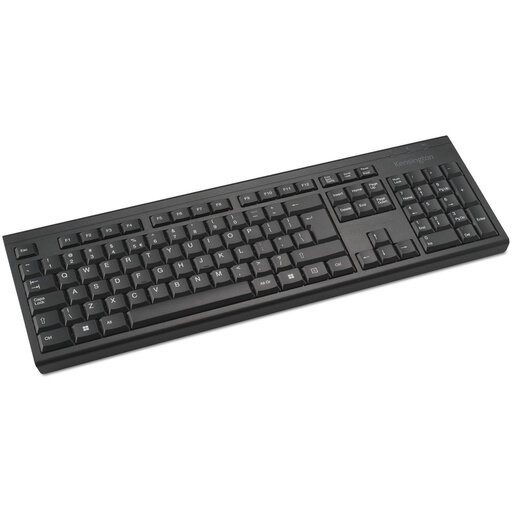
Kensington KB150 EQ wireless keyboard
A wireless model may suit you if you want a keyboard without a fixed cable connection; check that its connection and layout work with your computer.
Wireless keyboard.
View at Joybuy
Frequently asked questions
Does an ergonomic keyboard have to be split?
No. A compact, straight model can free up desk space, while two separate halves give you more freedom to position your hands. Choose a layout you can adjust to suit yourself, and allow time to get used to it.
How should you set up your workspace when working at a different desk?
Set up your workspace afresh at each location and aim for a relaxed posture. The Arboportaal recommends varying your working posture and taking breaks; a different keyboard doesn’t replace the need to do this.
Do you need software for the break indicator on the R-Go Split Break?
According to R-Go Tools, the light is controlled by R-Go Break software. Check whether you’re allowed to use the software on your work computer and whether you can install it; choosing a keyboard shape is a separate decision.
Does the Dutch guidance on screen work recommend a split keyboard?
The Arboportaal guidance doesn’t recommend a split design. For employees who do screen work for more than two hours a day, the Arboportaal states that the screen and keyboard must not be attached to each other. It also recommends alternating screen work with other tasks or taking a break.


