
Instruction writer
You write and edit lots of steps and captions, and want a comfortable, familiar keyboard layout above all.


Start by choosing a layout that feels comfortable to type on and keeps your mouse and frequently used editing keys within easy reach. A compact keyboard can leave more room for working with images; a full-size, split or customisable model may be a better fit if dedicated navigation keys, a different hand position or recurring key functions matter more to you. You add images and captions in your document software, not with the keyboard itself.
You write and edit lots of steps and captions, and want a comfortable, familiar keyboard layout above all.
You switch between text and images and want to keep room for your mouse without losing the keys you need for editing. RTINGS notes that compact keyboards take up less desk space.
You want to be able to position keyboard halves or rearrange your workspace during longer sessions, without associating this with any particular health outcome.
Start with a key layout that suits the way you write and edit. Then consider desk space, hand position and the connection or software you need.
| What to consider | What to look for | Who might find this most important? |
|---|---|---|
| Writing and editing | Compare the key layout, how easy it is to reach the arrow and navigation keys and, where possible, the feel of the exact model variant. | If you write lots of steps and captions, you’ll want to type and edit quickly without having to hunt for familiar keys. Around 36% of consumers prioritise typing comfort. |
| Space for your mouse and images | Check the keyboard’s width and the position of its arrow, function and navigation keys. Also consider how you switch between text and images in your software. | If you often use your mouse to view or edit images, having extra space beside your keyboard may be important. Around 29% of consumers give the most importance to having room for mouse work and images. |
| Hand position | Consider the position of your hands, mouse and screen together, and try an alternative layout if you can. | If you want to adjust your hand position during longer sessions, consider the positioning options and how long it may take to get used to them. Around 21% of consumers prioritise hand position. |
| Connectivity and key functions | Check your operating system, supported connections, the exact key layout and whether the actions you want are available in the software you use. | If you use several devices or want to assign recurring actions to keys, connectivity and customisation options matter. Around 14% of consumers give these features top priority. |
Customising keys and inserting or numbering images are two different things. In Word, you do this using the document software’s features.
Try the action you want in your document software first, then check whether the keyboard software can trigger it.
Setting up keys and learning to use document features can take extra time.
A more compact layout can leave more room for your mouse, but it may change the position or accessibility of the keys you use for navigation and editing.
Compare the exact layout with the keys you need when writing and editing images.
A different keyboard shape is only one part of your workspace and does not prove that it will lead to a particular health outcome for you.
Consider your hand position, mouse space and the rest of your workspace together, and try an alternative layout if you can.
Connections and key layouts can vary between models and variants.
Check the full variant name, the keys shown, the system requirements and the connection included with that variant.
If the connection isn’t suitable, you may need an adapter. A different key layout may also feel different from what you expected.
Worth considering if you’re looking for a full-size keyboard or want to compare a split design.
The KC 6000 SLIM is a slim, full-size keyboard for a dedicated writing space.
The K3 Max ISO collection is designed for anyone looking to explore a compact mechanical layout with customisable keys.
The Split Break v.2 is worth considering if you want to position the two keyboard halves separately.
These Joybuy keyboards are compact options for anyone who wants to keep some desk space free. Check the layout, connection and features you need for each variant.
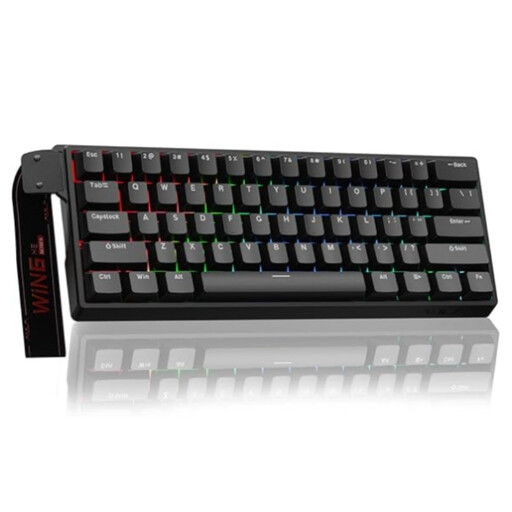 Image unavailable
The 60% layout may suit you if you want to leave room for mouse work beside your keyboard.
Wired, with Hall Effect magnetic switches, RGB lighting and adjustable actuation from 0.01 mm, according to the product name.
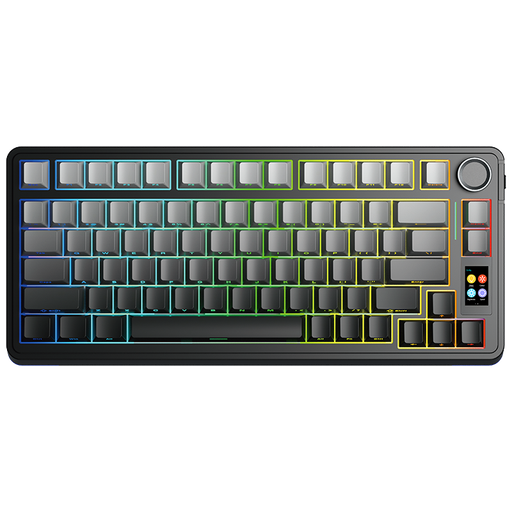 Image unavailable
The 75% layout may suit you if you’re looking for a more compact design. Check first that the changed key positions work for the way you write.
The product name lists tri-mode wireless connectivity, a TFT display and hot-swappable switches.
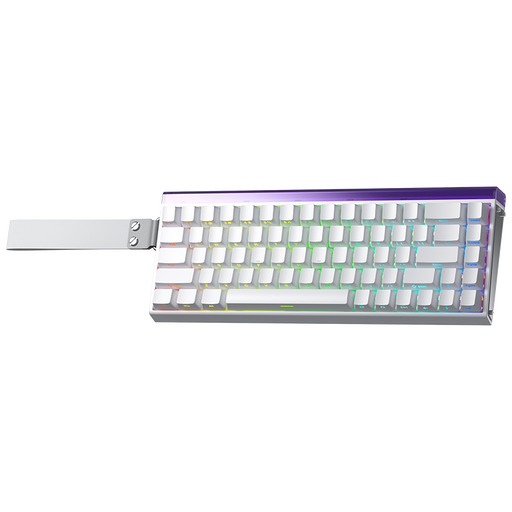 Image unavailable
A compact layout can leave more room beside your keyboard, but check carefully that the US key layout suits what you use every day.
The product name lists a wired connection, RGB lighting and Hall Effect magnetic switches.
 Image unavailable
The 75% layout may suit you if you’re looking for a compact design that still leaves room for mouse work on your desk.
The product name lists tri-mode connectivity, US QWERTY, an 8000 mAh battery and hot-swappable mechanical switches.
 Image unavailable
A 75% layout can leave more room for your mouse. Check that the layout and wired connection work for your workspace.
The product name lists 82 keys, magnetic switches, adjustable actuation from 0.1 mm and RGB lighting.
No, you do that in your document software. In Word, choose a location for a photo using Insert and Picture. Word also has a feature for image captions. For other software, check which actions and keyboard shortcuts it supports.
Position the halves of a model designed for this purpose at a distance that works for you, while also checking that your mouse and screen are easy to reach and see. The R-Go Split Break v.2 manual confirms that its two parts can be positioned separately. The right setup varies from person to person.
For a typical online consumer purchase, ACM ConsuWijzer says you generally have up to 14 days from delivery to change your mind, subject to legal exceptions. Products must also meet the required standards. If there’s a fault the seller is responsible for, they must offer an appropriate solution.
Not every user does. Arboportaal states that, for employees who work at a screen for more than 2 hours a day, the screen and keyboard must not be attached to each other. In that situation, laptop users must be able to use a separate screen or keyboard. This requirement does not necessarily apply to every reader.