For a verse novel, choose a keyboard based on what interrupts your work most: switching between your text and section outline, long typing sessions, noise in a shared space or working in different places. Programmable keys can simplify recurring tasks, but your writing software manages the outline. So check that the shortcuts, layout and connectivity suit your software and workspace too.
Who is this keyboard advice for?
Writer who regularly rearranges sections
You write in verse and often navigate between chapters or sections. Easily accessible shortcuts and, where available, customisable keys can help; your writing software manages the outline itself. Literature & Latte explains how Scrivener lets you switch between the outline and the project structure.
Writer with long typing sessions
You’re looking for a key shape and workspace set-up that suits extended typing. A wrist rest or contoured shape doesn’t guarantee that you’ll avoid discomfort: varying your posture and taking breaks still matter, as Arboportaal advises.
Writer who works in different places
You work in more than one place or on more than one device, weighing portability, connectivity and a familiar keyboard layout against each other. Check which connection and layout you actually need for each model.
What should you consider when choosing?
Programmable controls
Best for: frequently switching between your manuscript and section outline, and assigning shortcuts to repeated tasks.
Trade-off: you’ll need to configure the keys and check that the command you want works in your writing software; a macro won’t create an outline for you.
Contoured keyboard with wrist rest
Best for: making typing posture and keyboard shape your main considerations for long sessions.
Trade-off: the shape needs to suit your hands and set-up, and it’s no substitute for changing position or taking breaks.
Flat wired keyboard
Best for: writing at a fixed Windows workstation and wanting a wired keyboard with scissor-switch keys.
Trade-off: check that USB-A, the full-size layout and the keyboard’s width suit your computer and desk.
Compact mechanical keyboard
Best for: a more compact layout and the option to configure the keys or controls yourself.
Trade-off: the layout and switch feel may take some getting used to; hot-swap is only available on the specified Keychron K3 Max version.
| What to consider |
What should you check? |
Who is this important for? |
| Switching between text and outline |
Try the shortcuts in your own writing software and check whether you can customise the keys for your operating system. |
If you often rearrange sections while writing, you’ll want quick access to the right command. Around 36% of consumers give this switching the highest priority. |
| Typing posture during long sessions |
Consider key shape, height, posture and available space together; try out the shape if you can. |
During long writing sessions, the position of your hands and arms may matter more than extra features. Around 29% of consumers put typing posture first. |
| Key noise |
Try the exact model and switch version; don’t judge the noise level by the type of mechanism alone. |
If you write in a shared space, you’ll want to know how the keys sound there. Around 21% of consumers make noise their top priority when choosing. |
| Portability and connectivity |
Check the physical layout, connections and keys you use for text and outlines on each device. |
If you switch between workspaces or devices, size and connectivity are key. Around 14% of consumers prioritise portability and switching between devices. |
Common mistakes when choosing
-
Confusing an outline feature with a keyboard feature
Your writing software manages your sections and their order. At most, programmable keys can send an input or shortcut.
First, check whether your software has the outline commands and shortcuts you need. Then decide whether customisable keys would be useful.
Configuring keys can take extra time; also check whether you already use the writing software you need.
-
Buying based on a brand or series name without checking the version
The CHERRY KC 6000 SLIM is available with different country layouts. For the Keychron K3 Max, hot-swap is only available on the specific RGB hot-swappable version.
Before buying, check the full model name, physical layout, connection and switch type.
-
Assuming a comfortable shape will prevent discomfort
Arboportaal notes that working at a screen can involve repetitive hand movements and static strain. A keyboard’s shape alone won’t remove that strain.
Consider the keyboard alongside your workspace set-up and working habits. Change your posture while working at a screen, look away regularly and take micro-breaks, as Arboportaal advises.
Brands worth considering
Logitech
The models mentioned here take different approaches: customisable typing tasks with MX Keys S, or a contoured shape with Wave Keys.
- Logitech describes the MX Keys S as having programmable keys and Smart Actions; according to Logitech, the Wave Keys has a contoured shape and wrist rest.
- These product features don’t prove a writing benefit or protect against discomfort. Check that the settings and key shape suit the way you work.
CHERRY
The KC 6000 SLIM is a flat, wired scissor-switch keyboard for a fixed Windows workstation.
- The product specifications list USB-A, a full-size layout and scissor-switch keys.
- According to the specifications, the model has no backlighting. CHERRY lists several country layouts, so check the version you choose.
Keychron
The K3 Max is a compact mechanical option for anyone who wants to configure the controls and keys themselves.
- Keychron describes a 75% layout, several connection options and configuration through Launcher.
- According to Keychron, hot-swap is only available on the specified RGB hot-swappable version. Check the exact variant and layout too.
Keyboards at Joybuy
These Joybuy products are suited to programmable controls, typing in a shared space, a more compact layout or working in different places. Check that the listed layout and connection suit your equipment for each model.
 No image available
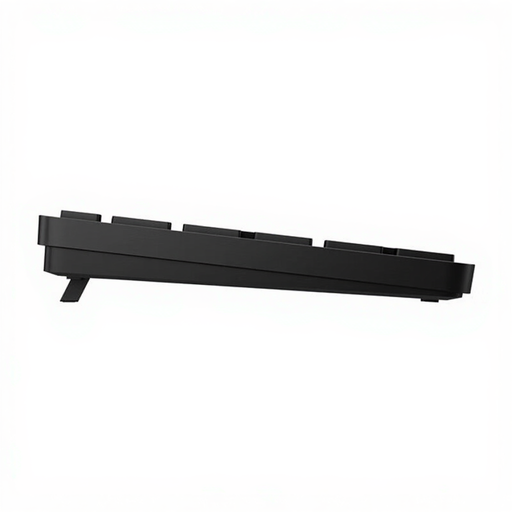
HP 450 Programmable Wireless Keyboard
An option to consider if you want to assign supported, recurring tasks to keys; your writing software still manages the outline.
The product description lists programmable shortcuts through HP Accessory Center, a USB receiver and feet that adjust up to 6 degrees.
Joybuy
 No image available
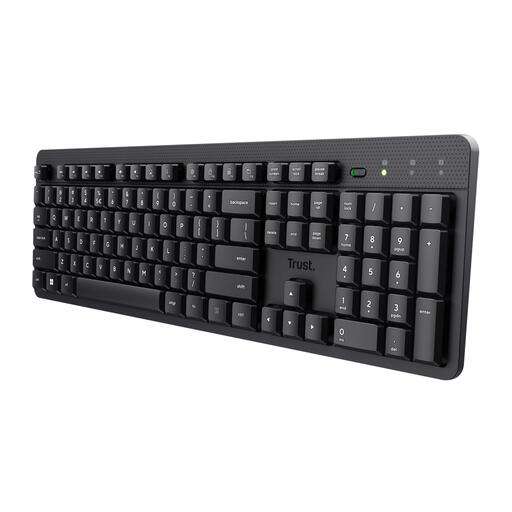
Trust Ody II Wireless Keyboard, US QWERTY
An option to consider if you type in a shared space and want a full-size keyboard with a number pad.
The product description lists membrane keys, a soft, virtually silent keystroke, a number pad and a wireless USB receiver. The listed layout is US QWERTY.
Joybuy
 No image available
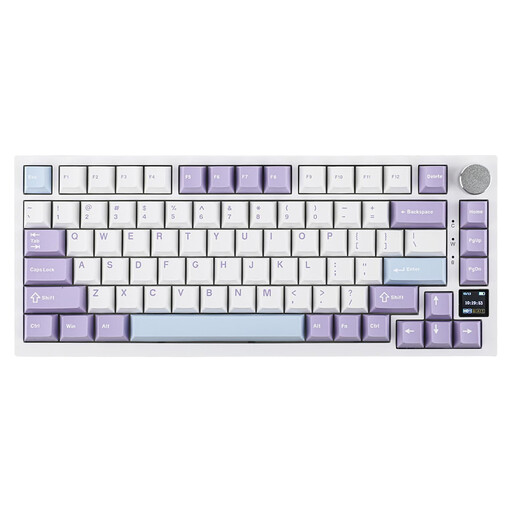
Ajazz AK820 Pro 75% Mechanical Keyboard, US QWERTY
A compact option to consider if you want to save desk space while keeping navigation and function keys.
The product description lists an 82-key layout, Bluetooth, 2.4GHz and USB-C. The listed layout is US QWERTY; check that it suits the way you work.
Joybuy
 No image available
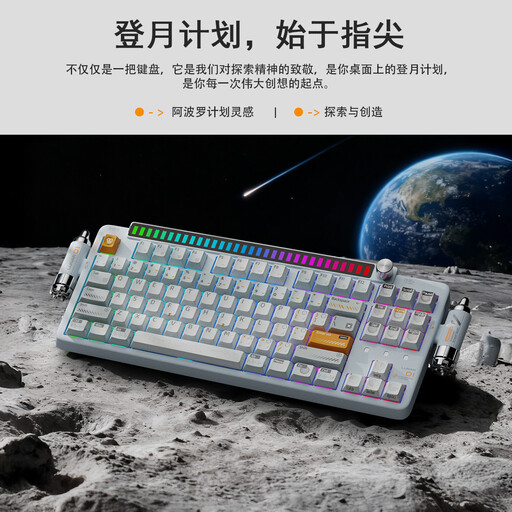
KEYSME Lunar 01 80% Tri-Mode Mechanical Keyboard, US QWERTY
An option if you want a more compact layout alongside customisable controls for recurring tasks.
The product description lists a programmable knob, hot-swap switches, and Bluetooth, 2.4GHz and wired USB-C connectivity. The listed layout is US QWERTY.
Joybuy
 No image available
Voxis B033 Tri-Fold Wireless Keyboard with Touchpad
A portable option to consider if you switch between workspaces and want to take a keyboard with touchpad with you.
The product description lists Bluetooth, a foldable design and intended use with tablets, smartphones and computers. Compatibility depends on the device you use.
Joybuy
Frequently asked questions
Can a programmable keyboard create section outlines by itself?
No. Your writing software manages the sections and outline; the keyboard sends input or a configured shortcut. According to Literature & Latte, in Scrivener you can open Outline view with Command-3 on Mac and Ctrl+3 on Windows. Check the commands for the software you use.
How can I use a keyboard more sensibly during long writing sessions?
Vary your posture, look away from the screen regularly and take micro-breaks. Arboportaal recommends this for screen work; a different keyboard shape is no substitute for these habits or a suitable workspace set-up.
What are my rights when I buy a keyboard online or if it develops a fault?
For many consumer purchases made at a distance, you have a 14-day cooling-off period; check the terms that apply to your specific purchase. According to the Dutch government, you’re also entitled to a product that works properly, and the seller is your point of contact if there’s a problem.
Am I legally required to use a separate keyboard when writing on a laptop?
Not if you’re writing for personal use. Arboportaal explains that for employees who work at a screen for more than 2 hours a day, the screen and keyboard must not be attached to each other; when using a laptop, it must be possible to use a separate screen or keyboard. This workplace rule doesn’t automatically apply to personal use.


