
Writer with long typing sessions
You write and revise a lot, and want to choose a key feel and layout that are comfortable. Change your posture and take microbreaks too; Arboportaal recommends this approach for working with screens.


Start with a key layout and feel that make writing and editing comfortable; you don’t need a keyboard with a dedicated synopsis feature. Choose a more compact model if desk space is limited or you want to keep your mouse closer, a quieter one if you share your space, or a split keyboard if you want to position the two halves separately. Check the connection and exact key layout. No keyboard is a substitute for a properly set up workspace and regular breaks.
You write and revise a lot, and want to choose a key feel and layout that are comfortable. Change your posture and take microbreaks too; Arboportaal recommends this approach for working with screens.
You want room on your desk for notes or to position your mouse closer. If you rarely enter numbers, a model without a fixed numeric keypad could free up space.
You want to be considerate of others in the room or write on different devices. If so, check how the key feel and connection are described for the exact model.
| What to consider | What should you check? | Who should pay particular attention? |
|---|---|---|
| Key feel and layout | Compare the key types and check the physical layout, including Enter, Shift and the characters you use often. | If I write and edit a lot, I want a key feel and layout that suit the way I type. Around 36% of consumers prioritise key feel and layout. |
| Desk space and hand position | Consider whether you need a numeric keypad and whether you want to position a straight or split keyboard. TNO notes that a narrower keyboard can be an option for keeping the mouse closer to your body. | If my desk also needs space for notes or a mouse, a compact model is worth considering. If I want to position the halves separately, a split model is another option. Around 29% of consumers prioritise space or hand position. |
| Key noise | Check how the manufacturer describes the key feel, but don’t treat ‘quiet’ as a like-for-like noise measurement. | In a shared home workspace, I want to be considerate of others while typing. Around 21% of consumers prioritise low key noise. |
| Connection and devices | Check that your computer has a suitable connection and whether you need a cable, USB receiver or the ability to switch between devices. | If I write on several devices, switching between them may be useful; on one dedicated computer, that feature may be unnecessary. Around 14% of consumers prioritise connection or switching between devices. |
A TKL model leaves out the fixed numeric keypad. A full-size model could take up space you’d rather use for your mouse or notes.
Compare how often you enter numbers with the desk space available before choosing a size.
The layout can affect how much space is left beside your keyboard.
The Trust Ody II is described as using a USB receiver. You’ll need a suitable, available port on your computer for the receiver.
Check the connection on the exact model and the ports on the computer you use for writing.
Bear in mind which port the receiver uses and check that it’s available in your setup.
You can position the two halves separately, but that doesn’t prove the model will prevent discomfort for every user. It may also take time to get used to the different position.
Consider your whole workspace and take breaks. If you’re starting to experience discomfort, consider seeking appropriate professional advice.
The physical layout can differ around keys such as Enter and Shift, even when the variant is described as QWERTY.
Check the product image and variant name, especially if you use punctuation or keyboard shortcuts often.
An unfamiliar physical layout may take some getting used to for your usual punctuation and keyboard shortcuts.
The wired STREAM range includes a full-size keyboard and a TKL model without a numeric keypad.
The MX Keys S is worth considering if you’re looking for backlighting and the ability to switch between devices you write on.
The Ody II is a standard wireless keyboard with a USB receiver.
The Split Break has two keyboard halves that can be positioned separately.
This selection includes wired and wireless keyboards for a dedicated writing space, including compact models without a full numeric keypad.
 No image available
A wired model to consider if your keyboard stays in one place on your desk.
The product name lists a metal case, phone stand and wrist rest.
 No image available
The compact layout may suit you if you want to keep desk space free while writing.
68 keys; wired; US layout. Check that the physical layout suits the characters you usually use.
 No image available
A wireless option to consider if you want to switch between devices while writing.
The product name describes a rechargeable model for multiple devices.
 No image available
The wired connection may suit a dedicated writing space where you don’t need a wireless connection.
82 keys; magnetic switches.
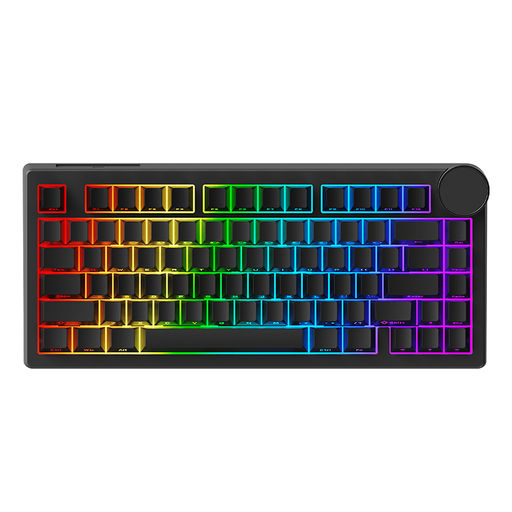 No image available
The compact layout is worth considering if you want to keep desk space free while writing.
75% layout; wired; magnetic switches.
Not if you mainly write running text and enter few numbers. A TKL model leaves out the fixed numeric keypad; choose a full-size model if you use that keypad often.
Use a separate keyboard so you can position the screen and keyboard independently, and adjust your workspace to suit you. For employees who work with screens for more than two hours a day, Arboportaal describes requirements for a screen and keyboard that aren’t attached to each other; this isn’t a general legal purchase requirement for every writer using a computer at home.
No. A keyboard on its own isn’t a substitute for good posture and regular breaks. Arboportaal recommends alternating screen-based tasks, changing your posture and taking microbreaks. Employees who are starting to experience discomfort can contact their occupational physician and, if necessary, discuss a workplace assessment.
When you buy from a business online, you generally have 14 days to change your mind, although exceptions may apply. You’re also entitled to a product that is fit for purpose; there is no fixed statutory warranty period in the Netherlands. If there’s a fault, the seller must provide a solution.