
Writer of long chapters
You type lots of continuous text and are mainly concerned with key feel, keyboard layout and a workspace that supports long writing sessions.


Start with a layout and key feel that suit long writing sessions. Then consider extra features such as quiet keys, a compact size or programmable keys. A keyboard doesn’t track changes itself: your word processor does that, and the shortcuts available may depend on your keyboard layout and operating system.
You type lots of continuous text and are mainly concerned with key feel, keyboard layout and a workspace that supports long writing sessions.
You review changes in a word processor and want keys and shortcuts that suit the software and operating system you use.
You may be looking for a quieter typing experience or a keyboard that’s easy to move between workspaces.
Best for: typing long chapters on a familiar layout. CHERRY describes the STREAM as having scissor-switch keys, while Trust describes the Ody II as a model with quiet, low-profile keys.
Trade-off: a keyboard with a more spacious layout takes up more desk space; noise levels and key feel vary by model.
Best for: repeated revision tasks where you want to customise keys. Logitech lists programmable keys and Smart Actions for the MX Keys S.
Trade-off: check whether you can assign the desired command to a key in your word processor and software setup; programmable keys won’t automatically carry out every revision task.
Best for: anyone wanting to save desk space while still being able to customise keys. Keychron lists a 75% layout and key customisation options for the K3 Max.
Trade-off: check the exact layout and switch variant; the 75% layout doesn’t include a built-in number pad.
Best for: anyone who wants to take hand and arm positioning into account when setting up their workspace. Microsoft describes the Microsoft Ergonomic Keyboard as a split, curved model.
Trade-off: this particular model is wired, and Microsoft lists Windows 10 or 11 as a requirement. A different keyboard shape is no substitute for setting up your workspace properly and changing your posture regularly.
| What to consider | What to look for | Who is this important for? |
|---|---|---|
| Comfort when writing for long periods | Consider key feel, layout and your posture together; change position when needed. | When writing long chapters, I want a key feel and layout that are comfortable at my desk. Around 36% of consumers give long-term typing comfort top priority. |
| Revision controls | Check the shortcuts for your word processor and operating system. Microsoft Support notes that Word shortcuts can vary by keyboard layout. | When reviewing changes, I want to use revision commands quickly in the software I work with. Around 29% of consumers prioritise useful revision controls. |
| Quiet typing | Check the key type and, where possible, try the key feel and sound of the exact model. | In a shared space, I want to be considerate of others while writing. An estimated 21% of consumers place the greatest importance on a quiet workspace. |
| Size and connection | Check the layout, available desk space and whether your computer supports the connection. | At a small or shared workspace, I want to know whether the size and connection are practical. Around 14% of consumers mainly choose based on desk space or connection type. |
The commands available depend on your word processor, operating system and any companion software.
Before buying, check whether you can assign the revision tasks you use most often to keys.
Allow time to configure the settings and check they work with your own software.
Products in the same Ody II range may be a standalone keyboard or a bundle with a mouse.
Compare the full model name and check what’s included with the version you’ve chosen.
A bundle may also include a mouse you don’t need.
Keyboard shape alone doesn’t determine your overall posture; screen and desk position and changing your posture also matter.
Assess your whole workspace and check that the different keyboard layout works for you.
The models mentioned range from the straightforward wired K120 to the MX Keys S with customisable functions.
The wired STREAM is an option if you’re looking for a low-profile feel with scissor switches.
The Ody II, model 25011, is a wireless option for a workspace you share or move between.
The K3 Max is worth considering if you’re looking for a compact mechanical layout and key customisation.
The Microsoft Ergonomic Keyboard has a split design for anyone who wants to take hand and arm positioning into account.
These keyboards are suited to writing, editing documents and a range of desk or mobile setups.
 No image available
A foldable option for anyone who moves between workspaces or types on several devices.
Bluetooth pairing with up to three devices; the description lists compatibility with Windows.
Rechargeable, with a magnetic stand and scissor-switch keys, according to the product description.
 No image available
A full-size option for anyone who enters a lot of text and wants a fixed wired connection.
The product information lists a number pad, navigation keys and plug-and-play functionality via a wired connection.
 No image available
A full-size model for anyone looking for a number pad and customisable commands.
The product information lists 108 keys and hot-swappable switches; the layout is described as US.
Bluetooth, 2.4 GHz and USB-C are listed. For macros, the product information specifies a dedicated driver; check that it works with your software.
 No image available
A wired option for anyone who types for long periods and is considering a model with a wrist rest.
The product information lists a metal case, a detachable wrist rest and a wired connection.
 No image available
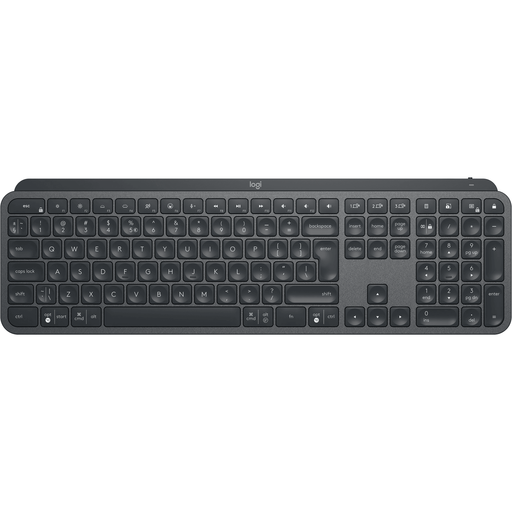
A wireless option for anyone who wants to customise keys or switch between several computers.
The product information lists a full-size design and Easy-Switch for up to three devices.
Key customisation via Logi Options+ is mentioned; check that the software works with your computer and the commands you want to use.
No. Changes are tracked and reviewed in your word processor. In Word, these features are under Review; check which shortcuts are available for your application and operating system.
First, check the connection used by the model you’ve chosen: the Logitech K120 uses USB, while the Trust Ody II has a USB receiver. For a wireless model, also consider its power supply and follow the product’s care instructions.
For an employee who works at a screen for more than 2 hours a day, Arboportaal states that the screen and keyboard must not be attached to each other. When working on a laptop, it must be possible to use a separate screen or keyboard; this requirement doesn’t apply to every individual buyer.
According to ACM ConsuWijzer, online consumer purchases generally come with a cooling-off period of up to 14 days after delivery. This is separate from your right to a product that meets the standards you can reasonably expect under normal use: if a product is faulty, the seller is responsible for providing an appropriate remedy free of charge.