
Writer of long guides
You write long pieces and want to keep typing comfortably. Tailor your workstation and breaks to the way you work; Arboportaal describes screen-based work as involving repeated movements of the fingers and hands.


Choose a keyboard with a layout and connection that suit your computer and word processor. For nested headings, use your word processor’s heading styles and document features rather than a specialist keyboard. Programmable keys can be useful if you often carry out the same tasks, but check that the software you need is compatible with your system. For long writing sessions or work in a shared space, key feel, noise levels and your workstation setup may matter more than extra features.
You write long pieces and want to keep typing comfortably. Tailor your workstation and breaks to the way you work; Arboportaal describes screen-based work as involving repeated movements of the fingers and hands.
You regularly move sections around and want to navigate quickly between main headings and subheadings. In Word, headings appear in the Navigation pane when you use heading styles, according to Microsoft Support.
You want to be considerate of others and may need to switch between a computer and a tablet. Consider key noise, connectivity and layout as separate purchasing factors.
First, check that the layout, connection and software are compatible with your devices. Then decide which factor matters most for your writing: document navigation, comfort during long sessions, a quieter workspace or switching between devices.
| What to consider | What to look for | Who is this important for? |
|---|---|---|
| Headings and workflow | First, check your word processor’s heading styles and keyboard shortcuts. Then see whether the keyboard lets you reprogramme keys on your system. | If you often move headings around, you’ll want to navigate the structure quickly; around 33% of consumers make headings and workflow their top priority. |
| Typing comfort | Compare the keyboard’s height, dimensions and key feel, and consider it alongside your workstation setup and the variety of tasks you do. | For long writing sessions, you’ll want key feel and a setup that suit the way you type; around 27% of consumers put typing comfort first. |
| Noise in the workspace | Check the exact version and type of key mechanism. A product description such as ‘quiet’ is not a comparable noise measurement. | If you work in the same room as other people, keyboard noise could be a deciding factor; around 20% of consumers prioritise a quieter workspace. |
| Connection and layout | Check the connection, supported systems and physical key layout. According to Microsoft Support, commonly used Word keyboard shortcuts are based on a US keyboard layout. | If you switch between devices or often use particular characters, you’ll want to know whether the connection and key positions suit your needs; around 20% of consumers make connection and layout their top priority. |
Extra keys don’t create a hierarchy of main headings and subheadings by themselves. In Word, applied heading styles provide the structure for navigation and a table of contents.
First, test how your word processor handles heading styles, keyboard shortcuts and navigation. Only then compare which extra keys you can configure and whether the associated software works on your system.
A product range may include different layouts or bundles. For example, Trust sells an Ody II keyboard and a keyboard-and-mouse set; the name alone doesn’t tell you which version you’re looking at.
Check the full model name, what’s included in the bundle, the physical layout and the connection on the product detail page.
A different keyboard layout doesn’t replace an assessment of your posture, workstation and working habits. Trust’s product positioning is not proof that one model prevents discomfort.
Consider your setup as a whole and check whether you can get used to the layout comfortably. Don’t expect one keyboard to solve every aspect of your workspace.
The MX Keys S is worth comparing if you’re looking for a full-size keyboard with configurable keys and the option to switch between devices.
The KC 6000 SLIM is a slim, full-size keyboard with a scissor mechanism, designed for a fixed workstation.
The Ody II and Keyra have different layouts: a straight keyboard that Trust describes as quiet, and a split model.
The Surface Keyboard (2nd edition) is a Bluetooth option with Windows-focused keys and a number pad.
These compact or mechanical keyboards are designed for text input and offer different layouts, connections and key customisation options.
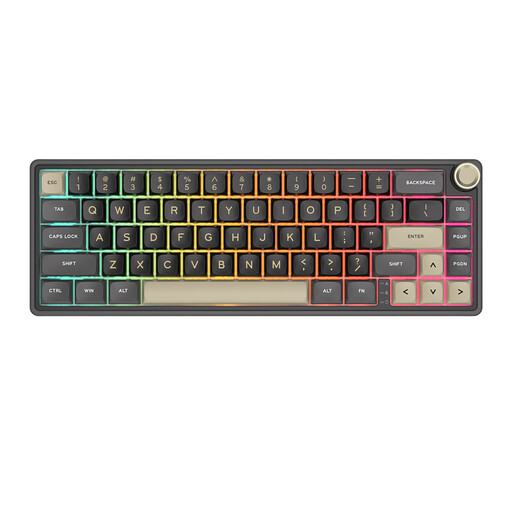 No image available
A compact layout to consider if you have limited desk space and want to configure programmable keys.
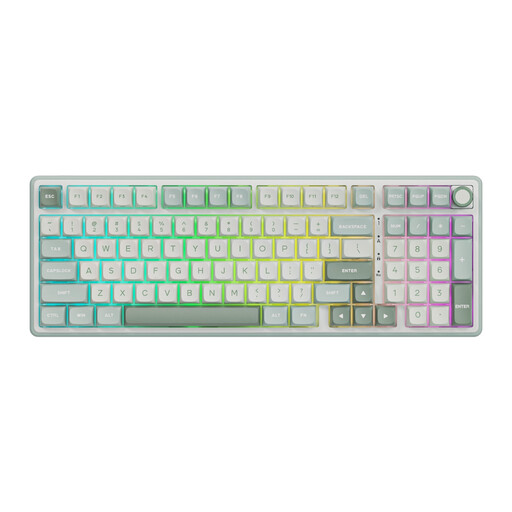 No image available
Worth considering if you’d like a number pad for writing and other tasks.
 No image available
Worth comparing if you want a number pad alongside a choice of connection options.
 No image available
A more compact layout with navigation keys to compare if you want to use less desk space.
 No image available
A compact wired option to consider if you’re looking for adjustable actuation points.
No. In Word, you create headings using heading styles. In Word for Windows, you can then view those headings in the Navigation pane and move sections of your document. For other word processors, check their own features and keyboard shortcuts.
Compare the connection and supported systems for the exact version with your computer. Microsoft Support says that its published Word keyboard shortcuts are based on a US layout, so also check the characters and key positions you use often.
Consider the keyboard as part of your entire workstation and take breaks from screen-based work. Arboportaal outlines specific employer obligations for employees: under the regulations cited, if you work at a screen for more than two hours a day, the screen and keyboard must not be attached to each other. This isn’t a universal purchasing requirement for every individual writer.
No. ACM ConsuWijzer explains that statutory guarantees for consumer purchases apply alongside any manufacturer’s or seller’s warranty. If a product breaks sooner than you could reasonably expect under normal use, contact the seller. In the Netherlands, there is no fixed statutory two-year guarantee period for every keyboard.