
Travellers who type their answers
If you want to enter words yourself rather than just read or tap through flashcards, first check that your learning app supports this on your device. AnkiMobile describes typed answers for certain cards.


If you mainly read or review flashcards by tapping, try doing that without an extra keyboard first. A physical keyboard is most useful when you want to type answers and your learning app supports it. AnkiMobile describes typed answers for certain cards, but that doesn’t confirm how other apps work. Then choose based on your device, how much room you have in your bag and where you can place the keyboard during your journey.
If you want to enter words yourself rather than just read or tap through flashcards, first check that your learning app supports this on your device. AnkiMobile describes typed answers for certain cards.
If you’re taking a phone or tablet and have little room to spare, a compact or foldable keyboard may be worth considering. Compare its dimensions when open, too: ProtoArc lists the XK01 as 119,70 mm when folded and 386,39 mm when unfolded.
If you alternate between studying on a phone and a tablet, check how many devices a keyboard can connect to. Logitech lists this feature for the Pebble Keys 2 K380s, while Trust and Samsung also describe models that connect to multiple devices.
Choose this if: you mainly read or review flashcards by tapping and want to see how that works on a train journey first.
The trade-off: you don’t have anything extra to carry, but typing on a touchscreen may be less comfortable.
Choose this if: you type answers and want a keyboard that packs away neatly.
The trade-off: check not only how much room it takes up in your bag, but also whether there’s enough space for it when open.
Choose this if: you want to switch between devices and can carry a one-piece keyboard.
The trade-off: models vary in design and layout, so check which one suits your device and how you travel.
Choose this if: you have an iPad that’s compatible with that specific keyboard model.
The trade-off: compatibility isn’t guaranteed with other iPads, phones or tablets.
| What to consider | What to look for when buying | Who is this important for? |
|---|---|---|
| Space in your bag and when using it | Compare the dimensions when folded and unfolded, and think about where you can place the keyboard and your screen. | If I have little room in my bag but also need somewhere to put the keyboard while studying, a foldable model may be worth considering. Around 33% of consumers say storage space is their main consideration. |
| Typing on your own device | Check your device and the keyboard layout, and make sure the input fields or keys you need work in your learning app. | If you want to type answers, a keyboard is most useful when your app and device support that input. Around 27% of consumers say compatibility is their top priority. |
| Key noise in shared spaces | Think about the area you’re travelling in. A manufacturer’s description such as ‘quiet’ isn’t a measure of how noisy the keyboard will be in a train carriage. | If I’m studying in a shared train space, I want to be considerate of other passengers and my surroundings. Around 20% of consumers are most concerned about potential noise. |
| Power and accessories | Check the battery type or charging method, and whether you’ll need a separate stand for your device. | If you want to avoid surprises with power or extra accessories while travelling, compare these details in advance. Around 20% of consumers place the most importance on power and additional purchases. |
A foldable keyboard can be considerably wider when open. ProtoArc lists the XK01 as 119,70 mm wide when folded and 386,39 mm when unfolded.
Compare both sets of dimensions and think about where you can place the keyboard and your screen during the journey.
A connection doesn’t automatically mean that the input fields or shortcuts you want will work in your learning app. For example, shortcuts in the Anki desktop documentation don’t confirm that the same controls are available in every mobile app.
Test how you enter, reveal and review answers with your own device and learning app.
The model name alone doesn’t always tell you which keyboard layout or variant you’ll receive.
Before buying, check the full product specification, keyboard layout and current product details.
The Pebble Keys 2 K380s and Keys-To-Go 2 are compact Bluetooth options for use with devices including phones and tablets.
The Lyra Compact is a fixed keyboard for anyone who wants to switch between a phone, tablet and computer.
The XK01 is a foldable option for anyone who wants a keyboard that’s easy to pack away.
The Smart Keyboard Trio 500 is a compact, non-foldable model for use with paired devices.
The Magic Keyboard Folio is designed for specific iPad models and creates a connected setup.
This selection includes a foldable Bluetooth keyboard, iPad keyboards made for specific models and a full-size wireless keyboard. Before buying, check that the exact version is compatible with your device and learning app, has the keyboard layout you want and fits in the space available.
 No image available
This foldable design may suit anyone who wants to carry a keyboard compactly; check its dimensions and compatibility with your device and learning app.
The product name specifies Bluetooth, a tri-fold design and a touchpad.
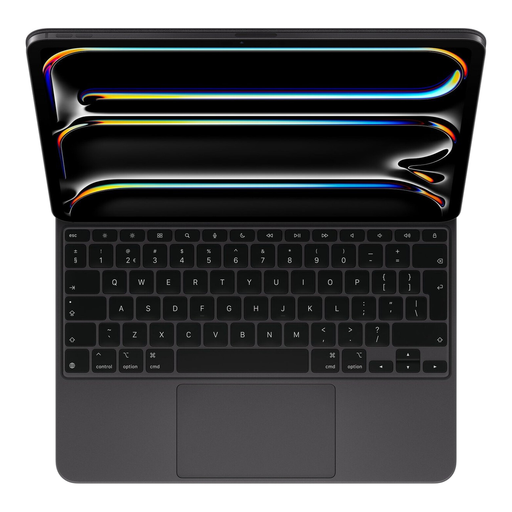 No image available
This model is designed for use with a compatible iPad Pro; check your exact iPad model before ordering.
The product name specifies iPad Pro 13-inch (M4). Compatibility is device-specific, not universal across phones and tablets.
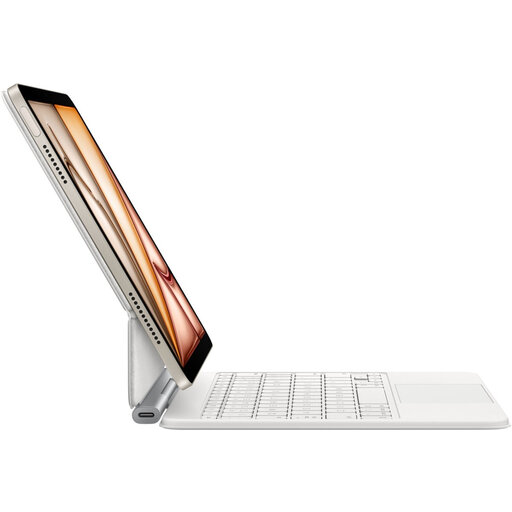 No image available
This version is designed for use with a compatible iPad Air; check your iPad generation and keyboard layout.
The product name specifies iPad Air 11-inch M3 and a Dutch layout.
 No image available
This model is designed for a compatible iPad Air; check that both the tablet and keyboard layout suit your needs.
The product name specifies iPad Air 13-inch M3 and US English.
 No image available
A full-size keyboard may be a good fit if you have enough space while travelling; bear in mind its size when packing or setting it up.
The product name specifies a number pad, scissor keys and a US QWERTY layout. Check the layout before buying.
No, not if you mainly read or tap answer buttons. AnkiMobile describes a keyboard input field for cards where you need to type an answer; try it out to see whether a physical keyboard suits your learning app and study routine.
Don’t assume they will. The Anki desktop manual describes using the space bar and Enter while reviewing, for example, but doesn’t confirm that the same controls work in every mobile app and on every device. Test the actions you want to use before buying.
With a Bluetooth model, switch on pairing mode and follow the instructions on your device. Samsung says that with the Trio 500 you then enter a six-digit code; also check the battery type or charge level for your own model.
Be considerate of the quiet carriage and the people around you. NS describes the quiet carriage as a place without disruptive noise; a manufacturer’s description such as ‘quiet keys’ doesn’t guarantee that other passengers won’t hear you typing.