Start with a typing feel that suits a shared workspace and a layout that gives you easy access to the symbols, arrow keys and function keys you need for test code. A low-profile office keyboard, a compact or split keyboard, and an adjustable mechanical model each involve different trade-offs. So check the exact layout and how noisy the version you’re considering is. Manufacturers’ claims about quietness aren’t directly comparable sound measurements.
Who is this relevant to?
Developers working alongside colleagues
If you write a lot of test code close to other people, it’s worth considering the typing feel and keyboard layout before choosing a keyboard. RTINGS.com also highlights the importance of dedicated arrow keys, a function row and a numeric keypad for programming keyboards.
Developers who use lots of keyboard shortcuts
If you regularly use arrow keys, function keys, symbols or custom key layers for testing and debugging, easy access may matter more than choosing the smallest possible keyboard. The keys you need will depend on your workflow.
Developers with limited desk space
If you need space beside your keyboard or want to try a different hand position, consider the size and layout. A design that feels comfortable for one person won’t necessarily suit everyone.
What to consider when choosing
Low-profile office keyboard
When: if you want a familiar, non-mechanical typing feel and sit close to colleagues.
Trade-off: a full-size model takes up more desk space; manufacturers’ claims about quietness aren’t directly comparable.
Compact keyboard
When: if having more room for your mouse matters more than a built-in numeric keypad.
Trade-off: check that the smaller layout still gives you access to the keys and key combinations you usually use for test code.
Split ergonomic keyboard
When: if you want to try a curved, split layout at your own desk.
Trade-off: the layout may take some getting used to; an ergonomic design doesn’t guarantee relief from discomfort.
Customisable mechanical keyboard
When: if adjustable keys or custom key layers are important for commands you use repeatedly.
Trade-off: check the profile, weight and noise of the specific model and switches before using it in a shared space.
| What to consider |
What should you check? |
Who should prioritise this? |
| Noise in a shared workspace |
Try the exact model, including the larger keys and any switches, ideally in a similar environment. |
If I sit close to colleagues, I want to avoid making unnecessary noise when typing. Around 36% of consumers prioritise noise levels. |
| Keys for test code |
Check where the symbols, arrow keys and function keys are, and try your usual testing and debugging commands. |
If I navigate or debug frequently, I want the keys I need to be easy to reach. Around 29% of consumers prioritise a layout suited to coding. |
| Setup and hand position |
Consider the space for your mouse, your hand position and whether a different layout suits your desk. |
If I spend a long time at my desk, I want a setup that suits my hands and workspace. Around 21% of consumers prioritise their working posture. |
| Connectivity and switching between devices |
Check which connection types your workplace allows, whether software can be installed and which layout the model has. |
If I switch between work devices, I want connectivity and controls that suit the way I work. Around 14% of consumers prioritise switching between devices. |
Common pitfalls
-
Assuming ‘quiet’ means a comparable noise measurement
CHERRY and Logitech describe the typing feel of their own models, but manufacturers’ descriptions don’t provide a direct comparison of their noise levels.
Assess the noise of the exact model, including its larger keys, in a similar office environment.
-
Choosing a compact keyboard without checking your testing workflow
Dedicated arrow keys, a function row and keyboard shortcuts can all be important for programming. A smaller layout may change how you use the keyboard or require extra key combinations.
Try your usual symbols, testing commands and debugging keys on the exact layout.
-
Expecting an ergonomic design to solve everything
A split or curved keyboard won’t suit every user automatically. The way your workspace is set up and how often you vary your tasks still matter.
Adjust your workstation and, if you’re starting to feel discomfort, seek advice suited to your circumstances.
-
Counting on a software feature without checking your work computer
According to R-Go Tools, the Compact Break’s break indicator is controlled by Break software.
Before buying, check whether you’re allowed to install software on your work computer.
Brands to consider
CHERRY
The wired STREAM KEYBOARD is a low-profile office option with SX scissor switches.
- CHERRY describes this model’s typing feel as very quiet.
- That’s a manufacturer claim, not an independent comparison; the wired version is less suitable if you want to switch quickly between wirelessly connected devices.
Logitech
The MX Keys S is a low-profile model with device switching; the ERGO K860 has a curved, split layout.
- Logitech says the MX Keys S’s improved key stability reduces noise, and that you can switch between up to three devices.
- The ergonomic claims for the ERGO K860 don’t automatically apply to the MX Keys S or suit every user.
R-Go Tools
The Compact Break is a compact office keyboard with a software-controlled break indicator; the Dutch version discussed here is wired and has a US QWERTY layout.
- R-Go Tools highlights its light keystroke and the extra space beside the keyboard.
- The indicator requires Break software; assess the compact layout separately to see whether it suits your test code.
Keychron
The Q6 Ultra 8K is a full-size mechanical keyboard with customisable keys and multiple connection options.
- RTINGS.com highlights this model’s customisability as a strength.
- RTINGS.com also points out its high profile and weight. The version discussed has a US layout; these features don’t prove that it’s quiet enough for colleagues.
Keyboards for test code
Joybuy keyboards for test code, from a wired full-size keyboard to compact mechanical models with customisable keys.
 No image available
Wired QWERTY keyboard with numeric keypad
The full-size layout may suit you if you want a familiar keyboard layout and numeric keypad for working with test code.
QWERTY layout; full size; wired and plug-and-play.
Joybuy
 No image available
AULA F75 MAX 75% — US QWERTY, Reaper Switch
The 75% layout may suit you if you’re after a more compact mechanical keyboard while keeping arrow and function keys within easy reach.
Mechanical; wireless; US QWERTY layout; Reaper Switch.
Joybuy
 No image available
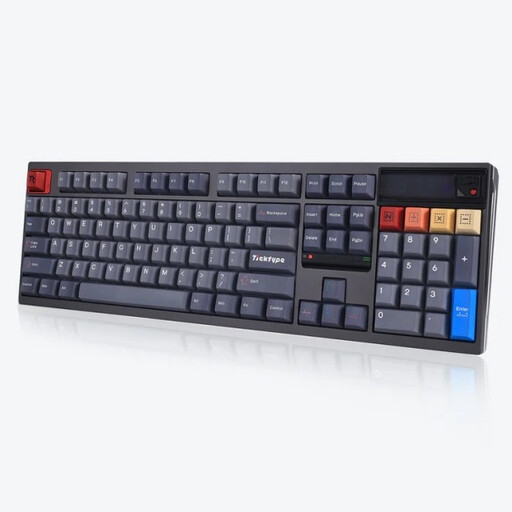
Ticktype DP104 — 108 keys, Silent Tactile Switches
The full-size layout may suit you if you want a 108-key keyboard for test code; the switch name isn’t a measurement of noise in your office.
Mechanical; 108 keys; Silent Tactile Switches; US layout.
Joybuy
 No image available
AJAZZ AK820 MAX 75% — US QWERTY, Flying Fish Switches
This compact model may suit you if you want multiple connection options and a 75% layout.
Mechanical; US QWERTY layout; wired, Bluetooth and 2.4G; Flying Fish Switches.
Joybuy
 No image available
AJAZZ AK820 Pro 75% — US QWERTY, Flying Fish Switch Purple
The compact layout may suit you if you want to keep the arrow and function keys and be able to swap switches.
Mechanical; US QWERTY layout; wired, Bluetooth and 2.4G; Flying Fish Switch Purple.
Joybuy
Frequently asked questions
Should employees who do a lot of programming on a laptop use a separate keyboard?
For employees who spend more than 2 hours a day working with display screen equipment, Arboportaal states that the screen and keyboard must not be attached to each other. In that case, laptop users must be able to use a separate screen or keyboard; whether this requirement applies to you depends on your work.
How do you set up your keyboard at a shared or changing office workstation?
Adjust your workstation each time and check that you can keep your shoulders, forearms and wrists relaxed. Arboportaal also recommends varying your posture and screen-based work; a different keyboard isn’t a substitute for this.
Does the break indicator on the R-Go Compact Break work without software?
According to R-Go Tools, the LED is controlled by R-Go Break software. So check whether you can install it on your work computer before buying.
What are your rights if a keyboard bought online isn’t suitable or breaks too soon?
ACM ConsuWijzer states that online consumer purchases generally come with a cooling-off period of up to 14 days after delivery, subject to legal exceptions. If a product doesn’t do what you could reasonably expect under normal use, the seller is responsible for providing an appropriate remedy free of charge under the legal guarantee. A fixed two-year guarantee period in the Netherlands doesn’t automatically apply to every keyboard.


