If you use two screens with one computer, focus on shortcuts, keyboard layout and typing comfort; you won’t need to switch between devices. If you work with two computers, a keyboard that lets you switch between devices may be useful. A compact model frees up desk space, while a full-size keyboard retains a number pad.
Which keyboard is right for you?
Designer who uses lots of shortcuts
Works on a quest map using one computer and wants quick access to frequently used commands. Check whether your design software supports custom key assignments; Keychron and Logitech describe programmable keys on specific models.
Long-hours screen user
Types and edits for extended periods, prioritising the position of the keyboard, hands and mouse over extra device features. Arboportaal describes repetitive actions and static physical strain associated with screen work.
User with two computers
Uses two separate computers and wants to switch between them with one keyboard. Logitech says the MX Keys S can switch between up to three devices.
What should you consider when choosing?
First, work out whether you use two screens with one computer or want to switch keyboard input between two computers. Then choose a layout and connection options that suit your workspace and design software.
| What to consider |
What should you check? |
Who is this important for? |
| Shortcuts and layout |
Check whether your software supports custom key assignments and whether the layout you choose has the keys you need. |
If I use the same design commands often, I want to know whether they’ll be easy to access and whether key programming works with my software. Around 40% of consumers prioritise shortcuts and keyboard layout. |
| Typing comfort and desk space |
Check whether a compact or split model will fit on your desk and whether the key positions feel comfortable. |
During long working sessions, I want to consider hand position and the space available for my mouse, without expecting a keyboard alone to prevent discomfort. Around 30% of consumers give the highest priority to workspace comfort and positioning. |
| Switching between devices |
Establish whether you have one computer with two screens or two separate computers, then check which connections are supported. |
If I use two computers, switching between devices is relevant; it isn’t if I use two screens with one computer. Around 20% of consumers prioritise switching between devices. |
| Simple connection |
Check whether a wired connection and the physical layout suit your computer and workspace. |
If I use one computer and don’t need extra setup features, a simple connection may be enough. Around 10% of consumers give simplicity the highest priority. |
Common mistakes
-
Confusing two screens with two computers
When you use two screens with one Windows computer, you manage the screen layout in Windows; a device-switching feature is designed for separate devices.
First, work out whether you use one computer with two screens or two computers.
-
Choosing a compact model without checking the layout
A compact layout, such as the 75% layout of the Keychron K3 Max, doesn’t have a separate number pad.
Check the shortcuts and input methods you use in your design software before choosing a size.
If you need a separate number pad, choosing a compact keyboard may mean you’ll need to buy one separately.
-
Treating an ergonomic product claim as a guarantee against discomfort
A keyboard’s shape alone doesn’t prove that it will have a particular effect on an individual’s health. Arboportaal also describes other aspects of screen work, including static physical strain.
Assess the keyboard alongside the position of your screen, mouse and arms, and how often you vary your activities at work.
Brands to consider
Logitech
The MX Keys S is an option if you’re considering a full-size keyboard, customisable keys or switching between computers.
- Logitech says this model has programmable keys and can switch between up to three devices.
- If you have one computer with two screens, device switching may be unnecessary. Also check that the key settings you need work with your software.
Keychron
The K3 Max is a compact mechanical option if you’re looking for a smaller layout and customisable keys.
- Keychron describes the K3 Max as having a 75% layout, key remapping and three connection modes.
- The layout doesn’t have a separate number pad. According to Keychron, hot-swap is only available on the specified RGB hot-swap variant.
CHERRY
The wired STREAM is a straightforward option for one computer.
- CHERRY says the STREAM uses scissor-switch mechanisms.
- The manufacturer describes the keyboard as quiet, but this isn’t an independent sound measurement. There’s no evidence of device switching for this model.
R-Go Tools
The Split Break is designed for people who want to position a keyboard in two separate parts.
- R-Go Tools describes two separately positionable parts and break reminder software.
- The different key positions may take some getting used to. Claims that it prevents or reduces discomfort don’t establish an effect for every individual.
Kensington
The Pro Fit Ergo KB675 EQ TKL Rechargeable is a compact ergonomic option with device switching.
- For this model, Kensington specifies connections to up to three devices and compatibility with Windows and macOS.
- The product page reviewed is for a US version and excludes Windows computers with an ARM processor. Don’t assume these specifications apply to a different version.
Joybuy products
This selection includes compact keyboards for anyone who values desk space or programmable macros, plus a full-size HP model with device switching.
 No image available
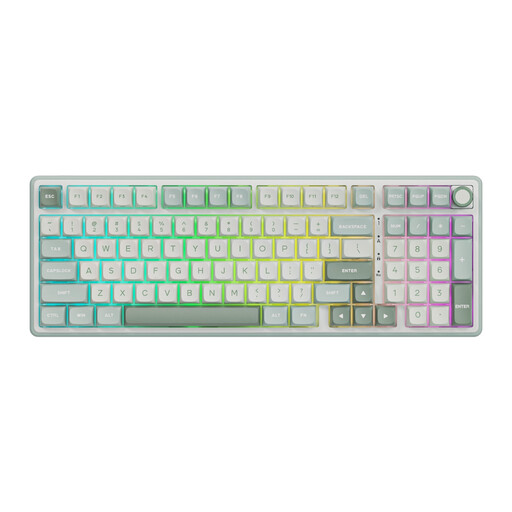
RK ROYAL KLUDGE R98 Pro Wired Mechanical Keyboard
An option if you’re looking for a compact layout and customisable keys.
The product description mentions an online driver for customising keys and macros.
The product title specifies a US keyboard layout; check that it suits your needs.
View on Joybuy
 No image available
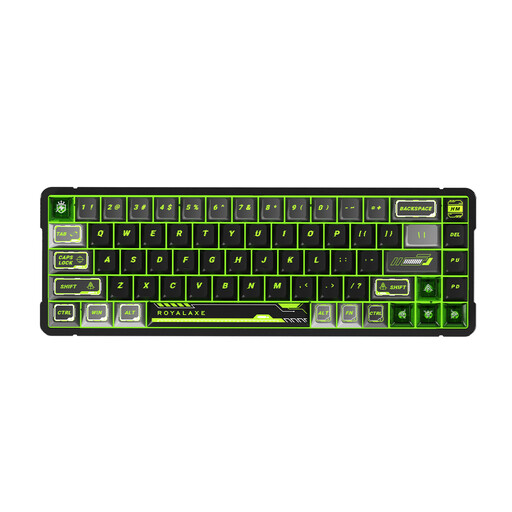
Royalaxe X68 Full Aluminum 65% Wired Mechanical Keyboard
A compact, wired option if you want to use programmable macros.
The product title specifies 68 keys, a US layout and a wired connection. The product description mentions programmable macros.
View on Joybuy
 No image available
HP 725 Multi-Device Rechargeable Wireless Keyboard
A full-size option if you want to combine a number pad with the ability to switch between devices.
The product specifications list a full-size layout and programmable shortcut keys.
The description mentions two Bluetooth connections and one connection via a 2.4GHz receiver, with switching between up to three devices.
View on Joybuy
 No image available
AJAZZ AK820 MAX 75% Wireless Mechanical Keyboard
A compact wireless option if you want to save desk space and set up macros.
The product title specifies a 75% layout, three connection modes, a US QWERTY layout and hot-swap.
The product description mentions macros and settings stored in the device’s internal memory.
View on Joybuy
 No image available
Ajazz AK820 Pro 75% Mechanical Tri-Mode Keyboard
A compact option if desk space and a choice of connection methods are important to you.
The description specifies a 75% layout with 82 keys, plus Bluetooth, 2.4 GHz and USB-C.
The product title specifies a US QWERTY layout and compatibility with Win/Mac/PC.
View on Joybuy
Frequently asked questions
Do I need a keyboard with device switching for two monitors?
No, not just because you use two monitors with one computer. Windows manages the screen layout; device switching is only relevant if you want to move keyboard input between separate computers.
How should I set up two screens before configuring shortcuts?
If you use Windows, arrange the displays in the settings to match their physical positions, then check that the pointer moves in the expected direction. Next, check which shortcuts your design software uses.
When is a separate keyboard required in a workplace?
According to Arboportaal, the screen and keyboard must not be attached to each other when an employee works at a screen for more than 2 hours a day. This conditional Dutch workplace rule is not a general requirement for every private buyer or two-screen setup.
What rights do I have as a consumer after an online purchase?
According to the Dutch Government, in many cases you have 14 days to change your mind after buying online from a business; for example, an online purchase from a private individual isn’t covered by the distance-selling rule described. The Dutch Government also explains that if a product doesn’t work properly, you may be able to ask the seller to repair or replace it.


