
Writer on the move
You work on a travel story in different places and want to take a keyboard with you. Consider its size, how well it’s protected in transit and how it connects to your device.


If you write in different places, a compact keyboard is often a better fit for your travel luggage. If you do a lot of revising, the position of the navigation and function keys matters more. For long writing sessions in one place, a contoured keyboard with a palm rest may be an option, but its shape alone doesn’t guarantee comfort: your overall workstation setup matters too.
You work on a travel story in different places and want to take a keyboard with you. Consider its size, how well it’s protected in transit and how it connects to your device.
You regularly revise text, select passages and add notes. Check that the navigation and function keys suit your writing software and the layout you use.
You often write for extended periods in the same place, so the keyboard’s shape and layout matter more to you than having the smallest possible bag.
| What to consider | What should you check? | Who should give this more weight? |
|---|---|---|
| Portability and changing writing locations | Dimensions, whether a carry case is included and the connectivity options available on that version. | If I write my travel story on the move, I want to take a keyboard without using up too much space; around 33% of consumers put portability first. |
| Navigation while editing | Check the arrow, navigation and function keys, and try your usual keyboard shortcuts in the writing software you use. | If I often select passages and edit text, I want to find the right keys quickly; around 25% of consumers make editing navigation their top priority. |
| Comfort during long sessions | Consider the shape and palm rest alongside the position of your keyboard and screen. | If I write in one place for a long time, I want to be able to adapt the shape and setup to my workspace; around 25% of consumers put workplace comfort first. |
| Compatibility with your device | Check the operating system and whether Bluetooth, a receiver or a cable is suitable for your device and the version you’re considering. | If I want to use my keyboard with a particular writing device, I want to know in advance which connection I need; around 17% of consumers start by checking device compatibility. |
The position of the navigation keys can vary between layouts. Shortcuts may also work differently on another layout.
Check the layout of the exact version and try your usual editing tasks in the software you use.
A manufacturer’s comfort claim doesn’t tell you on its own how a keyboard will feel to you. The position of your screen and keyboard also plays a part.
Assess the shape for yourself and set up your workstation as a whole. Don’t treat comfort claims as a guarantee against discomfort.
Versions, switches, layouts and connectivity can vary between models.
Before ordering, check the full model name, version, switch, key layout and included accessories.
The MX Keys Mini is a compact option, while the Wave Keys is designed for a dedicated writing space, with a contoured layout and palm rest.
The KW 9200 MINI is a compact option for people who write in different places and want to compare connectivity options.
The K3 Version 2 is a compact mechanical option with a 75% layout.
The Designer Compact Keyboard is a compact Bluetooth option for a compatible Windows PC.
This selection includes compact keyboards for writing on the move, models with extra navigation or function keys, and a version for a compatible iPad Pro.
 No image available
A compact mechanical option to consider if you want to check the navigation and function keys for editing text.
The product information lists arrow and function keys, plus wired, Bluetooth and 2,4GHz connectivity.
 No image available
A compact option if you want to take a keyboard and mouse with you or switch between writing devices.
The product information lists a TKL format, scissor keys and connection to up to three devices via Bluetooth or USB receiver.
 No image available
A roomier layout to consider if you prefer working with a full-size keyboard while editing.
The product information lists low-profile scissor keys, a numeric keypad and switching between up to four devices via USB receiver and Bluetooth. This version has a US QWERTY layout; key positions may differ from other layouts.
 No image available
A foldable option if you write on the move using a tablet, smartphone or computer and want a touchpad.
The product information lists 63 keys, Bluetooth and support for iOS, Android and Windows. When folded, the keyboard measures 152 × 97 × 12 mm and weighs 0,3 kg.
 No image available
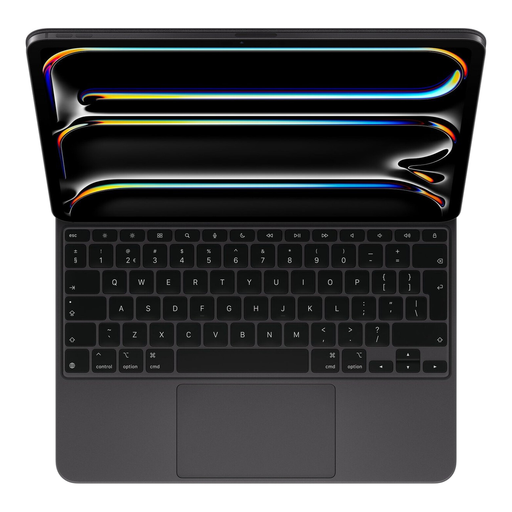
An option for editing on a compatible iPad Pro if you want to select text using a trackpad.
The product information lists a trackpad, 14 function keys, a protective case and adjustable viewing angles. This version is specified for iPad Pro 13-inch (M4).
Not every traveller needs a separate keyboard for this. Arboportaal states that for employees who work at a screen for more than 2 hours a day, the screen and keyboard must not be attached to each other; this isn’t a general requirement for every traveller buying a keyboard for personal use.
Try the keys and combinations in your own writing software, operating system and keyboard layout. Microsoft notes that keys on a different layout may not correspond exactly to those on a US keyboard.
According to Microsoft’s setup information, you’ll need a PC running Windows 10 or 11 and Bluetooth 4.0 or later. Check these requirements before buying; this guide doesn’t confirm that every other device is compatible.
For distance purchases, a 14-day cooling-off period applies in many cases, according to the Dutch government. Whether it applies to your order depends on the specific purchase and the applicable terms.