
Indexers who enter lots of numbers
You regularly enter dates, page numbers and references in travel journals, and want a dedicated workspace with an easy-to-use number pad.


Choose a full-size keyboard if you regularly enter dates and page numbers, a programmable model to simplify repetitive tasks, or a compact keyboard if you work in different locations. A keyboard can’t identify duplicate journal entries, so check them in your indexing software. Before you buy, also consider the layout, connection and typing comfort.
You regularly enter dates, page numbers and references in travel journals, and want a dedicated workspace with an easy-to-use number pad.
You often use the same input fields or keyboard shortcuts and want to simplify repetitive tasks, while continuing to check for duplicate entries yourself.
You move between workspaces or devices and prefer a compact keyboard to a full-size model.
First, distinguish between using your indexing software and checking entries for duplicates. Then choose a keyboard based on your main priority: repetitive tasks, typing comfort, number entry or working in different locations.
| What to consider | What to look for when buying | Who is this important for? |
|---|---|---|
| Checking for duplicate entries | Check that the layout and programmable keys work with the shortcuts in your indexing software. Review any duplicates found in the software itself. | If I want to review repeated entries carefully before deleting anything, I need to distinguish keyboard controls from checking the content itself. Around 36% of consumers prioritise carefully checking for duplicate entries. |
| Comfort during long typing sessions | Consider the key layout and type of keys. You may also want to try a split layout to see if it suits you. | If I index for long periods, I want a layout and key action that feel comfortable. Around 29% of consumers prioritise typing comfort when entering data for extended periods. |
| Dates and page numbers | Check whether the specific model has a number pad and whether the layout suits the way you enter data. | If I enter lots of dates and page numbers, I want to handle those figures efficiently. Around 21% of consumers say number entry is their main priority. |
| Working in different locations | Check compatibility with your devices and which connection options are available on the model you’re considering. Think about whether you need a number pad. | If I update my index in different places or on different devices, a compact design matters more to me than a full-size keyboard. Around 14% of consumers prioritise working on the go. |
A programmable key performs a task you’ve assigned to it. Deciding whether two notes describe the same event is still a job for your indexing software and you.
Test keyboard shortcuts on a copy first, and check any entries they find before permanently deleting anything.
A compact model can be convenient to carry around, but it may not have a dedicated number pad for dates and page numbers.
Decide which feature matters most for your everyday work, then check the layout of the specific model you’re considering.
The physical keys and the software keyboard layout aren’t the same thing. The selected layout also determines which characters you enter.
Compare the keys with your selected layout and test punctuation and accented characters before entering a large index. Microsoft Support explains how to add or change input layouts in Windows.
The wired STREAM KEYBOARD range is designed for a dedicated workspace.
The MX Keys S is designed for repetitive tasks and use with multiple devices.
The Lyra Compact is designed for working in different locations, while the TK-150 is a separate full-size wired model.
The V6 Max is a full-size mechanical keyboard for those who want to customise keys and macros.
The ErgoDox EZ has two separate keyboard halves that can be positioned independently for a split setup.
These keyboards are suited to entering numbers, setting up programmable actions and working at either a dedicated or compact workstation.
 No image available
Ideal for a dedicated workspace where you regularly enter dates and page numbers.
Number pad, QWERTY layout and plug-and-play USB connection.
 No image available
Suited to repetitive tasks and switching between devices. Check that the programmable keys work with your indexing software.
Full-size, wireless and rechargeable. The product information lists programmable keys and connections for two Bluetooth devices and one 2.4GHz device.
 No image available
Suited to anyone who wants a compact setup and the option to customise macros for repetitive tasks.
75% layout, three connection modes and customisable macros with onboard memory. The listed layout is US QWERTY.
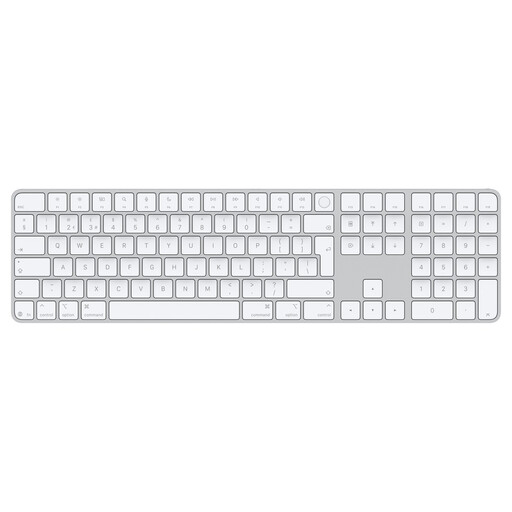 No image available
Suited to entering numbers on a compatible Mac. Check the device requirements before choosing.
Numeric keypad, Dutch layout and Touch ID. Compatible with Mac models with Apple Silicon.
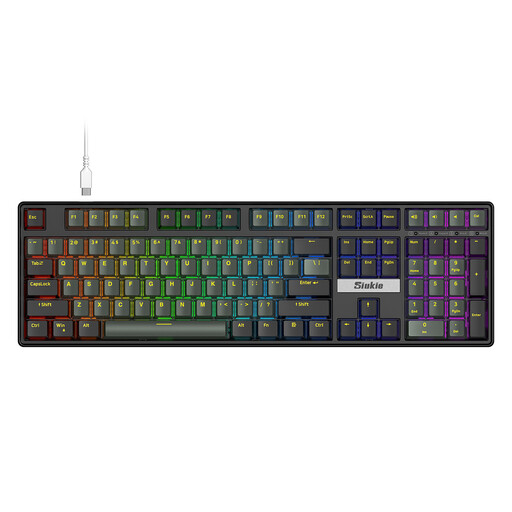 No image available
Ideal for a dedicated wired workspace where you want a full-size keyboard for data entry.
108 keys, wired USB connection and replaceable switches.
No. Keyboard functions are for entering and controlling information, not checking data for duplicates. In Excel, you can filter or remove duplicate values; Microsoft Support makes clear that removing them permanently deletes the selected values. Check the entries and, if necessary, make a copy first.
Check that the connection you choose works with your device, and set the software keyboard layout to match the physical keys. Microsoft Support explains how to add or change an input layout in Windows. Test punctuation and accented characters before entering lots of data, too.
No. An ergonomic design doesn’t guarantee that a keyboard will feel comfortable for everyone or prevent discomfort. Pay attention to your hand position, try out the layout if possible, and take breaks from prolonged screen work.
According to Arboportaal, if you work at a screen for more than two hours a day, the screen and keyboard must not be attached to each other. For an employee using a laptop, this means a separate screen or keyboard must be available; this requirement applies to that working situation.
For a standard online consumer purchase, you generally have a statutory 14-day cancellation period after delivery, although exceptions may apply. You also have statutory rights if a product used normally doesn’t meet what you could reasonably expect. ACM ConsuWijzer explains these rights. A manufacturer’s guarantee doesn’t replace your statutory rights.