
A synopsis writer working alongside colleagues
You type longer pieces of text in a shared space and want your keystrokes to cause as little distraction as possible. RTINGS.com lists low typing noise as a consideration when you share an office.


For writing a book synopsis in a shared office, a low-profile, quiet keyboard is a sensible starting point. Choose a compact or ergonomically shaped model if desk space or hand position matters more to you. Compare the sound of the exact version and check the layout, connection and fit: a product description such as ‘quiet’ isn’t a sound measurement taken in your workplace.
You type longer pieces of text in a shared space and want your keystrokes to cause as little distraction as possible. RTINGS.com lists low typing noise as a consideration when you share an office.
You write and edit prose, rarely use a number pad and want to leave room for your mouse and documents. BakkerElkhuizen explains how a compact keyboard without a dedicated number pad can bring your mouse closer.
You pay attention to hand position and support while working at a screen, and are open to getting used to a different layout. Arboportaal recommends a relaxed posture; a different keyboard shape also calls for a personal fit check.
Start with the key feel and layout that suit your shared workspace and writing style. Then check the connection and the keys you need on the exact version you’re considering.
Choose this if: you like short key travel and want to type quietly in a shared space.
Bear in mind: it feels different from a deeper mechanical keyboard. For wireless models, check the connection and the exact version.
Choose this if: you mainly write prose, enter few numbers and want to keep space free beside the keyboard.
Bear in mind: you’ll be giving up a dedicated number pad. Check that it has the navigation and function keys you use.
Choose this if: a different hand position and an integrated palm rest are important to you.
Bear in mind: the unusual layout may take some getting used to, and the fixed rest takes up space. This doesn’t prove that the model prevents discomfort.
Choose this if: you prefer the deeper feel of mechanical keys and the exact version suits your shared workspace.
Bear in mind: mechanical keyboards vary in noise. RTINGS.com notes that clicky switches can be among the louder options.
| What to consider | What should you look for? | Who is this important for? |
|---|---|---|
| Noise for colleagues | Check the exact switch type and, if available, an independent review of the same version. Don’t take ‘quiet’ as a guarantee of silent typing. | When I work in the same room as colleagues, I don’t want every keystroke to distract them; around 36% of consumers give low typing noise their highest priority. |
| Hand position and typing comfort | Consider the keyboard shape alongside your workspace and see whether the layout feels comfortable to you. An ergonomic product claim doesn’t prove that it prevents discomfort. | During longer writing sessions, I want a posture and layout that feel comfortable to me; around 29% of consumers put hand position and typing comfort first. |
| Layout and desk space | Check the exact key layout, punctuation, arrow and navigation keys, and how much space is left beside the keyboard. | If I mainly write prose and enter few numbers, I want room for my mouse without losing the keys I use when editing; around 21% of consumers prioritise layout and desk space. |
| Connection and switching between devices | Check the port or Bluetooth support you need, whether a receiver is included and whether any software is allowed on your work computer. | When I want to use the keyboard with my work devices, its connection needs to be compatible; around 14% of consumers put connectivity and switching between devices first. |
The switch, case and way you type all affect the sound you hear. A manufacturer’s description isn’t a measurement taken in your office conditions.
Compare the exact version and, if noise is a deciding factor, look for an independent review of that model.
Compact models don’t all retain the same navigation and function keys. A keyboard without a dedicated number pad is most practical if you rarely use those keys.
Make a note of the arrow, navigation, function and punctuation keys you need, then check that they’re included on the exact version.
An unusual layout may take some getting used to; your workspace set-up and taking regular breaks still matter.
Consider the keyboard shape alongside your workspace set-up, and don’t treat a product claim as a health promise.
A shared model range name doesn’t tell you exactly which products are in the box.
Before buying, check the full product name, what’s included and the exact version.
A set may also include a mouse you don’t need.
The MX Keys S is a low-profile wireless model, while Wave Keys has a wave-shaped layout and fixed palm rest.
The STREAM KEYBOARD is a wired option with low-profile SX scissor switches.
The UltraBoard 950 is a compact, wired option without a dedicated number pad.
The Ody II is a wireless option with low-profile keys and a full-size layout.
This selection includes keyboards for writing and editing, from low-profile models with different connections to compact and mechanical options. Check the specific layout and the stated noise level for the version you’re considering.
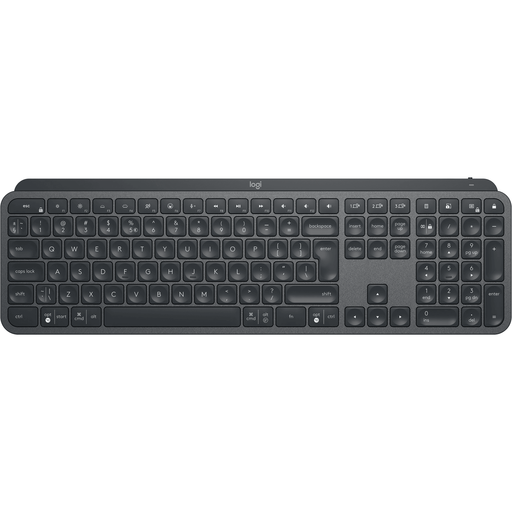 Image unavailable
For anyone who wants to type wirelessly and switch between multiple devices.
The product information lists Bluetooth and a Logi Bolt receiver; according to the information, Easy-Switch supports up to three devices. The title specifies a US QWERTY layout.
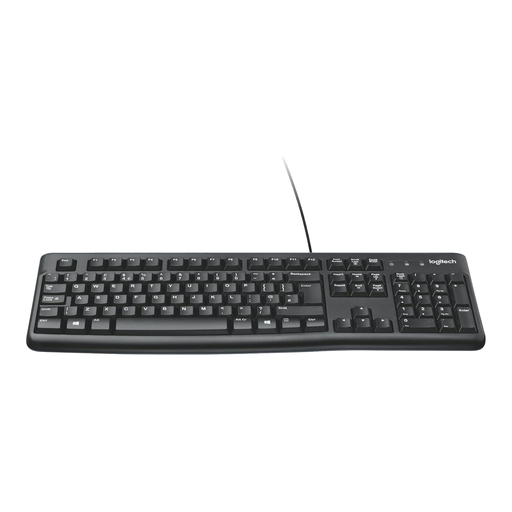 Image unavailable
For anyone considering a full-size wired keyboard.
The product information lists a USB cable, adjustable feet and low-profile keys described as quiet. This noise description isn’t an independent measurement.
 Image unavailable
For anyone who values low-profile keys and switching between work devices.
The product information lists scissor-style keys, Bluetooth and a USB receiver, with connections to up to four devices. It also mentions a rechargeable battery and a number pad. The title specifies a US QWERTY layout; the noise description isn’t an independent test.
 Image unavailable
For anyone considering a compact mechanical keyboard with hot-swappable switches.
The product information lists USB-C, hot-swappable linear switches, 83 keys and five layers of sound-dampening foam. The foam doesn’t measure the sound you’ll hear while typing. The title specifies a US QWERTY layout.
 Image unavailable
For anyone considering a compact layout without a dedicated number pad.
The product information lists 61 keys, RGB lighting and a membrane key feel with a mechanical feel. The description says it has no number pad; the title specifies a US QWERTY layout.
Not necessarily: according to Arboportaal, for employees who work at a screen for more than 2 hours a day, the screen must not be attached to the keyboard. When using a laptop, it must be possible to use a separate screen or keyboard, so a separate screen may be enough. Whether this requirement applies to you depends on your working day and employment relationship.
Readjust your workspace if you move to a different seat. Arboportaal recommends keeping your shoulders, wrists and forearms relaxed and varying your posture; an ergonomically shaped keyboard doesn’t replace the need to pay attention to your workspace.
Check that the exact version works with the connections and ports allowed by your work computer. Logitech says Wave Keys supports Bluetooth and comes with a Logi Bolt receiver; Trust lists a USB receiver for the Ody II. Also check whether you’re allowed to use any configuration software on your office computer.
For online purchases made by consumers from a business, you usually have 14 days to change your mind, according to the Rijksoverheid. You’re also entitled to a product that works as it should, and can contact the seller if there’s a fault. The Rijksoverheid states that the Netherlands has no fixed statutory warranty period; check the terms of any additional warranty separately.