
Student sharing a room
Writes in a shared or noisy space and wants to reduce keyboard noise without overlooking the connection and layout.


If you share a student room and keyboard noise matters, compare a model described as quiet with the connection and layout you need; ‘quiet’ doesn’t guarantee your housemates won’t hear it. If desk space is your priority, consider a compact model without a dedicated number pad; choose a full-size keyboard if you need one. A separate keyboard doesn’t replace a suitable working posture and microbreaks.
Writes in a shared or noisy space and wants to reduce keyboard noise without overlooking the connection and layout.
Wants to make room for a laptop, documents and mouse, so compares a compact keyboard with a model that has a number pad. TNO, via Arboportaal, recommends a narrow keyboard for many tasks, so you can keep the mouse closer to your body.
Considers key feel and the position of the screen, keyboard and mouse, and plans regular breaks. Arboportaal highlights repetitive hand movements and static strain when working at a screen, and recommends varying your activities and taking microbreaks.
When it’s a good fit: if you write in a shared room, want a number pad and have a suitable USB port for the receiver.
Trade-off: it takes up more desk space and needs a receiver; the manufacturer’s description ‘quiet’ doesn’t tell you how audible it will be in your room.
When it’s a good fit: if space is limited or you want to switch between devices; Logitech says the Pebble Keys 2 K380s features Easy-Switch for three devices.
Trade-off: it doesn’t have a dedicated number pad; check Bluetooth compatibility, the layout on offer and whether the round, flat keys suit you.
When it’s a good fit: if you have a permanent desk, don’t need a wireless connection and want a full main key area without a number pad.
Trade-off: you’ll need a suitable USB port and room for the cable; a quiet keystroke doesn’t guarantee your housemates won’t hear it.
When it’s a good fit: if a wired connection and number pad matter more to you than keeping your desk compact.
Trade-off: the dedicated number pad takes up extra space beside your mouse.
Start by deciding whether you need a number pad; then check that the connection and keyboard layout work with your computer.
| Point to consider | What to check before buying | Who is it important to? |
|---|---|---|
| Keyboard noise | Trust and CHERRY describe certain models as quiet. Compare the key feel and, where possible, judge the noise for yourself. | If I write in the same room as my housemates, I want less distracting keystrokes without assuming the keyboard will be inaudible. Around 33% of consumers in this writing context say keyboard noise is their top priority. |
| Desk space | Compare the dimensions and consider whether you often enter sequences of numbers; a TKL model doesn’t have a dedicated number pad. | If I want to leave room for documents and a mouse, a compact keyboard matters more than a dedicated number pad. Around 25% of consumers say desk space is their top priority. |
| Typing comfort and working posture | Consider the key feel and the position of your keyboard, mouse and screen. Arboportaal recommends varying your activities and taking microbreaks when working at a screen. | If I type for long periods, I want a key feel and workstation that suit me and let me vary my posture. For around 25% of consumers, this is more important than other buying considerations. |
| Connection and layout | Check the exact version, connection and keyboard layout. A receiver needs a suitable USB port; Bluetooth needs to be supported by your device. | If I want to be sure the keyboard works with my computer and has the keys I need, I check these details before buying. Around 17% of consumers say connection and layout are their top priority. |
A manufacturer’s description doesn’t guarantee that your housemates won’t hear the keyboard; the noise also depends on how you type and the room.
Consider the type of keys and, where possible, try the keyboard in a quiet setting. Don’t choose based on the word ‘quiet’ alone.
A dedicated number pad makes a keyboard wider. TNO, via Arboportaal, recommends a narrow keyboard for many tasks, so you can keep the mouse closer.
Think about how often you enter sequences of numbers and measure your available desk space before choosing a model.
These connections work in different ways, and each needs to be supported by your computer or requires a suitable port.
Before ordering, check that the version’s connection and exact keyboard layout are compatible with your computer.
The Ody II is a full-size wireless keyboard with a USB receiver; the Primo is a wired model with a USB-C cable and USB-A converter.
The Pebble Keys 2 K380s is a compact Bluetooth keyboard for switching between devices.
The STREAM KEYBOARD TKL doesn’t have a number pad; the STREAM KEYBOARD is full-size.
This selection of Joybuy products includes compact and full-size keyboards for writing. When choosing, pay particular attention to the connection and layout that suit your computer and workspace.
 No image available
A good fit for a small desk if you’re looking for a wired TKL layout without a number pad.
The product description mentions membrane keys with a quiet keystroke; this doesn’t guarantee how the keyboard will sound in your room. This version has a US QWERTY layout.
 No image available
The 75% layout is a compact option if you want to save desk space.
The product name describes a wired mechanical keyboard with a US QWERTY layout and hot-swappable linear switches.
 No image available
This compact model suits a small writing space if you don’t need a dedicated number pad.
The product name describes a wired 60% layout with 61 keys and a membrane keyboard with a mechanical feel. Check that the US layout suits you.
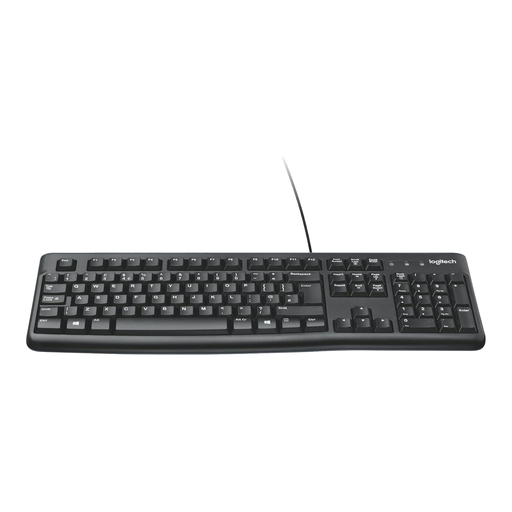 No image available
A full-size model is worth considering if you want to use a number pad and have enough desk space.
Before buying, check the connection and the exact keyboard layout of this version.
 No image available
A good fit for a workspace where you want a number pad and the option to switch between devices.
The product name describes a full-size wireless keyboard with scissor keys and a US QWERTY layout. Check which connection and layout are compatible with your computer.
Position your screen, keyboard and mouse so you can vary your posture, and take regular breaks from screen work. Arboportaal also recommends microbreaks; a keyboard alone won’t prevent discomfort.
Not always: the Logitech Pebble Keys 2 K380s uses Bluetooth, while the Trust Ody II uses a USB receiver. Check your computer’s connection options and the exact version of the keyboard.
Keep a separate USB receiver somewhere safe, and check how a wireless model is powered. According to Trust, the wired Trust Primo uses a 180 cm USB-C cable with a USB-A converter; check which accessories are included with the version you’re buying.
In the Netherlands, online purchases from a business are often covered by a statutory 14-day cooling-off period; check the terms that apply to your purchase. If a product is faulty, the seller must provide a solution. There is no fixed statutory two-year guarantee for all products in the Netherlands.
Not just because you’re studying at home. According to Arboportaal, the rule that the screen and keyboard must not be attached to each other applies to employees who work at a screen for more than two hours a day; don’t automatically apply this workplace rule to private study.