If you do a lot of precise mouse work, a compact keyboard without a separate number pad is a sensible starting point. If you mainly want to adjust your hand position, compare split models. Programmable keys are worth considering if you repeat the same actions often, while a full-size keyboard is a good fit if you need a separate number pad. No keyboard can replace a well-set-up workstation or alternating between sitting and standing, so check the layout and connectivity of the exact model too.
Which keyboard suits which designer?
Designer who does a lot of mouse work
You do a lot of selecting, positioning and editing with your mouse, and want to keep your keyboard and mouse close together. In its factsheet on display screen work, TNO notes that mouse use can contribute to physical strain.
Designer looking to adjust their hand position
When typing and switching between sitting and standing, you want to find a position for your hands, arms and work surface that feels relaxed. Arboportaal highlights the importance of an adjustable workstation.
Designer who repeats the same key actions
You perform the same actions often and want to assess whether programmable keys or macros would suit the way you work. Features vary by model and may depend on software.
What should you consider when choosing?
Compact keyboard
A good fit if: you often switch between your keyboard and mouse while designing and don’t need a separate number pad.
Keep in mind: not having a separate number pad can be inconvenient if you enter a lot of numbers.
Split keyboard
A good fit if: you want to position the two halves separately to find a hand and arm position that works for your workstation.
Keep in mind: a fixed, curved design offers less freedom of placement than separately adjustable halves.
Programmable keyboard
A good fit if: you want to assign recurring design actions to keys or macros.
Keep in mind: features may depend on the model and its accompanying software.
Full-size keyboard
A good fit if: having a separate number pad matters more to you than keeping the distance between your keyboard and mouse as short as possible.
Keep in mind: check how far you need to reach for your mouse at your workstation, both sitting and standing.
| Consideration |
What to check before buying |
Who should consider this? |
| Mouse reach |
Check the keyboard’s width, number pad and mouse position at both sitting and standing desk heights. |
If I often do precise mouse work, I want to keep the keyboard close to the mouse and assess the reach at both desk heights. Around 40% of consumers put mouse reach first. |
| Hand position |
Compare a fixed, curved design with separately positionable halves, and check that both will fit on your work surface. |
When switching between sitting and standing, I want to position my hands and arms comfortably without assuming that one keyboard shape will automatically solve the problem. Around 30% of consumers prioritise an adjustable hand position. |
| Repeated actions |
Check which software is required and whether you can customise the key functions you want. |
If I repeat the same design actions, I want to see whether key functions or macros suit the way I work. This is the top priority for around 20% of consumers. |
| Layout and connectivity |
Check the exact QWERTY variant, operating system support and Bluetooth or USB connectivity. |
If the layout or connection is a deciding factor, I want to know in advance whether the model suits my computer and typing habits. Compatibility is the top priority for around 10% of consumers. |
Which buying mistakes can you avoid?
-
Choosing a full-size keyboard without checking your mouse reach
Precise mouse work can be a big part of designing. That makes the distance between your keyboard and mouse an important consideration for your setup.
Place your keyboard and mouse at both working heights and compare them with a compact model if you rarely use a separate number pad.
-
Assuming a split keyboard is guaranteed to resolve discomfort
A different keyboard shape doesn’t remove the importance of setting up your workstation properly and varying your posture.
Check how it fits into your own workstation. If you’re starting to experience discomfort, seek appropriate professional advice about your workstation.
A split design may take some getting used to, and separate positioning accessories also take up space.
-
Not checking the exact model
Key layout, connectivity and features can vary between versions, even within the same product range.
Before ordering, check the full model details, QWERTY layout, connection and any software requirements.
Which brands are worth considering?
BakkerElkhuizen
The S-board 840 is a compact, wired model without a separate number pad.
- BakkerElkhuizen lists scissor-switch keys and two USB ports for this model.
- Check whether the integrated number pad meets your needs.
Kinesis
The Freestyle2 for Mac is an example of a keyboard with separately positionable halves.
- Ergowerken’s product page lists wired USB connectivity and QWERTY ANSI US International for the Mac version.
- Make sure you choose the Mac version and consider whether you want to use any tenting accessories.
Logitech
The MX Keys S is an example of a full-size keyboard with programmable features, while the ERGO K860 has a fixed, curved split design.
- Logitech lists Smart Actions for the MX Keys S via Logi Options+ and describes the split frame of the ERGO K860.
- These are model-specific details from the manufacturer, not an independent comparison or a guarantee of reduced discomfort.
R-Go
The Compact Break is worth considering if you’re looking for a small keyboard; Bluetooth is listed for the white version mentioned here.
- Ergowerken lists a width of 285 mm and QWERTY ANSI US International for that version.
- Check that the key layout suits your typing habits.
Keychron
The K3 Pro is a compact mechanical option to consider if you want to explore key remapping or macros.
- Keychron lists a 75% ANSI layout, Bluetooth, key remapping and macros.
- According to Keychron, hot-swap is available only on a specific version, so check which variant you’re viewing.
Compact keyboards on Joybuy
These keyboards have a compact design and suit a workstation where you want to leave room around your mouse.
 No image available
AULA F75 75% wireless gaming keyboard, US QWERTY layout
The compact layout may suit you if you want to keep space free around your mouse.
75% layout, mechanical keyboard, wireless and US QWERTY layout.
View on Joybuy
 No image available
AJAZZ AK820 MAX 75% wireless mechanical keyboard, US QWERTY layout
The compact layout may suit you if you want to place your keyboard and mouse together on your work surface.
75% layout, tri-mode connectivity, US QWERTY layout and hot-swappable switches.
View on Joybuy
 No image available
Trust Lyra keyboard and mouse, US English QWERTY, blue
This set may suit you if you want to choose a keyboard and mouse together for a compact setup.
RF wireless and Bluetooth; US English QWERTY version in blue.
View on Joybuy
 No image available
Ajazz AK820 Pro 75% mechanical keyboard with tri-mode connectivity, US QWERTY layout
The compact layout may suit you if you want to leave space on your work surface for mouse movement.
75% layout, wired, Bluetooth and 2.4G; US QWERTY layout and hot-swappable switches.
View on Joybuy
 No image available
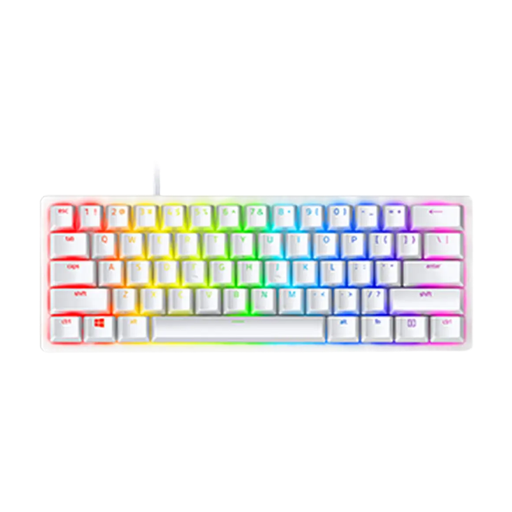
Razer Huntsman Mini, linear optical switches, US, Mercury
The compact version may suit a work surface where you want to leave space beside your keyboard.
Linear optical switches; US version in Mercury.
View on Joybuy
Frequently asked questions
Do you have to stand at a sit–stand desk to work comfortably?
No. Arboportaal recommends an adjustable workstation and changing your posture regularly. Standing is one way to alternate with sitting, not a reason to stay in one position for a long time.
What if you spend more than two hours a day working at a screen?
For employees who work at a screen for more than two hours a day, Arboportaal describes workplace requirements stating that the screen and keyboard must not be attached to each other. For a laptop, it must be possible to use a separate screen or keyboard. This is a conditional workplace rule, not a requirement for every individual shopper to buy a specific keyboard model.
How can you set up your workstation and vary your working day?
Adjust your work surface when sitting and standing so that your shoulders, forearms and wrists can stay relaxed. Arboportaal recommends breaking up screen work, changing your posture regularly and taking short microbreaks.
Does a wireless keyboard sold in the Netherlands need a CE mark?
EU market access rules apply to radio equipment covered by the European Radio Equipment Directive. The European Commission and Your Europe explain that, by affixing the CE mark, the manufacturer declares that the product meets the relevant EU requirements. Check the information for the exact version; a CE mark is not independent ergonomic approval. This requirement does not apply on the same basis to every wired keyboard.
What about returns and warranty for an online purchase?
According to the Netherlands Authority for Consumers and Markets, online consumer purchases usually come with a 14-day cooling-off period. Dutch statutory warranty also depends on what you could reasonably expect from the product; a two-year manufacturer’s warranty is not automatically the full statutory warranty period.


