
Simultaneous keystroke tester
You want to find out which specific key combinations are registered and distinguish a stated rollover specification from how the keyboard behaves in your own application.


Start by checking the exact key combinations you want to test: a stated rollover figure or anti-ghosting feature doesn’t prove that every combination will work in your software. Then compare typing noise, layout and connection. A keyboard described as quiet isn’t automatically suitable for demanding combination tests.
You want to find out which specific key combinations are registered and distinguish a stated rollover specification from how the keyboard behaves in your own application.
You run combination tests alongside colleagues and consider typing noise as well as input registration.
You switch between devices or workspaces and want to check whether the connection, keyboard layout and available desk space suit your tests.
When: if handling lots of simultaneous keystrokes is your priority and you also want to consider a dampened case, the CHERRY KW 300 MX is worth comparing.
Trade-off: the manufacturer’s claim doesn’t prove that every combination will work in your application. Also check that the compact layout suits your work.
When: if you need to save desk space and the manufacturer describes the keystrokes as quiet, you can test the SteelSeries Apex 3 TKL with your own combinations.
Trade-off: the manufacturer mentions anti-ghosting and quiet switches, but the product specifications don’t give an exact rollover figure for this option.
When: if you’re testing combinations within the support stated by Trust, you could consider the Trust GXT 833 Thado.
Trade-off: Trust states that it supports up to 10 simultaneous keystrokes, but doesn’t present this model as a quiet office keyboard.
When: if quiet typing matters more than extensive combination testing, the Trust Ody II is an option to consider.
Trade-off: the manufacturer describes the keys as quiet, but a quiet profile alone doesn’t tell you whether the combinations you need will be registered.
| What to consider | What should you check? | Who is this important for? |
|---|---|---|
| Key combination registration | Note the keys, how long you hold them and the order in which you press them. Test them with the computer, software and connection you intend to use. | If I know which combinations my test needs to include, I can check whether they’re actually registered. Around 36% of consumers give registering the combinations they need top priority. |
| Typing noise | Listen to the sound while carrying out your own tests; product descriptions aren’t a sound measurement of your workspace. | When colleagues work in the same room, I want to consider typing noise as well as input registration. Around 29% of consumers put keeping things quiet for colleagues first. |
| Layout and desk space | Check that the keys you need are present and that the layout suits the way you work. | If I need a number pad or other specific keys, I don’t want a compact layout to slow down my testing. Around 21% of consumers start by considering the layout and available desk space. |
| Connection and repeatability | Record the computer, software and connection mode, and repeat any combinations you’re unsure about under the same conditions. | For repeated tests or when switching between devices, I want to know which connection I’m using. Around 14% of consumers give a fixed or changing test connection top priority. |
Microsoft Applied Sciences explains that keyboards carrying this label don’t necessarily support the same combinations. Software and communication between the computer and keyboard can also limit simultaneous input.
Test the combinations that matter for your work, and note which software and connection you’re using.
The Trust Ody II’s quiet positioning and the Trust GXT 833 Thado’s claim of up to 10 simultaneous keystrokes apply to different models.
Check typing noise and simultaneous input support separately. Don’t attribute a feature of one model to another.
For the KW 300 MX, CHERRY lists a compact office layout, a dampened case and N-key rollover.
The Trust GXT 833 Thado is presented as supporting simultaneous input, while the Ody II is presented as a quiet keyboard.
For the Apex 3 TKL, SteelSeries lists anti-ghosting and quiet switches.
For the Logitech G G413 SE, the manufacturer states a 6-key rollover and mechanical tactile keys.
These keyboards are suited to fixed, compact setups and tests involving simultaneous keystrokes. Check that each model’s layout and stated input support suit your application.
 No image available
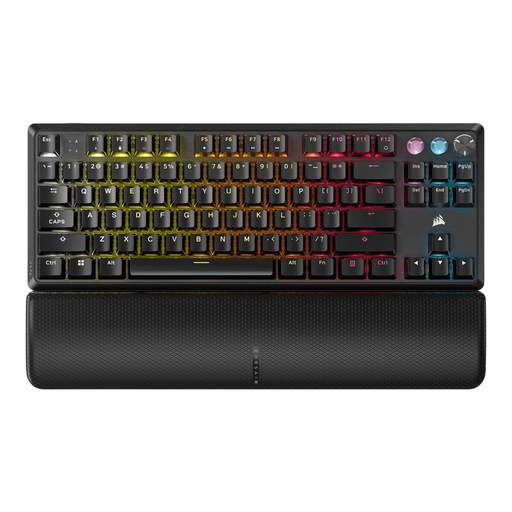
A wired TKL option to consider if you’re testing combinations within the stated input limit.
The product description mentions anti-ghosting for up to 10 simultaneous keys and a 1.8 m USB cable. The manufacturer doesn’t position this model as a quiet office keyboard.
 No image available
A wired TKL model to compare if you’re testing simultaneous keystrokes and want a compact layout.
The product description mentions full anti-ghosting, sound-dampening foam and pre-lubricated stabilisers. These features alone don’t provide a measured noise level or guarantee that your specific combinations will work.
 No image available
A wired TKL option for a compact test setup where typing noise also matters.
The product description mentions 12-key rollover and quiet membrane switches. Test the combinations you use for yourself.
 No image available
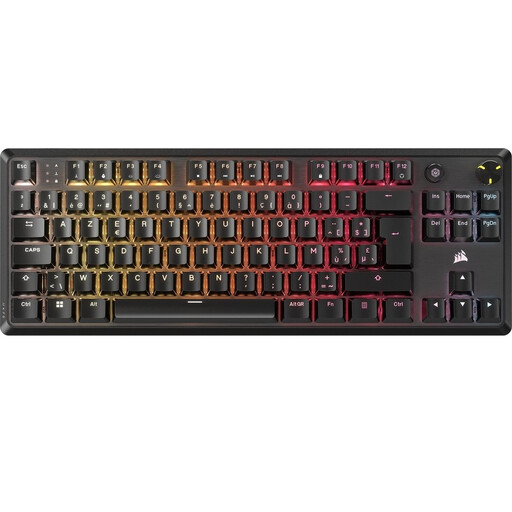
A wired, compact model to consider if you need N-key rollover and the Belgian AZERTY layout suits your work.
The product description mentions full N-key rollover and two layers of sound-dampening foam. This isn’t an independent sound test.
 No image available
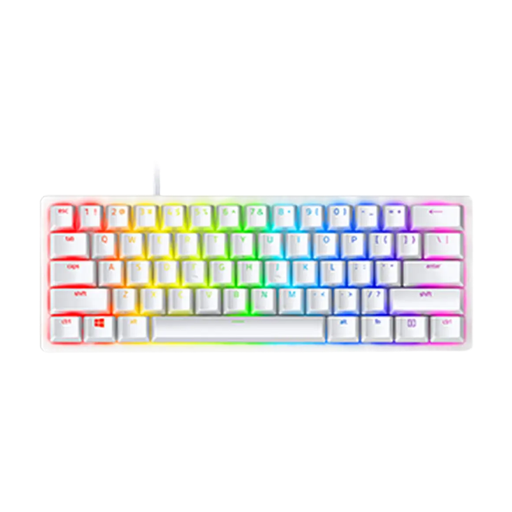
A 60% model to consider if desk space is limited and you can work with the smaller layout.
The product description mentions N-key rollover and anti-ghosting, as well as a detachable USB-C cable. Check whether the missing keys suit your test setup.
Write down the exact key combinations and try them on the computer and in the application you need the keyboard for. Microsoft Applied Sciences offers a demonstration to show which combinations work and explains how hardware, software or the communication between them can limit simultaneous input. A browser demonstration therefore isn’t a substitute for testing in your own application.
Check that the keys you need are present, and note the connection if you’re repeating tests. Also listen to the typing noise in your own workspace: ‘quiet’ and ‘dampened’ are product descriptions, not measured noise limits for your office.
According to ACM ConsuWijzer, online consumer purchases generally come with a statutory 14-day cooling-off period from delivery, subject to exceptions and conditions. The statutory guarantee is separate from any manufacturer’s guarantee: if a product doesn’t perform as you could reasonably expect under normal use, contact the seller.
The government information consulted doesn’t prescribe a brand, rollover figure or quiet keyboard. According to Arboportaal, if an employee works at a display screen for more than 2 hours a day, the screen and keyboard must not be attached to each other. This is a conditional workplace requirement, not a general product specification for every user.