
Testing key combinations
You want to check whether important combinations register simultaneously. Compare the stated rollover for the specific model and connection mode. Keychron, Trust and Logitech G provide model-specific information.


If you want to test simultaneous keypresses without permanently using a USB port, look for a model whose manufacturer specifies rollover for the wireless mode you want to use. If Bluetooth isn’t an option, a wired keyboard with a stated anti-ghosting feature is an alternative, but you’ll need a free USB port while using it. Also check that the exact version has the relevant product markings. The Dutch Authority for Digital Infrastructure explains that the manufacturer applies the CE marking when the product complies with the applicable requirements.
You want to check whether important combinations register simultaneously. Compare the stated rollover for the specific model and connection mode. Keychron, Trust and Logitech G provide model-specific information.
You don’t want to use a permanent USB receiver and are considering Bluetooth, provided your computer supports it. Keychron specifies rollover for the K8 Pro in both wired and wireless modes.
You want to save space, but need to check that the layout you choose includes all the keys you want to test. Trust and Razer describe the layouts of their specific models.
Start with the key combinations you want to test and the rollover specification for the relevant connection mode. Then check that your computer supports your preferred connection and that the layout includes all the keys you need.
| What to consider | What to look for | Who is this important for? |
|---|---|---|
| Simultaneous keypresses | Compare the rollover specification for the exact model and connection mode you’ll use; test the combinations that matter to you. | If I test combinations using several keys at once, I want to know the rollover specified for the exact connection and check my own combinations. Around 42% of consumers prioritise registering simultaneous keypresses. |
| Free USB ports | Check whether Bluetooth is available on your computer and which port a receiver or cable will use. | If I have few free USB ports, I want to use Bluetooth without a receiver, provided my computer supports it. Around 33% of consumers give keeping USB ports free the highest priority. |
| Keyboard layout | Check that the exact version includes the keys you need, such as a number pad or function row. | If I need specific keys for my test, I want to check that they’re physically present on the keyboard. Around 17% of consumers prioritise the keys and layout they need. |
| Power and maintenance | Check how the version is powered and how you can keep working during a test session. | For long testing sessions, I want to know in advance whether the power options suit the way I’ll use it. Around 8% of consumers give power and maintenance the highest priority. |
Bluetooth can work without a USB receiver on a compatible computer, but a wireless connection via a USB receiver still uses a port.
Check which connection mode you want to use and whether your computer supports Bluetooth.
The figures manufacturers provide apply to specific models; they aren’t an independent, hands-on test of every key combination.
Compare the specification for the exact version and test the combinations that matter to you.
Razer says the BlackWidow V3 Mini HyperSpeed has a 65% layout with arrow keys, but no separate function row or number pad.
Before choosing, compare the keys you want to use with the layout of the exact version.
The K8 Pro is worth considering if you want Bluetooth and an explicit rollover specification.
The wired GXT 833 Thado is worth considering if you have a free USB-A port and want a compact layout.
The G413 TKL SE is a wired model without a number pad, for anyone whose testing needs are met by its stated rollover.
According to Razer, the BlackWidow V3 Mini HyperSpeed offers several connection options if you want to switch between them.
These keyboards are designed for testing simultaneous keypresses and offer different connection options and layouts. For each exact version, check the stated rollover or anti-ghosting, the keys you need and the relevant product markings.
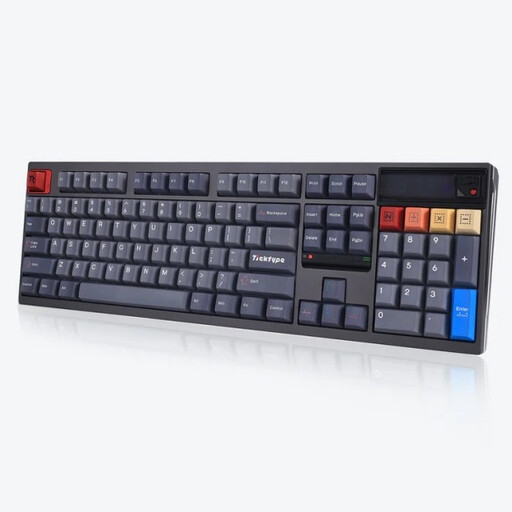 Image unavailable
Bluetooth mode may remove the need for a USB receiver if your computer supports Bluetooth.
The product name lists Bluetooth, wired and 2.4 GHz connection modes, a full-size layout with 108 keys and an 8000 mAh battery. Check which rollover specification applies to the mode you want to use.
 Image unavailable
Bluetooth may remove the need for a USB receiver if your computer supports this connection.
The product name lists wired, Bluetooth and 2.4 GHz connection modes, along with a 10,000 mAh battery. Check the rollover specification for the mode and key combinations you want to test.
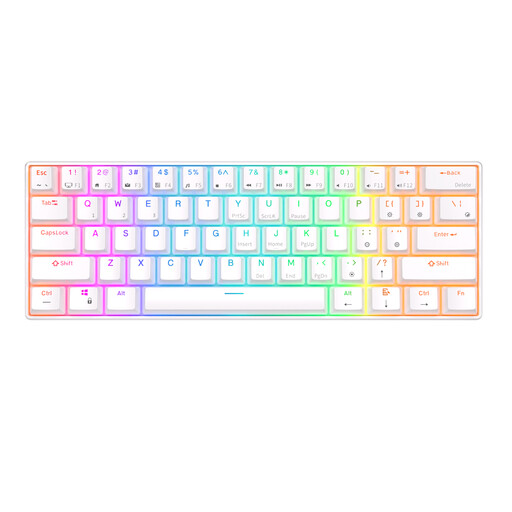 Image unavailable
Bluetooth may remove the need for a USB receiver if your computer supports Bluetooth.
The product name lists three connection modes and a 61-key layout. The product title uses the description “No-Conflict 61 Keys”; check the combinations that matter for your test.
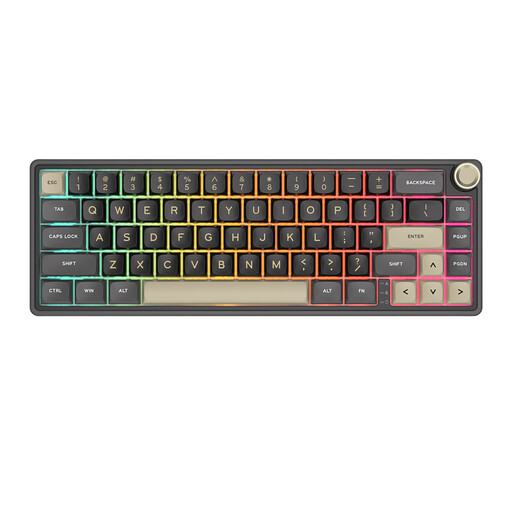 Image unavailable
A wired connection needs a free port while you use the keyboard.
The product description states that it has full-key anti-ghosting and a 66-key layout. Check that the exact version includes the keys you need, and test your own combinations.
 Image unavailable
This wired model may suit you if you want a compact layout and have a USB port available while using it.
The product description lists N-key rollover with anti-ghosting, a compact 60% form factor and a detachable USB-C cable. Check that the layout includes all the keys you need for your test.
First, check whether your computer supports Bluetooth. Bluetooth doesn’t need a USB receiver; a wired keyboard, however, needs the appropriate USB port to be free while you’re using it.
According to the Trust manual, connect the GXT 833 Thado to a free USB-A port on your computer. Check the product number of your version against the manual.
Keyboards placed on the market in the Netherlands must meet the applicable European product requirements. Wireless versions must also meet the requirements for radio equipment. The Dutch Authority for Digital Infrastructure states that the manufacturer applies the CE marking when the product complies with the requirements. Check the marking on the exact version; this isn’t a separate licence to use the product for the buyer.
No. According to ACM ConsuWijzer, your statutory rights exist alongside the manufacturer’s warranty, and what you’re entitled to depends on what you could reasonably expect from the product under normal use. If a product is faulty, contact the seller.