Choose a keyboard to suit your day-to-day work: entering lots of text in search fields, regularly typing numeric codes, or saving space and switching between devices. A full-size keyboard has a separate number pad, while a compact model takes up less room. A split layout calls for a different typing posture and may take some getting used to. Advanced search is provided by the catalogue software, not the keyboard, so check which fields, filters and shortcuts your catalogue supports.
Who is this choice relevant to?
Collection manager who enters lots of data
If you regularly enter titles and other catalogue details, consider the layout and how your workstation is set up. Arboportaal highlights repetitive tasks and static strain as factors to consider when working with screens.
Cataloguer who enters lots of numeric codes
If you regularly enter collection or shelf numbers, choosing between a separate number pad and a more compact layout matters. Logitech says the ERGO K860 has an integrated number pad; the BakkerElkhuizen S-board 840 uses NumLock for numeric input.
User with a small or shared workspace
If you often switch between your keyboard, mouse and search fields, compare the width and layout controls. If you work across multiple devices, also check which connection options the keyboard offers; Trust says the Keyra supports this.
What should you look for when choosing?
Start with the type of input you use most: text, numeric codes or controls across multiple devices. Then compare the layout with the space on your desk and the features available in your catalogue software.
| What to consider |
What should you check? |
Who is this important for? |
| Text entry and search fields |
Try the navigation and editing keys; check which search fields and shortcuts your catalogue supports. |
If I enter lots of titles, composers and search terms, I want to move quickly between fields and results. Around 31% of consumers prioritise text entry and search controls. |
| Typing posture during long sessions |
Assess the layout at your own workstation and see whether the keyboard and screen can be positioned separately. |
When entering lots of data, I want a typing posture that suits my hands and workspace, without assuming that a particular shape will prevent discomfort. Around 25% of consumers prioritise typing posture. |
| Numbers and key layout |
Compare access to numbers and the exact key layout; try entering a few codes from your catalogue. |
If I often enter collection or shelf numbers, direct access to numbers matters more to me than a narrower keyboard. Around 19% of consumers prioritise numeric input and key layout. |
| Space for your keyboard and mouse |
Measure the available space and consider where your mouse sits while you enter data and review search results. |
At a small desk, I want to keep my mouse close to my keyboard, even if that means going without a separate number pad. Around 13% of consumers prioritise desk space. |
| Switching between devices |
Check the number of supported devices, the connection options and compatibility with each device you use. |
When I catalogue on more than one device, I want to switch between them without using a different keyboard for each one. Around 12% of consumers choose a keyboard mainly for its ability to switch between devices. |
Common mistakes when choosing
-
Expecting the keyboard to add advanced search features
Search fields, filters and search term variations come from the catalogue software; how you use them varies from one application to another.
Check your catalogue’s search features first, then try the relevant keys and shortcuts.
-
Choosing a compact keyboard without considering numeric input
A compact model may not have a separate number pad. The S-board 840 offers numeric input via NumLock, but that is not the same as a dedicated number pad.
Before you choose, enter a few collection or shelf numbers using the layout you’re considering.
-
Assuming every ISO keyboard has the same key legends
The Keychron K10 Pro is available in several ISO layouts, including UK, German, Swiss, Nordic, French and Spanish variants.
Check the variant and key legends you’ve selected, especially if you often enter names and punctuation.
Keyboard brands to consider
Logitech
The ERGO K860 is a full-size split keyboard with an integrated number pad.
- Logitech lists a cushioned palm rest and adjustable feet.
- The manufacturer’s claims about posture do not guarantee reduced discomfort. Also consider the width and whether the layout suits the way you type.
BakkerElkhuizen
The wired S-board 840 is a compact option without a separate number pad.
- BakkerElkhuizen lists shortcut keys, two USB ports and numeric input via NumLock.
- Consider whether the NumLock numeric function will be enough if you enter numeric codes regularly.
Trust
The wireless Keyra combines a full-size split layout with the ability to switch between devices.
- Trust says you can switch between up to three devices using two Bluetooth connections or a USB receiver.
- Check that the layout suits your input needs and that the connections work with the devices you use.
Keychron
The K10 Pro ISO is a mechanical keyboard with key remapping and macro options.
- Keychron lists its Launcher web app for remapping keys and setting up macros.
- The ISO variants listed are UK, German, Swiss, Nordic, French and Spanish layouts. Check your chosen variant and whether your catalogue supports the actions you’ve configured.
Perixx
The wired PERIBOARD-512 has split keys and an integrated palm rest.
- Perixx lists membrane keys and a 1.8 m USB-A cable.
- Check that the connection, layout and space required suit your workspace.
Keyboards on Joybuy
The keyboards below are suited to text and numeric input, navigation and a range of workstation layouts for cataloguing.
 No image available
Wired keyboard with number pad, QWERTY
A full-size keyboard with a separate number pad, ideal if you regularly enter numeric codes.
QWERTY layout, plug-and-play and suitable for office and home use, according to the product name.
View on Joybuy
 No image available
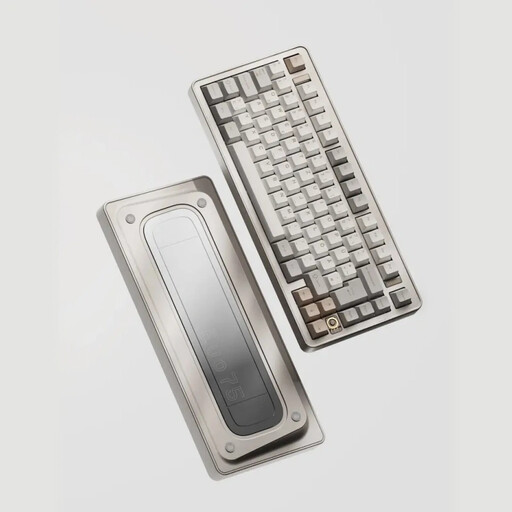
AULA F75, 75% layout mechanical keyboard
A compact layout to consider if you want to save desk space and don’t need a full-size number pad.
The product name lists a US QWERTY layout and three connection modes; check that the key legends suit your input needs.
View on Joybuy
 No image available
Ticktype EVO75, mechanical keyboard
An option to consider if you want to remap keys and your catalogue supports the keystrokes you need.
The product name lists a US layout, three connection modes and VIA compatibility. Check that the layout suits the characters you enter.
View on Joybuy
 No image available
REDRAGON wired mechanical keyboard with 94 keys
The product name mentions a wrist rest; check the layout and dimensions to see whether this model suits your workspace.
Wired mechanical keyboard with a metal casing and phone stand, according to the product name.
View on Joybuy
 No image available
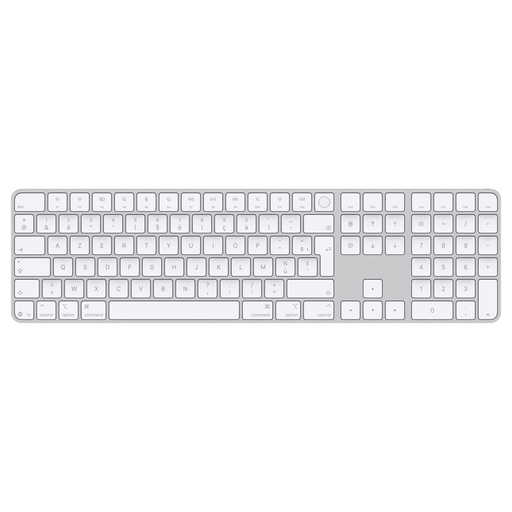
Apple Magic Keyboard with Touch ID and number pad
An extended keyboard with a number pad for anyone who regularly enters numbers and uses document navigation.
The product description says it is designed to pair with and be used on a Mac; check that it suits your computer.
View on Joybuy
Frequently asked questions
Can a programmable keyboard enable advanced searching in your sheet music catalogue?
No, not on its own. The catalogue software determines which fields and search options are available. For example, the University of Amsterdam Library describes searching for sheet music using Advanced Search, material type and search terms. A remappable keyboard can only control actions supported by the software you use, so check your catalogue’s features and shortcuts first.
How should you set up a laptop workstation for long cataloguing sessions?
For employees who work with screens for more than two hours a day, Arboportaal states that the screen and keyboard must not be attached to one another. For laptop users, this means it must be possible to use a separate screen or keyboard. This is a workstation requirement for that situation, not a general product specification for every individual buyer.
What are your rights to a guarantee and a cooling-off period when you buy a keyboard online?
A guarantee for a product that turns out to be faulty sooner than expected under normal use is separate from the cooling-off period for an online purchase. ACM ConsuWijzer explains that, in such a guarantee case, the seller must offer an appropriate solution free of charge. Online purchases often come with a statutory cooling-off period of up to 14 days after delivery, with some exceptions.


