
Tester in a quiet office
You regularly enter search terms alongside colleagues and want to be considerate about typing noise. Manufacturers describe their own models as quiet, but this is not a like-for-like comparison of their noise levels.


Start with the layout you need to enter search terms, numbers and keyboard shortcuts comfortably. Then choose between a compact wired model, a keyboard with a numeric keypad or a wireless model for multiple devices, depending on your workspace and available connections. Any claims about noise levels are made by manufacturers and are not based on comparable sound measurements.
You regularly enter search terms alongside colleagues and want to be considerate about typing noise. Manufacturers describe their own models as quiet, but this is not a like-for-like comparison of their noise levels.
You switch between words, numbers and keyboard shortcuts. The layout and whether or not there’s a numeric keypad determine which keys you need for your tasks.
You work with limited desk space or use several devices, so you need to consider which size and connection will suit your workspace.
Choose this if: you mainly enter text and filters, and rarely use a numeric keypad.
Trade-off: a TKL layout doesn’t include a numeric keypad; also check that the fixed connection suits your workspace.
Choose this if: you regularly enter numbers and can use a wireless receiver with your work computer.
Trade-off: a full-size model takes up more desk space, and a USB receiver requires an available, permitted connection.
Choose this if: you regularly switch between supported devices while testing.
Trade-off: check the layout and whether your workspace allows the required connection and any customisation software.
| Consideration | What to check before buying | Who is this important to? |
|---|---|---|
| Typing noise | Check the stated key mechanism and the manufacturer’s description; if possible, try the keyboard in a similar setting. | If I often type in a shared space, I want to be considerate towards colleagues without relying on an unverified comparison. Around 36% of consumers rank typing noise as their top priority. |
| Keyboard layout | Check the layout of the specific version and decide whether you need a numeric keypad. | If I test filter variations with different words, symbols and numbers, I want to find the keys I need where I expect them to be. Around 29% of consumers rank keyboard layout as their top priority. |
| Desk space | Compare the size you’re considering with the space available, and think about whether you can work without a numeric keypad. | At a shared or small desk, I want to leave room for my other work essentials. Around 21% of consumers rank available desk space as their top priority. |
| Connections and devices | Check which connections are permitted, which devices are supported and whether any software is required. | If I work on different test devices, I want a connection that works with my workspace and the option to switch between devices when needed. Around 14% of consumers rank connectivity as their top priority. |
Manufacturers’ descriptions are not sound tests comparing different keyboards under the same conditions. So a claim that a keyboard is quiet doesn’t tell you how it compares with other models.
If possible, try the keyboard yourself in a similar setting and don’t base your choice on an unverified ranking.
The CHERRY STREAM KEYBOARD TKL leaves out the numeric keypad to save space. This may be inconvenient if you enter a lot of numbers.
Think through your usual filter tasks in advance and decide whether you mainly type words and symbols, or enter numbers frequently too.
If you later find that you regularly need to enter numbers, you may need a separate numeric keypad.
The Trust Ody II uses a USB receiver. On a managed work computer, available connections and IT policies may determine whether you can use it.
Check the connections and IT policies before buying; don’t assume that a USB receiver means Bluetooth.
CHERRY offers the STREAM KEYBOARD and STREAM KEYBOARD TKL, both with SX scissor-switch mechanisms. The TKL version is designed for anyone who wants to save space without a numeric keypad.
The Ody II is a wireless model designed for office use. Trust describes it as having quiet, low-profile keys and a stowable USB receiver.
Logitech positions the MX Keys S for uses including working across multiple devices, programmable keys and backlighting.
These Joybuy options include compact and full-size keyboards with wired or wireless connections to suit different keyboard needs.
 No image available
This wired TKL version is an option if you’re looking for a compact keyboard with a US QWERTY layout.
Specifications: TKL size, wired and US QWERTY.
 No image available
This full-size version is an option if you want to enter numbers using a numeric keypad while testing.
Specifications: QWERTY layout, wired plug-and-play connection, black and full-size.
 No image available
This 75% version is an option if you’re looking for a compact size and several connection options.
Specifications: US QWERTY; wired, Bluetooth and 2.4G.
Variant: Gradient Grey Side-Engraved Keycaps/Reaper Switch.
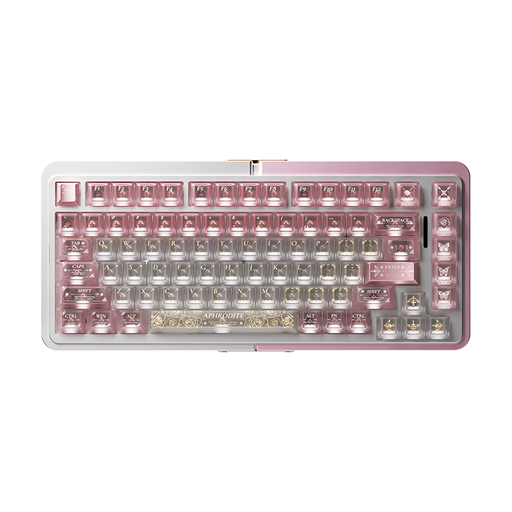 No image available
This version may suit you if you’re looking for a 75% layout and a wired mode.
Specifications: TTC Magnetic HE Switches, hot-swappable Wired Mode and Rapid Trigger.
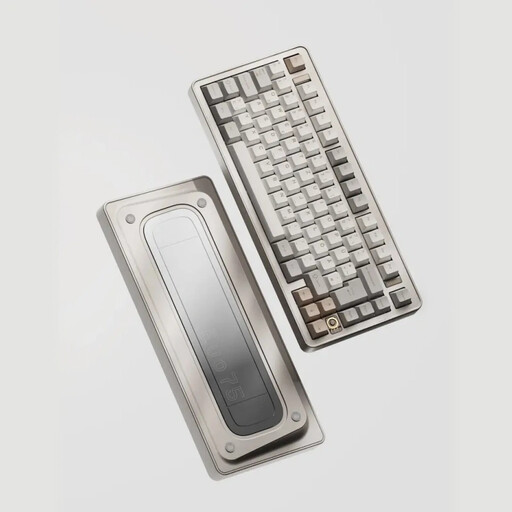 No image available
This version is an option if you’re looking for a 75% layout and connectivity with multiple devices.
Specifications: US layout, tri-mode connection, aluminium case and hot-swappable.
Variant: Leaf Spring Mount, Creamy Rye Switches, 8000mAh, RGB and Anodized First Light.
According to Arboportaal, the monitor and keyboard must not be attached to each other if an employee spends more than 2 hours a day working with a screen. Laptop users must then be able to use a separate monitor or keyboard. This is a conditional workplace rule, not a feature that every keyboard must have.
First, check which connections are allowed by your work computer and IT policy. Trust says the Ody II uses a USB receiver; Logitech says the MX Keys S can switch between up to three devices. Check that your devices are supported and that any required software is allowed.
For consumer purchases in the Netherlands, statutory warranty applies if a product does not meet reasonable expectations when used normally; a manufacturer’s warranty does not replace these statutory rights. Online consumer purchases generally come with a 14-day cooling-off period after delivery, subject to statutory exceptions. If you’re buying on behalf of a business, check separately which consumer rights apply.
Wireless keyboards placed on the EU market as radio equipment are covered by the European Commission’s Radio Equipment Directive, which includes requirements for safety and electromagnetic compatibility. The Dutch government states that electronic devices in the EU must carry a CE mark. A product listing without verifiable information about the specific version does not, by itself, prove compliance.