
Planner at a busy shared desk
You write invitations and running orders while other people work nearby. Typing noise and a suitable connection are important factors to consider; Trust describes the Ody II’s keys as quiet.


Start by thinking about what matters most at your shared desk: typing quietly, switching between computers or making room for documents. Then choose the connection and layout that suit the devices available and the planning work you do. A numeric keypad is useful if you enter lots of figures, while compact or split layouts involve different considerations.
You write invitations and running orders while other people work nearby. Typing noise and a suitable connection are important factors to consider; Trust describes the Ody II’s keys as quiet.
You work on the same activity across more than one device and don’t want to reconnect every time. The CHERRY KW 9200 MINI has multiple connection channels; Logitech says the MX Keys for Business range features Easy-Switch for up to three computers.
You regularly enter figures and amounts, and need to weigh up a numeric keypad against the space taken up by a full-size keyboard. Logitech describes the K120 as a wired model with a numeric keypad.
Choose based on the task you do most often: typing alongside others, switching between devices or entering data at a fixed workstation.
Choose this if: you type a lot of text while others are working nearby and have a spare USB port.
Bear in mind: the receiver needs to stay available, and the description ‘quiet’ is not based on independent noise measurements.
Choose this if: you switch between compatible computers and want to free up desk space.
Bear in mind: the CHERRY KW 9200 MINI has no numeric keypad. Also check which connections each device supports.
Choose this if: your computer stays in one place and you often enter amounts or figures.
Bear in mind: a cable limits how easily you can move it, and a full-size keyboard takes up more desk space.
Choose this if: you regularly type for long periods and find a split layout comfortable.
Bear in mind: it may take time to get used to the layout, and it is no guarantee against discomfort.
| Consideration | What should you look for? | Who is this important for? |
|---|---|---|
| Quiet typing | Check the description for the exact model, its layout and whether it needs a spare USB port. | If I’m typing messages or minutes alongside other people, I want to cause as little disruption as possible. Around 29% of consumers say quiet typing is their top priority. |
| Switching between devices | Check Bluetooth support, available USB ports and how many connections the keyboard can use for each computer. | If you use several computers for an activity, you won’t want to reconnect every time. Around 24% of consumers say switching between devices is their top priority. |
| Desk space | Compare the dimensions of the model with your workspace and consider whether you use a numeric keypad. | If I need room for documents and other items beside my keyboard, a more compact model matters more to me. Around 18% of consumers put desk space first. |
| Figures and budgets | Check whether the exact model has a numeric keypad and whether its physical layout suits the input language on your computer. | If you mainly enter attendee numbers or budget items, a numeric keypad can be useful. Around 17% of consumers say entering figures is their main priority. |
| Typing for long periods | Consider whether the layout feels comfortable to use, and make sure the rest of your workspace is set up well too. | For long typing sessions, I want to choose a layout that feels comfortable for me. Around 12% of consumers say typing for long periods is their main consideration. |
Models can differ in their Bluetooth and receiver connections. A USB receiver needs a suitable spare port; Bluetooth requires support on the device.
Before buying, check the ports and Bluetooth support on each computer, as well as the connection options for the exact keyboard variant.
The receiver needs to stay available, and pairing via Bluetooth may involve extra steps.
The CHERRY KW 9200 MINI has no numeric keypad, whereas a full-size model such as the Logitech K120 does.
Decide whether freeing up space or frequently entering figures matters more for your planning work.
A Dutch product title doesn’t necessarily mean the keys have a Dutch layout. The physical layout and the selected input language together determine which characters appear.
Compare the layout of the variant on offer with the input language on your computer.
An inconvenient character layout may mean extra corrections and time spent getting used to it.
The split layout of the Trust Keyra is a product feature, not a proven guarantee of health benefits. Your workstation set-up and taking breaks from screen work also play a part.
Choose a layout that feels comfortable to type on, and assess the rest of your workspace too.
The K120 is a wired office option with a numeric keypad; MX Keys for Business is a separate range with Easy-Switch for multiple computers.
Trust describes the Ody II as designed for quiet, wireless typing with a receiver; the Keyra is a separate range of split, wireless keyboards.
The KW 9200 MINI is a compact option for those using several devices; the KC 6000 SLIM is a separate full-size keyboard for a fixed workstation.
These keyboards suit different planning needs, such as having a numeric keypad, saving space or switching between devices.
 No image available
A wired option for a fixed workstation where you regularly enter figures.
Numeric keypad; QWERTY layout; plug and play; full-size.
 No image available
An option for anyone who wants to switch between multiple devices at their workstation.
Full-size; wireless connection via RF or Bluetooth; the product description says it can switch between up to three devices.
 No image available
A model to consider if you’re looking for a numeric keypad and a connection to multiple devices; Trust describes it as quiet to type on.
USB receiver and three Bluetooth channels; the product description says it connects to up to four devices; numeric keypad. The title specifies a US QWERTY layout.
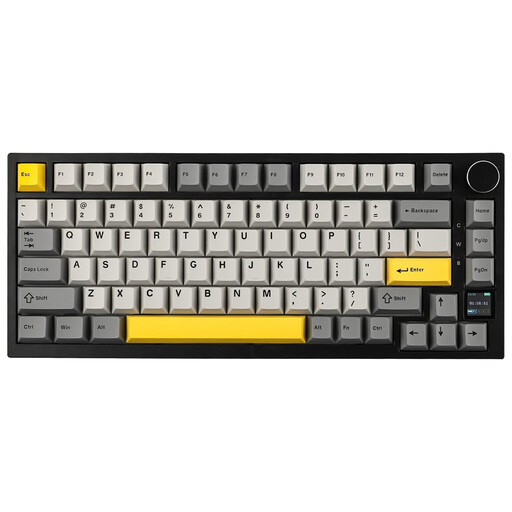 No image available
A compact layout for anyone looking to free up desk space and needing a choice of connection options.
82 keys; connects via Bluetooth, 2.4 GHz or USB-C. The title specifies a US QWERTY layout.
 No image available
A compact, wired option for a fixed workstation where you want to free up desk space.
75% layout; 83 keys; USB-C cable connection. The title specifies a US QWERTY layout.
No, not if the keyboard supports Bluetooth and your device is compatible. A model with a USB receiver does need a suitable spare port, so check the connection options for the exact version.
Agree on how to clean frequently used items, and follow the instructions for the specific keyboard and cleaning product. The RIVM lists community centres and office buildings as potential users of its general hygiene guidelines; a spill-resistant label does not mean a keyboard can be submerged.
For an applicable online consumer purchase from a business, you generally have a 14-day cooling-off period; terms and exceptions may apply. In the Netherlands, products must also meet statutory consumer guarantees, with no fixed statutory guarantee period. Contact the seller if there’s a fault.
Not every planner is. According to Arboportaal, for employees who work at a screen for more than 2 hours a day, the screen and keyboard must not be fixed together. In that situation, using a laptop must be possible with a separate screen or keyboard; whether this applies to you depends on your work and workplace.