Who is this keyboard for?

Typing alongside colleagues

You search and make notes in logs while others are working nearby. Typing noise may therefore be your first consideration. Manufacturers such as Logitech and Trust describe specific models as quieter or quiet, but this isn’t a measurement of the noise they’ll make in your workplace.

Using a terminal at a small desk

You use navigation keys and a mouse, and want to know whether a compact layout still gives you enough keys. A 75% model doesn’t have a separate number pad, so check that the key placement works for your log viewer and terminal.

Working on a managed computer

You want to know in advance whether you can use the necessary USB port, wireless receiver and any configuration software on your work computer. Your organisation’s IT rules may determine which connections or settings are allowed.

What should you look for when choosing?

What to consider What should you check? Who is this important for?
Typing noise Check the exact key or switch type. A description such as ‘quiet’ isn’t a dBA measurement for your office. Do you work alongside colleagues and want to avoid disturbing them with your typing? Around 33% of consumers in this working situation give typing noise top priority.
Layout for navigating logs Check the position of the navigation, arrow and function keys, and whether you need a number pad. If you often navigate logs, you’ll want the keys you need close to hand; around 27% of consumers prioritise the key layout.
Connection and configuration Check whether your computer has USB-A or USB-C, and whether wireless use and configuration software are allowed under your IT policy. If your work computer restricts connections or settings, you’ll want to know in advance which options you can use; around 20% of consumers make the connection their top priority.
Space and desk set-up Measure the available desk space and consider whether you can position your mouse close enough. Make sure the set-up also suits your work. Is your desk small, or would you like to position your mouse closer during long periods of screen work? For around 20% of consumers, desk set-up matters most.

Common buying mistakes

  • Taking ‘quiet’ on the packaging as a guaranteed noise level

    A manufacturer’s description doesn’t measure how loud the keyboard sounds in your office. The noise can also vary depending on the model and how you type.

    Check the exact version and, where possible, compare it with an independent measurement taken under similar conditions. Also consider whether the sound suits your workplace and typing style.

  • Choosing a compact model without checking the key layout

    A 75% keyboard takes up less space, but doesn’t have a separate number pad. The position of the navigation keys may also differ from that of a full-size model.

    Before choosing a size, compare the physical layout with the keys you use in your terminal and log viewer.

  • Assuming macros or wireless use will work on your work computer

    A receiver, wireless connection or configuration programme is only usable if your computer and IT policy allow it.

    Check which ports are available and, if necessary, ask your IT department which peripherals and configuration software you’re allowed to use.

Brands worth comparing

Logitech

According to Logitech, the MX Keys S is a full-size wireless keyboard with backlighting, device switching and programmable features.

  • Logitech says improved key stability reduces noise; this isn’t an independent noise measurement.
  • Check whether configuration software is allowed on your work computer and whether a full-size keyboard will fit on your desk.

Trust

The Ody II is a wireless model with a receiver, while the Primo is a wired keyboard with low-profile keys.

  • Trust describes the models as quiet, but the available product information doesn’t provide a comparable dBA measurement.
  • For the Ody II, check that the receiver and battery use suit your needs; for the Primo, check the cable and available port.

CHERRY

CHERRY specifies that the KC 6000 SLIM has a scissor mechanism, a full-size layout and a wired USB-A connection.

  • The official specifications list Windows compatibility, no backlighting and a width of 440 mm.
  • The product specifications don’t compare its noise with that of other models. Also check that USB-A is available.

Keychron

The K3 Max is a compact mechanical keyboard with a 75% layout, wired and wireless connection options, and customisable keys.

  • Only the RGB hot-swappable version specified by Keychron supports the stated option to change switches.
  • Check the exact version and typing noise; a mechanical keyboard isn’t necessarily quiet.

Dell

Dell describes the KB900 as a rechargeable office keyboard with backlighting and ultra-quiet typing.

  • The backlighting and quiet operation are claims made by Dell, not noise measurements from your workplace.
  • The Dutch product page mentioned is for a French AZERTY version. Check the layout of the version you’re considering.

Keyboards at Joybuy

This selection includes compact and full-size keyboards with wired and wireless connections for navigating logs on a work computer. Compare the layout and connection with your own workplace; product descriptions that mention quiet operation aren’t a measure of the noise in your office.

Wired keyboard with number pad and QWERTY layout

Wired keyboard with number pad, QWERTY

A good fit for a fixed workstation if you want a wired connection and a dedicated navigation key group.

Full-size layout with number pad and QWERTY layout.

The product information lists backlighting and a plug-and-play connection.

View at Joybuy

AJAZZ AK820 MAX compact wireless mechanical keyboard

AJAZZ AK820 MAX 75% wireless mechanical keyboard

A good fit for a smaller desk if you want a compact layout with arrow and function keys.

75% layout with 82 keys and US QWERTY.

The product information lists three connection modes and hot-swappable switches. Check the layout and typing noise before choosing.

View at Joybuy
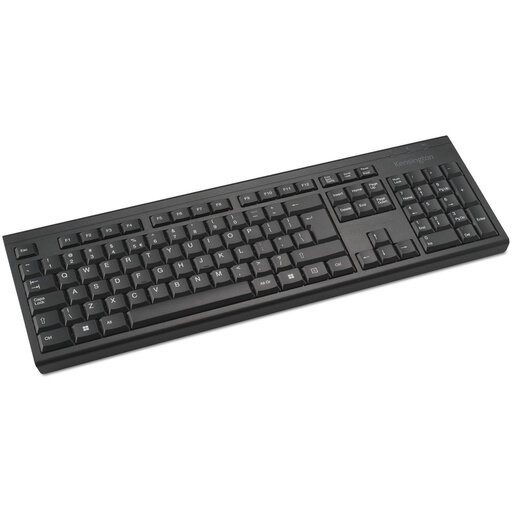
Kensington KB150 EQ wireless keyboard with number pad

Kensington KB150 EQ wireless keyboard

A good fit for a workstation where you want to use a full-size keyboard with a number pad and USB receiver.

The product information lists a 2.4 GHz receiver and membrane keyboard.

The wireless connection requires an available USB port; the listed layout is QWERTY US International.

View at Joybuy

Trust Vaiya wireless full-size keyboard with number pad

Trust Vaiya wireless keyboard with number pad

A good fit for a workstation where you want a full-size keyboard and a wireless connection.

The product information lists scissor-switch keys, Bluetooth and a USB receiver.

The layout is US QWERTY. Using the receiver requires an available USB port; the description of the keys as quiet isn’t a noise measurement.

View at Joybuy

AJAZZ AK820 compact wired mechanical keyboard

AJAZZ AK820 75% wired mechanical keyboard

A good fit for a smaller desk if a wired connection and compact layout suit the way you work.

75% layout with 82 keys and US QWERTY.

The product information lists hot-swappable linear switches. Check that the key layout works for navigating your logs.

View at Joybuy

Frequently asked questions

Do you need special macro keys to inspect logs?

Not necessarily. First, check which keys and commands you use in your terminal or log viewer. Windows Terminal has a search function for the text buffer. Programmable keys are only useful if you’re allowed and able to configure them on your work computer.

How do you connect a keyboard to a managed work computer?

Compare the connections on the exact version with the available ports and permitted connections on your computer. Trust lists a USB-C cable with a USB-A converter for the Primo, and a USB receiver for the Ody II. If you’re unsure, ask your IT department which peripherals and configuration software are allowed.

Should you use a separate keyboard when working on a laptop for long periods?

For employees who spend more than 2 hours a day working with a screen, Arboportaal states that the screen and keyboard must not be attached to each other. With a laptop, it must therefore be possible to use a separate screen or keyboard; this requirement doesn’t necessarily apply to every buyer.

What can you do if a keyboard develops a fault during normal use?

For a consumer purchase in the Netherlands, you can contact the seller if a product is faulty and doesn’t meet the required standard. The Dutch government says there is no fixed statutory two-year warranty period; a manufacturer’s guarantee is separate from your statutory rights.

Does a CE mark mean you can use a wireless keyboard on any company network?

No. European rules for radio equipment include requirements for safety and electromagnetic compatibility, among other things. A CE mark indicates that the manufacturer declares the product complies with the applicable product rules; it doesn’t mean that your employer’s internal IT policy allows you to use it.
