
Route planner who wants to work without a mouse
You want to reach route points and controls using the keyboard. Whether you can do that also depends on the route planner you use.


Choose a keyboard with a layout and navigation keys that suit the way you write your route guide, but also check whether your route planner supports the actions you need without a mouse. The W3C Web Accessibility Initiative states that pointer actions must have a keyboard equivalent, so test adding, editing, saving and sharing a route in the software you use.
You want to reach route points and controls using the keyboard. Whether you can do that also depends on the route planner you use.
You enter place names and directions, and want a layout and navigation keys that suit the way you edit.
You work across several devices or locations, and weigh up a compact size and easy switching between devices against the accessibility of the keys.
A keyboard can’t provide a route-planning function that’s only accessible with a mouse. Test the route planner you intend to use, and also consider the keyboard’s layout, connection and form.
| What to consider | What to look for | Who is this important for? |
|---|---|---|
| Route points without a mouse | Use Tab, Shift+Tab, Enter and the arrow keys to test whether you can add, edit and save points. | If you want to edit route points without a mouse, the key thing to test is the planner itself; around 36% of consumers prioritise mouse-free route controls. |
| Layout and text editing | Compare the physical keyboard layout with your system settings and check where the navigation keys are. | If you often edit place names and directions, the layout and key positions matter; around 29% of consumers prioritise text entry and navigation keys. |
| Hand position | Consider whether the shape and key spacing feel comfortable, and whether frequently used keys are easy to reach. | For long writing sessions, you’ll want to find a comfortable hand position and easy-to-reach keys; around 21% of consumers prioritise hand comfort. |
| Multiple workspaces | Check which devices are supported, the connection method, the power supply and the position of the navigation keys. | If you switch between devices or locations, weigh up a compact size against familiar keys; around 14% of consumers start with portability and switching between devices. |
Google Maps describes keyboard controls for parts of the map. Komoot describes entering waypoints, but documentation for individual actions doesn’t confirm that you can complete the entire route-planning workflow without a mouse.
Before choosing, use only the keyboard to go through the actions you need, including adding, editing, saving and sharing.
If you can’t access a particular step, you may need a different way of working or another route planner.
The Joybuy listing for an HP 350 is a Belgian AZERTY version. The physical layout determines which characters you type.
Check the layout of the exact version and compare it with your computer’s input settings.
Keyboards can use different connections or connection methods, so check that they suit your computer and workspace.
Check the exact version to see which connection, wireless link and power supply it requires.
The KC 1000 is a full-size wired option for a fixed Windows workstation.
The MX Keys S may be worth considering if you switch between devices or want to set up repeated actions.
The Lyra is a compact option for multiple devices; Trust describes the Keyra as having a split layout.
The HP 350 Compact Multi-Device is a compact Bluetooth option for use with multiple devices.
This selection includes keyboards for writing route directions, with options for a fixed or compact workspace and wired or wireless connections. You should also test the route actions you need in your own route planner.
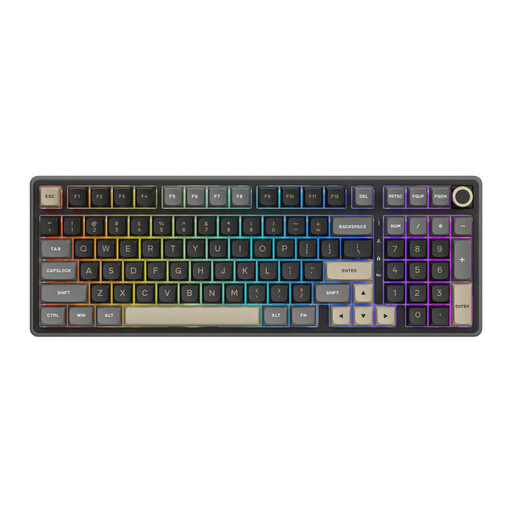 No image available
Suitable for writing route directions at a fixed workspace if you want a numeric keypad.
Wired mechanical keyboard; the product name also mentions a volume knob and Beige Switch.
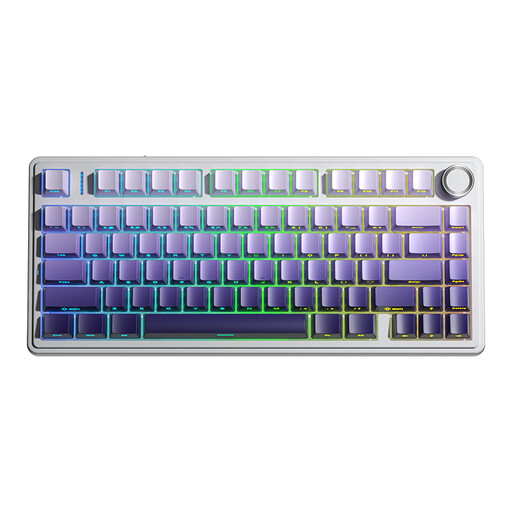 No image available
Suitable for writing route directions on a compact keyboard if you check the layout and connection carefully.
The product name lists QWERTY US and tri-mode: wired, Bluetooth and 2.4G.
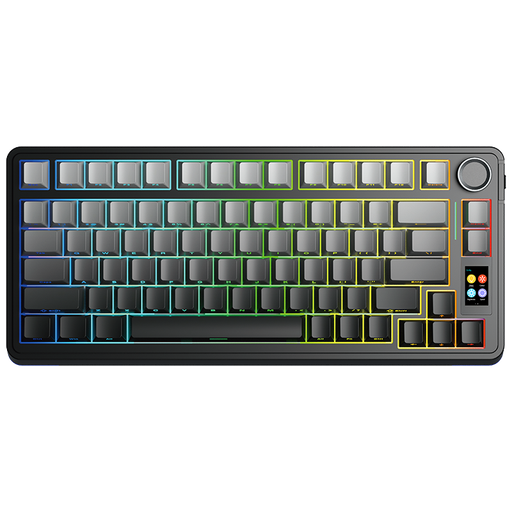 No image available
Suitable for typing route directions on a compact keyboard in a wireless workspace.
The product name lists tri-mode and a TFT display with a rotary knob.
 No image available
Suitable for typing route directions across multiple devices if you’re looking for a rechargeable wireless model.
The product name describes a wireless keyboard for multiple devices.
 No image available
Suitable for writing route directions on a compact keyboard if you want to weigh up wired and wireless connections.
The product name lists tri-mode, a QWERTY US layout and an 8000mAh battery.
No, not by itself. Google Maps describes keyboard controls for parts of the map, and Komoot documents waypoint entry; this doesn’t confirm that every step of the route-planning workflow works without a mouse. Test the actions you need in the software you intend to use.
Start with the map and the route actions you actually need. Google Maps Help explains how to use Tab on a computer to focus on the map, the arrow keys to move around and Ctrl+/ to open a list of keyboard shortcuts. Also test adding, editing and saving routes separately.
Check the exact keyboard layout and connection for the model, and compare them with your computer settings and workspace. CHERRY lists USB-A for the KC 1000; with compact models, it’s also worth checking where the navigation keys are.
In the Netherlands, the statutory guarantee has no fixed term. According to ACM ConsuWijzer, it depends on how long you can reasonably expect the product to last with normal use. If there’s a fault covered by the statutory guarantee, the seller is responsible for providing an appropriate solution; a manufacturer’s warranty doesn’t replace this right.
That doesn’t automatically apply to every product or service. The Dutch Authority for Digital Infrastructure describes the product groups covered by accessibility rules since 28 June 2025; the ACM describes separate rules for e-commerce services. This doesn’t, by itself, establish that an individual keyboard or a specific route planner falls within their scope.