For testing simultaneous key presses, specified rollover and anti-ghosting support are relevant; CHERRY lists both for the KC 200 MX. If you want to test which opposing key takes priority, choose a model with the SOCD rules you want to examine: Wooting describes several settings, while Razer describes Snap Tap as giving priority to the most recent input from two selected keys. Compare the exact switch and layout too, as a sound-dampening design doesn’t prove how quiet the complete keyboard is.
Who is this relevant to?
Users in a quiet study space
You want to investigate key behaviour or do a lot of typing without disturbing others. That makes the switch type and the construction of the complete keyboard important. RTINGS discusses switch and sound-dampening factors in quiet keyboards; CHERRY offers the KC 200 MX with a choice of switch types.
Testers of simultaneous key presses
You want to know whether key combinations are fully registered and unexpected input is prevented. Check the specified rollover and anti-ghosting support; CHERRY lists both for the KC 200 MX, while Keychron specifies NKRO for the Q1 HE.
Testers of opposing keys
You’re investigating what happens when opposing directional keys are active at the same time. The available SOCD rules are key here: Wooting describes several options, while Razer describes Snap Tap for two selected keys.
What should you look for?
Simultaneous key registration
Choose this option if: you want to find out whether several pressed keys are registered.
Keep in mind: rollover and anti-ghosting don’t answer the question of which opposing direction takes priority.
SOCD for opposing keys
Choose this option if: you want to test neutral output, fixed priority or priority for the most recent input.
Keep in mind: available settings vary by model; check that the exact version has the feature you want.
| Consideration |
What should you check? |
Who is this important for? |
| Typing noise |
Compare the exact switch type and, if noise is a deciding factor, look for a measurement of the complete keyboard. |
If you type in a shared, quiet space, you’ll want to know how the complete version sounds. Around 36% of consumers put quiet operation first. |
| Simultaneous key presses |
Check the rollover specification for the exact model and the connection mode it applies to. |
If you test key combinations, you’ll want to assess missed or unexpected input. Around 29% of consumers prioritise full registration of simultaneous key presses. |
| Opposing keys |
Decide whether you need neutral output, fixed priority or priority for the most recent input, then check that setting for the model. |
When you investigate opposing keys pressed at the same time, you’ll want to be able to choose the output rules. Around 21% of consumers put configurable SOCD rules first. |
| Layout and connection |
Check the layout, the keys you need and the available connection modes for the exact version. |
If your keyboard also needs to suit your study setup, the layout and device switching may be decisive. Around 14% of consumers prioritise a suitable layout or connection. |
Common buying mistakes
-
Assuming anti-ghosting means configurable SOCD
Registering simultaneous key presses and handling opposing directional keys are two different things to test. A mention of anti-ghosting doesn’t prove that you can adjust the SOCD rules.
Decide in advance what behaviour you want to test, then check the relevant model specification.
-
Assuming a quiet switch makes for a quiet keyboard
The case, sound dampening and stabilisers also affect how much noise you hear. A switch description alone doesn’t tell you how loud the complete keyboard is.
Check the exact version and look for a measurement of the complete keyboard if noise levels matter to you.
-
Assuming a similar product title means it’s the same version
A model name can cover different connection options, switches or layouts. These differences can determine whether the keyboard suits your test and setup.
Check the model code, connection, switch and layout on the product details page before ordering.
Brands to consider
CHERRY
The KC 200 MX is worth considering if you want specified NKRO and anti-ghosting support alongside a choice of switch types.
- CHERRY lists NKRO and anti-ghosting for the KC 200 MX.
- MX2A Silent Red is a specific version. Its description isn’t an independent measurement of the complete keyboard’s noise, and the listed features don’t confirm configurable SOCD.
Wooting
The 80HE is worth considering if you want to explore different SOCD rules for opposing keys.
- Wooting describes settings for last-input priority, fixed priority and neutral output.
- The manufacturer lists sound-dampening components, but this doesn’t establish a noise level or a comparative advantage. The model is described as wired.
Razer
The Huntsman V3 Pro range is worth considering if you want to test priority for the last-pressed of two selected keys.
- Razer describes Snap Tap as a feature that can be switched on and off for two selected keys.
- This description doesn’t confirm the same choice of neutral, fixed and last-input priority as the SOCD settings described by Wooting.
Keychron
The Q1 HE is worth considering if wireless device switching and specified NKRO in wired and wireless modes are important to you.
- For the Q1 HE version reviewed, Keychron specifies NKRO in both modes and Bluetooth for up to three devices.
- The specification is for an ANSI version and doesn’t confirm configurable SOCD or measured typing noise for a Dutch version.
Logitech G
The G515 LIGHTSPEED TKL is worth considering if you’re looking for a low-profile design, wireless use and a sound-dampening construction described by the manufacturer.
- The manufacturer describes a sound-dampening construction.
- This description doesn’t establish a noise level or confirm the rollover or SOCD behaviour you need for your test.
Joybuy products
A selection of Joybuy keyboards for key rollover testing and use in a quiet study space. Check that the input feature, switch and layout listed for each version suit your test.
 No image available
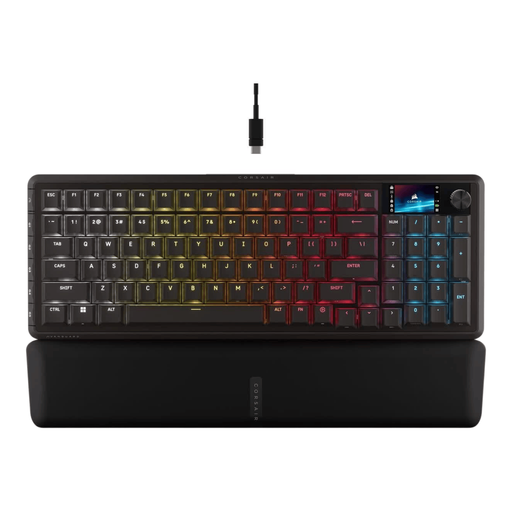
Corsair Vanguard 96 Wireless Mechanical Gaming Keyboard
The product description mentions configurable FlashTap SOCD logic, which is relevant if you want to investigate how opposing keys are handled.
The title lists a 96% layout, wireless connection, US QWERTY and black finish. The description mentions four layers of sound-dampening foam; this isn’t a measurement of the complete keyboard’s noise level.
View at Joybuy
 No image available
NAXSIR Foldable Bluetooth Keyboard
The foldable design and magnetic stand make it suitable for typing on the go with a phone or tablet.
The title lists Bluetooth, a rechargeable design and quiet keys; the product description mentions scissor-switch keys. Check separately whether it has the rollover or SOCD feature you need for your test.
View at Joybuy
 No image available
Ticktype DP104 Custom Tri-Mode
The title lists silent tactile switches, which may be relevant if typing noise matters to you; this isn’t a measurement of the complete keyboard’s noise.
The title lists 108 keys and a US layout. The product description mentions tri-mode connectivity and a full-size layout.
View at Joybuy
 No image available
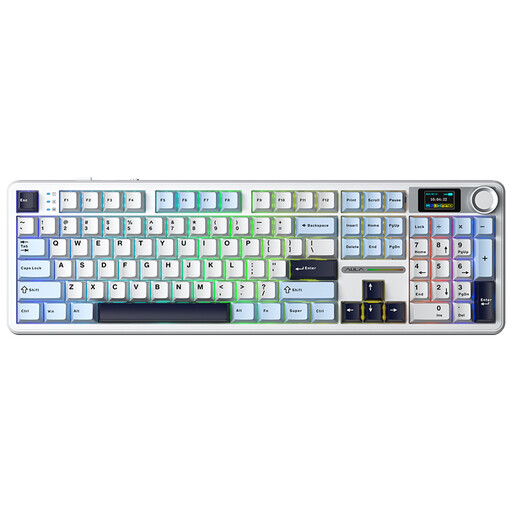
AULA F108 Pro
The description mentions a gasket construction which, according to the description, is designed to reduce noise and vibration; this doesn’t establish a noise level.
The title lists a wireless mechanical keyboard with tri-mode connectivity: Bluetooth, 2.4G and USB-C. It also mentions a hot-swappable design and Reaper linear switches.
View at Joybuy
 No image available
AJAZZ AK820 MAX 75%
The product description mentions a gasket construction and five layers of foam; this isn’t a measurement of typing noise.
The title lists a 75% layout, tri-mode connectivity, Flying Fish linear switches and US QWERTY. Check whether the compact layout includes the keys you need for studying or testing.
View at Joybuy
Frequently asked questions
Are anti-ghosting, NKRO and SOCD the same thing?
No. CHERRY lists anti-ghosting and NKRO as features for simultaneous input. SOCD concerns the output when opposing directional keys are active at the same time, so first decide what behaviour you want to investigate.
How do you set priority for opposing keys?
It depends on the feature available on the exact model. Wooting describes options for last-input priority, fixed priority and neutral output. Razer says Snap Tap is switched off by default on the Huntsman V3 Pro range and can be toggled via Synapse or Fn + left shift. Check the setting before you test.
What rights do you have if a keyboard bought online isn’t suitable?
For distance purchases from a business, you generally have a 14-day cooling-off period, with some exceptions. You’re also entitled to goods that conform to the contract in the Netherlands. The Dutch government says there’s no fixed statutory guarantee period and that you should contact the seller if a product is faulty.
Does a CE mark prove that a keyboard is quiet or registers keys correctly?
No. According to the European Commission, the manufacturer uses the CE mark to indicate that the product complies with the applicable EU product rules; CE marking is only required when those rules say it is. The mark isn’t proof of typing noise, NKRO or SOCD performance.


