What should you look for?
Start with the physical layout and connection, then weigh up how much importance you place on typing noise, repetitive tasks and space for your mouse.
| What to consider |
What should you check? |
Who might find this more important? |
| Typing noise |
Check the exact key mechanism and, for a mechanical model, the switch variant. A description such as ‘quiet’ doesn’t guarantee that your colleagues won’t hear you. |
If I type a lot of text close to colleagues, I want to avoid typing becoming an unnecessary distraction. Around 36% of consumers prioritise less disruptive typing. |
| Shortcuts and repetitive tasks |
Check which keys you can customise, what software you need and whether you’re allowed to use it at work. |
If I often make the same map edits, I want to do them using useful shortcuts or customisable actions. Around 29% of consumers prioritise repetitive tasks. |
| Mouse space and layout |
Compare a compact model with a full-size one and decide whether you use the number pad. Also consider your workstation setup. |
If I want to keep my mouse close while drawing, I pay attention to the keyboard’s width. Around 21% of consumers choose mainly with mouse space and working posture in mind. |
| Connection and devices |
Check whether your computer supports Bluetooth or the required USB connection, and whether the physical key layout suits you. |
If I switch between several devices for design work, I want a connection that works for them. Around 14% of consumers focus mainly on switching between devices and connection options. |
Keyboards at Joybuy
This selection includes compact and full-size keyboards for design work, with a range of layouts, connections and customisation options.
 No image available
Ticktype EVO75 Custom Tri-Mode Mechanical Keyboard, Creamy Rye Switches, US Layout
Could suit repetitive tasks if you can use the customisation options mentioned with your design software.
75% layout; US layout; VIA compatible; hot-swappable switches. The US layout may differ from the layout you’re used to for Dutch symbols and shortcuts.
Joybuy
 No image available
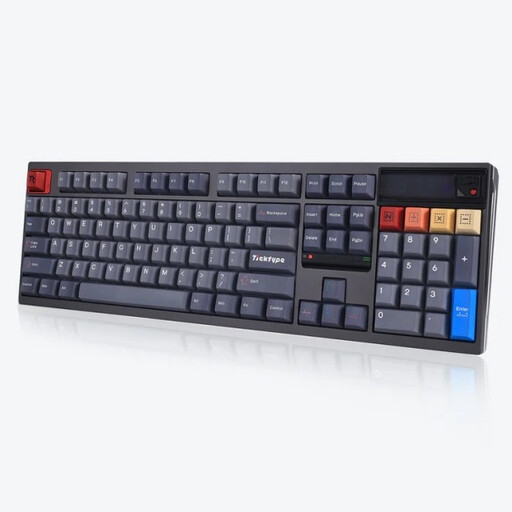
Ticktype DP104 Custom Tri-Mode Mechanical Keyboard, 108 Keys, US Layout
Could suit you if you enter numbers often and want a full-size keyboard with a number pad.
108 keys; US layout; hot-swappable switches. A full-size keyboard takes up more desk space than a compact one. The US layout may differ from the layout you’re used to for Dutch symbols and shortcuts.
Joybuy
 No image available
AJAZZ AK820 MAX 75% Wireless Mechanical Keyboard, Flying Fish Switches, US Layout
Could suit you if you’re looking for a more compact mechanical keyboard and want to switch between several devices.
75% layout; US layout; Bluetooth, 2.4G and USB-C according to the product title. The US layout may differ from the layout you’re used to for Dutch symbols and shortcuts.
Joybuy
 No image available
Trust Vaiya Wireless Keyboard, Full-Size Numpad, QWERTY US
Could suit you if you want a full-size keyboard with a number pad and work wirelessly with several devices.
The product description mentions a USB receiver, Bluetooth and connection to up to four devices. The QWERTY US layout may differ from the layout you’re used to for Dutch symbols and shortcuts.
Joybuy
 No image available
Ajazz AK820 Pro 75% Mechanical Tri-Mode Keyboard, Flying Fish Switch, QWERTY US
Could suit you if you want a more compact keyboard beside your mouse and need a choice of connection options.
75% layout; QWERTY US; wired, Bluetooth and 2.4G according to the product title; hot-swappable. The US layout may differ from the layout you’re used to for Dutch symbols and shortcuts.
Joybuy
Frequently asked questions
Which key layout should I check for my mapping software?
Check the physical layout of the exact version and the keyboard language set on your computer. Symbols and keyboard shortcuts matter for design work; which combinations work depends on the software you use.
How do I connect a wireless keyboard to a shared work computer?
It varies by model: Trust describes the Ody II as having a USB receiver, while Logitech lists Bluetooth and switching between three devices for the Pebble Keys 2 K380s. Check which connection your computer supports and whether you’re allowed to pair devices with your work computer.
Is a keyboard described as quiet always quiet enough for a shared office?
No. That description alone doesn’t indicate a comparable sound level. Check the exact key or switch variant, and bear in mind that the manufacturer’s description alone can’t determine how loud it will sound.
Is changing your keyboard all you need for long periods of map design?
No. Arboportaal also recommends setting up your workstation correctly and varying your posture and tasks. It also states that for employees who work with a screen for more than two hours a day, the screen and keyboard must not be attached to one another. This requirement applies to the work situation described and isn’t a general product specification for every buyer.
What are my rights if a keyboard bought online isn’t suitable or is faulty?
According to the Government of the Netherlands, online purchases from a business generally come with a 14-day cooling-off period. The product must also comply with the agreement; if it’s faulty or has another defect, you can contact the seller. The Government of the Netherlands states that there is no fixed statutory warranty period in the Netherlands.


