
Level designers who use keyboard shortcuts
You often switch between editor commands while building levels and want to check which physical keys and custom shortcuts you need first. Unity, for example, lets you assign shortcuts and manage conflicts.


Start with the shortcuts in your level editor: choose a layout that puts the commands you use most within easy reach. A compact keyboard can leave more room for your mouse, while a split or full-size layout may suit you better if hand position or direct number entry is more important. Set up your workstation properly and change position throughout the day, too; a keyboard alone won’t determine how your workspace feels.
You often switch between editor commands while building levels and want to check which physical keys and custom shortcuts you need first. Unity, for example, lets you assign shortcuts and manage conflicts.
You also write scripts, descriptions or notes, and want to weigh up the keyboard shape against your workstation setup. TNO recommends setting up your workstation properly and changing position regularly.
You use your mouse a lot to place objects and want to check whether a keyboard without a separate number pad would leave more room on your desk.
First, check which keys you use most in your editor. Then weigh up the physical layout, mouse space and other practical requirements against your workstation and equipment.
| What to consider | What to look for when buying | Best suited to |
|---|---|---|
| Editor keys | Compare your list of commands with the physical layout, function keys, arrow keys and any Fn layer. Unity supports managing editor shortcuts; available features vary by editor. | If I use editor commands often, I want the keys I need to be easy to reach. Around 33% of consumers give editor keys top priority. |
| Hand position and workstation | Assess a straight or split layout alongside desk height and arm position, both sitting and standing. TNO recommends setting up your workstation properly and changing position regularly. | When I type for long periods, I want a layout that suits my hands and workstation. Around 27% of consumers put this consideration first. |
| Mouse space | Check the keyboard’s actual width and think about how often you use a separate number pad. An integrated number function works differently from a separate number pad. | If I use my mouse a lot to place and drag objects, I want to leave enough room beside the keyboard. Around 20% of consumers prioritise mouse space. |
| Connectivity and devices | Check whether your computer supports Bluetooth, a USB receiver or a cable, and whether you’re allowed to use any configuration software on that computer. | When I switch between my work computer and another device, I want a connection that works with both. Around 13% of consumers prioritise connectivity and switching between devices. |
| Key noise | Check the specific switch variant and assess its sound in the conditions you work in. Don’t assume how noisy it is based on terms such as mechanical or ergonomic. | If other people work nearby, I want to know how much noise my chosen variant makes. Around 7% of consumers prioritise quieter keys. |
Which shortcuts are practical depends on both the editor and the physical layout. A compact layout may make certain keys or functions harder to reach.
Make a list of the commands you use most in advance, then check the exact layout and any key layers.
Setting up a usable key layout may take extra time.
The shape of the keyboard is just one part of your workstation setup. TNO also stresses the importance of setting up your workstation properly and changing position regularly.
Assess the keyboard shape alongside the position of your desk and mouse, and change position as you work.
According to the manufacturer, the BakkerElkhuizen S-board 840 has no separate number pad, but does have an integrated number function. These are not the same thing.
Think about how often you enter level values and whether the integrated function will suit your needs.
If it doesn’t meet your needs, you may need a separate number pad.
The customisation options on products such as the Logitech MX Keys S and Keychron K3 Max rely on their respective software.
Check that the required software works on your computer and that you’re allowed to use it there.
The K3 Max ISO is a compact mechanical option with customisable keys for editor work.
The wired S-board 840 is a compact office option if mouse space matters to you.
The MX Keys S is a low-profile keyboard with a full-size layout; the ERGO K860 has a split frame and number pad.
According to Trust, the Keyra is a split wireless keyboard that lets you switch between devices.
The PERIBOARD-535II is a wired, split mechanical option for anyone wanting to compare different switch variants.
These Joybuy products have compact layouts. Compare their layouts and connectivity with the editor keys and mouse space you need.
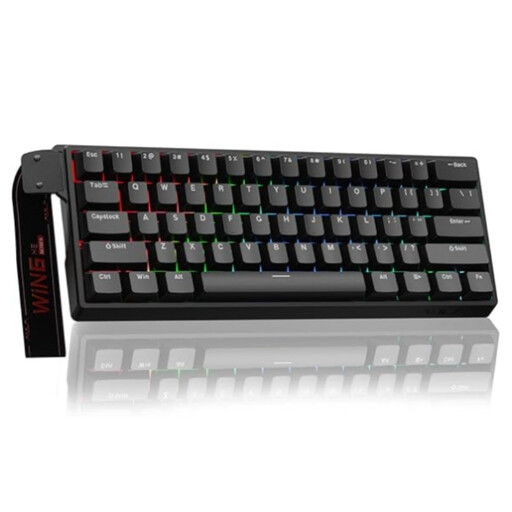 Image unavailable
The wired 60% layout is worth considering if you want to save desk space; first, check that the editor keys you need are easy to reach.
60% layout; wired; Hall Effect Magnetic Switch.
 Image unavailable
The 75% layout is a compact option to compare with your editor commands and available mouse space.
75% layout; QWERTY US; Tri-Mode: wired, Bluetooth and 2.4 GHz.
 Image unavailable
The 75% layout is a compact option to weigh up against the keys you want to access directly in your editor.
75% layout; wireless; QWERTY US.
 Image unavailable
The 68-key layout is a compact option to consider alongside your mouse; check that the keys you use most are easy to reach in your editor.
68 keys; magnetic switches; US layout.
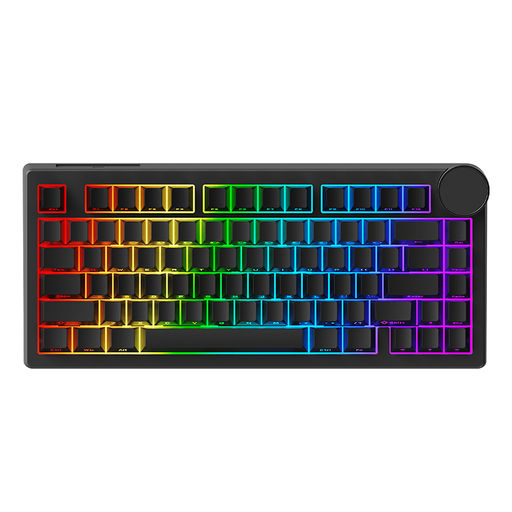 Image unavailable
The 75% layout, with its function row and arrow keys, is worth comparing with the function keys you use in your editor.
75% layout; wired; magnetic switches.
Not necessarily. First, check your editor’s shortcuts: Unity, for example, lets you assign and change shortcuts, and manage conflicts. A programmable keyboard may be useful as an extra option if you also want to set up keys or macros on the keyboard itself and can use the required software.
Set up your workstation to suit each position and switch between them. TNO stresses both a properly set up workstation and changing position; working only while standing or choosing a different keyboard doesn’t replace these considerations.
For online consumer purchases in the Netherlands, you’ll generally have up to 14 days after delivery to change your mind, subject to applicable exceptions. ACM ConsuWijzer explains the cooling-off period; your statutory rights for a faulty product are separate from any manufacturer’s guarantee.
Arboportaal doesn’t specify one universally required keyboard model. However, according to Arboportaal, for employees who work with a screen for more than two hours a day, the screen and keyboard must not be attached to each other; this requirement applies in that working situation.