
Writers and editors
If you write instructions and edit text, look for a familiar layout and keys that make it easier to navigate through text.


Start with a physical keyboard layout that feels familiar and makes frequently used navigation keys easy to find. A wired keyboard can be practical if you want a simple connection without wireless pairing. A compact model frees up space for reference materials, while a wireless one may be useful if you write on several devices. Don’t assume app-controlled extra features will work when you’re completely offline without checking first.
If you write instructions and edit text, look for a familiar layout and keys that make it easier to navigate through text.
If you sometimes work without internet access or additional accounts and apps, it’s worth distinguishing standard keyboard input from features that require software.
If you use documents alongside a computer and mouse, consider the keyboard’s dimensions and how your chosen layout will fit your workspace.
Best for: writing on one computer with a compatible USB-A port, if you want a number pad and dedicated navigation keys.
Bear in mind: the cable and wider design can take up space alongside printed reference materials and a mouse.
Best for: a desk where documents or a mouse need room, and you don’t want a wireless connection.
Bear in mind: check whether you often use a number pad or keys that may be missing from a compact layout.
Best for: writing on several devices, provided their connections and the layout suit the way you work.
Bear in mind: wireless use means charging and pairing; check software features separately if you work offline.
Best for: anyone looking for a compact setup who wants the choice of a wired or wireless connection.
Bear in mind: with a 75% layout, check where the navigation keys are and which variant offers the features you want.
The table covers consumers choosing a keyboard for this writing task; each row highlights their main purchasing priority.
| What to consider | What to look for when buying | Who should pay particular attention? |
|---|---|---|
| Layout and navigation keys | Compare the physical key positions with your current keyboard and check the navigation keys and frequently used characters on the exact version. | I don’t want to keep searching for familiar keys while writing and editing. Around 31% of consumers prioritise a familiar layout. |
| Offline usability | Check the connection and system requirements; test any essential software features in your offline workflow beforehand. | When I work without internet access or an account, I want to enter standard text without relying on extra software. Around 25% of consumers give offline usability top priority. |
| Typing comfort | Assess your hand position at your own workstation and check whether frequently used keys are comfortable to reach. | During longer writing sessions, I mainly want a keyboard layout that suits the way I work. Around 25% of consumers prioritise their hand position and ease of use. |
| Space for reference materials and a mouse | Measure the available desk width and consider whether you often use a separate number pad. | I want to use documents and a mouse alongside my keyboard, and I can manage without a dedicated number pad. This need for space is a priority for around 19% of consumers. |
The position of keys and symbols can vary between physical versions, even when the letter sequence is QWERTY.
Compare product images and the version code with the key positions you’re used to.
A keyboard that enters text doesn’t guarantee that account-linked shortcuts or a software-controlled break indicator will work without extra steps.
Decide which features you need when writing offline and check their requirements separately.
A smaller layout may reposition or omit keys you use often, such as the number pad.
Compare the exact layout with the navigation and number-entry keys you use when editing.
The KC 1000 is a full-size wired option for a fixed Windows workstation.
The Compact Break is a compact option when documents and a mouse need workspace.
The MX Keys S is a wireless option for anyone who works across several devices or wants backlit keys and customisable features.
The K3 Max is a compact mechanical option with several connection methods.
This selection includes compact wired keyboards, full-size models and a wireless option for anyone using several devices.
 No image available
A compact wired option for anyone who wants to leave room for printed reference materials and a mouse.
75% layout, mechanical keys and US QWERTY.
 No image available
A compact wired choice if you want to keep desk space free for reference materials.
60% layout, US QWERTY, 61 keys and RGB backlighting. This layout has no number pad.
 No image available
A full-size model for anyone who wants a separate number pad and has enough desk space.
Wired, QWERTY, full-size and plug-and-play.
 No image available
A full-size wireless option for anyone who wants to keep a number pad.
US QWERTY, number pad and scissor keys. The wireless connection uses a rechargeable battery, so bear charging and pairing in mind.
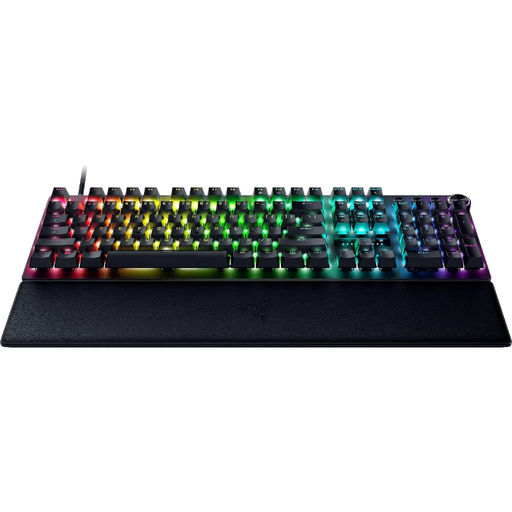 No image available
An option for anyone looking for a US QWERTY layout and using a wired workstation; check that the layout suits your everyday typing.
US QWERTY layout.
No, choose a keyboard based on the computer and operating system you use for writing. For a specific model, check the connection and system requirements; for example, CHERRY lists Windows and USB-A for the KC 1000.
You can’t tell just from the presence of programmable keys. Logitech describes Smart Actions as part of Logi Options+ and says you need to be signed in to an Options+ account to use it. Test any essential shortcuts beforehand in the offline workflow you use.
For professional screen-based work lasting more than two hours a day, the screen and keyboard must not be attached to one another, according to Arboportaal, part of the Ministry of Social Affairs and Employment. If using a laptop, the employee must be able to use a separate screen or keyboard. A document holder and alternating with other tasks or taking a break can also be part of the workstation setup; this is not a general purchasing requirement for every home user.
For a standard online purchase, consumers often have a statutory cooling-off period of up to 14 days after delivery, subject to exceptions; ACM ConsuWijzer explains this period. Faulty products are also covered by the statutory guarantee: according to the Dutch Government, there is no fixed statutory guarantee period in the Netherlands, and the seller must provide a solution for a faulty product. Before buying, check the applicable returns policy and who the seller is.