
Writer in a shared study
You want to write a label without the sound of the keys distracting other people. Trust and Logitech describe specific models as quiet; assess the sound and key feel of the version you’re considering.


Start with a keyboard layout that makes punctuation and editing keys easy to find, then assess the sound and typing feel of the exact version you’re considering. A model described by its manufacturer as quiet may be worth considering for a shared study, but without comparable sound measurements, that’s no guarantee of a particular noise level. Also take into account the space available on your desk and how the keyboard connects to your computer.
You want to write a label without the sound of the keys distracting other people. Trust and Logitech describe specific models as quiet; assess the sound and key feel of the version you’re considering.
You check names, punctuation and wording, and want the keyboard’s physical layout to match the input layout on your computer. Microsoft Support explains how to check the active input layout in Windows.
You want to leave room beside the keyboard for notes or a mouse. Choosing between a compact model and a larger keyboard also depends on which keys you want to be able to use straight away while editing.
First check the physical layout and connection, then compare the typing feel, sound and amount of space the keyboard takes up.
| What to consider | What should you check? | Who should pay particular attention? |
|---|---|---|
| Key sound and feel | Assess the feel of the exact version; a description such as ‘quiet’ is not a comparable sound measurement. | In a quiet study, I want to be able to type repeatedly without unnecessarily disturbing others. That’s why around 36% of consumers prioritise key sound and feel. |
| Layout and text editing | Check the physical punctuation and editing keys, and confirm the active input layout on your computer. | When correcting names and punctuation, I want the key labels to match the input settings. Around 29% of consumers put layout and text editing first. |
| Typing comfort | Try the feel and shape of the keys; don’t choose an ergonomic design expecting it to resolve any discomfort. | When writing for a long time, I want a posture and key feel that are comfortable for me. Around 21% of consumers prioritise typing comfort. |
| Connection and desk space | Check which port or Bluetooth support is available, the keyboard’s dimensions and whether you need a numeric keypad. | When I also have paper and a mouse on my desk, I want to know in advance whether the size and connection will work. For around 14% of consumers, connection and space are the main considerations. |
Trust and Logitech describe specific keyboards as quiet, but these descriptions are not comparable sound measurements. You can’t predict how a keyboard will sound in your study based on that term alone.
If possible, assess the sound and key feel of the exact version before you decide.
The term QWERTY doesn’t tell you where all the punctuation keys are. The Logitech K120 version described by Joybuy has a US International QWERTY layout.
Compare the full layout variant and key labels with your computer’s input settings.
An unsuitable layout may mean you need to get used to different key positions or choose another version.
A Bluetooth model, a keyboard with a USB receiver and a wired USB-A version all have different requirements for your computer and workspace.
Check which connections your computer supports and whether there’s room for a cable or receiver.
Depending on the model, you may need to set up a wireless connection or charge the battery; a wired model will have a cable on your desk.
Trust’s range described here includes both the Ody II with a USB receiver and the compact Nado II with Bluetooth.
The K120 is a full-size wired keyboard; the Signature K650 is a full-size wireless model with an integrated palm rest.
The KC 6000 SLIM is a full-size scissor keyboard for a fixed Windows workstation; the KC 4500 ERGO has a curved shape.
Rapoo describes the E9500M as a slim, full-size wireless scissor keyboard.
Joybuy keyboard picks for writing and editing, including compact and wired models in different layouts.
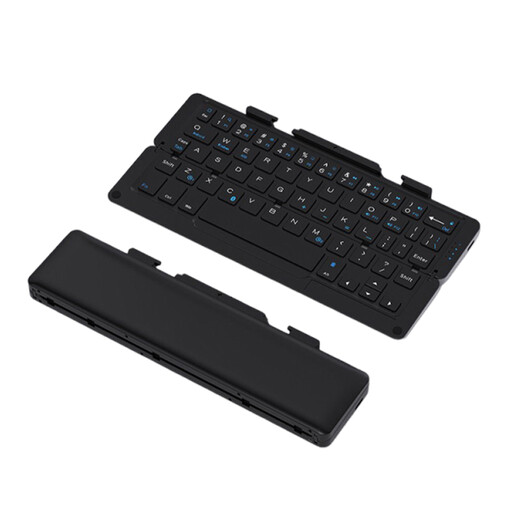 Image unavailable
The foldable design may suit you if space is limited, but check whether the compact layout feels comfortable for precise editing.
The product name mentions Bluetooth, a rechargeable design and a magnetic stand. It also describes the keys as quiet; this is not a comparative sound measurement.
 Image unavailable
This model may suit a fixed workspace if you want a numeric keypad and keys that are easy to reach; check the physical punctuation keys before ordering.
The product name mentions a wired plug-and-play connection and a full-size layout with a numeric keypad. QWERTY alone doesn’t confirm the position of all the punctuation keys.
 Image unavailable
The 60% layout may be worth considering if desk space is limited, but check whether the keys you use when editing are readily accessible.
The product name mentions a wired connection and Hall-effect magnetic switches.
 Image unavailable
This model may suit you if you’re looking for a wired keyboard with a wrist rest; check that the number of keys and dimensions work for your editing tasks and workspace.
The product name mentions 94 keys, a metal case and a phone stand alongside the wrist rest.
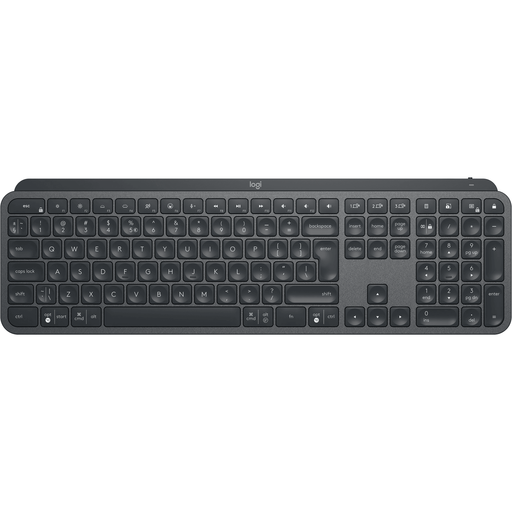 Image unavailable
This model may suit you if the US QWERTY layout matches the characters you use and your computer’s input settings.
The product name lists the US QWERTY variant. Check the physical punctuation keys before you buy.
Choose a physical layout that makes the punctuation you need easy to find, then set your computer’s input layout to match. In Windows, you can check and change the active keyboard layout; the QWERTY label alone doesn’t confirm where all the keys are.
First check your laptop’s ports and Bluetooth support. According to CHERRY, the KC 6000 SLIM requires USB-A; the Trust Ody II uses a USB receiver, while the Trust Nado II uses Bluetooth. These connection types are not interchangeable.
Follow the cleaning instructions for the exact model. Logitech Support recommends unplugging a wired Logitech device first and removing any replaceable batteries; check the instructions for other brands separately.
According to ACM ConsuWijzer, online consumer purchases generally come with a statutory 14-day cooling-off period after delivery, although exceptions apply. If a product doesn’t perform as you could reasonably expect under normal use, the retailer is your point of contact for your statutory guarantee rights; these are separate from any manufacturer’s warranty.
This requirement doesn’t apply to every private writer. Arboportaal states that for employees who work at a screen for more than 2 hours a day, the screen and keyboard must not be attached to each other; when using a laptop, it must be possible to use a separate screen or keyboard.