
Frontend developer who uses lots of shortcuts
You switch between code, CSS and DevTools, and want characters and shortcuts to be easy to reach on your physical layout and operating system.


Start with a layout that gives you access to your operating system’s coding and DevTools shortcuts. Then choose based on your desk and working style: compact for more space, split for separate positioning, or programmable if you want to customise the keys. A keyboard is no substitute for testing on a real mobile device.
You switch between code, CSS and DevTools, and want characters and shortcuts to be easy to reach on your physical layout and operating system.
You need room to move your mouse alongside your computer and want to know which keys you’ll lose with a more compact size.
You’re mainly considering hand position and your workspace, and comparing a conventional layout with a split keyboard.
First compare the physical layout with your operating system’s shortcuts, then consider desk space, hand position, typing noise and connectivity.
| What to consider | What should you check? | Who is this important for? |
|---|---|---|
| Layout and shortcuts | Compare the exact physical layout and the browser and editor shortcuts for your operating system. | I want to reach coding and DevTools keys straight away, without guessing where characters or function keys are. Around 33% of consumers give layout and accessibility the highest priority. |
| Desk space and hand position | Measure the space available and decide whether you need a number pad; consider a split model if you want to position the halves separately. | At a small desk, I want to leave enough room for my mouse, or be able to position the two keyboard halves just right. Around 27% of consumers prioritise space or hand position. |
| Typing noise and connectivity | Check that the connection is compatible with your computer, and don’t judge noise based solely on a general product description. | When typing in a shared workspace, I want to consider noise and choose a connection that suits my regular setup. Around 20% of consumers give quiet operation and a wired connection the highest priority. |
| Switching between devices and customising keys | Check the supported devices, layout and required software for each version; also see which cable or receiver is included. | If I work on several computers or want to set my own key functions, I look at switching between devices and the configuration required. Around 20% of consumers prioritise switching between devices or customisable keys. |
The name doesn’t tell you where characters, modifier keys and function keys are on that specific version.
Check the physical layout of that version against the shortcuts for your operating system and editor.
According to CHERRY, the CHERRY STREAM TKL doesn’t have a number pad. This may matter if you enter numbers regularly.
Decide in advance whether you can do without a number pad, and check the layout of the exact model.
Chrome for Developers describes Device Mode as an approximation; it doesn’t show every feature of a real mobile device.
Use emulation to make adjustments, and check anything you’re unsure about on a real mobile device too.
ACM ConsuWijzer states that if a product is faulty, the seller remains responsible for providing an appropriate solution, such as a repair, replacement or refund.
Check what extra cover includes and keep your proof of purchase; don’t treat it as a replacement for your statutory rights.
The MX Keys Mini is a compact option if you also want to switch between paired devices; the ERGO K860 has a split layout.
The K3 Max SE is a compact mechanical option if you want to customise the keys.
The STREAM KEYBOARD TKL is a wired option with a compact layout and scissor keys.
The Split Break v2 is an option if you want to position the two keyboard halves separately.
This selection focuses on compact keyboards for a home workspace, including models with customisable key functions.
 No image available
Suited to a compact workspace if you’re looking for a wired TKL keyboard.
The product description lists a USB connection, a layout without a number pad and US QWERTY.
 No image available
Suited to a compact, wired setup if you’re looking for US QWERTY.
The product information lists a USB connection, membrane keys and a TKL layout without a number pad.
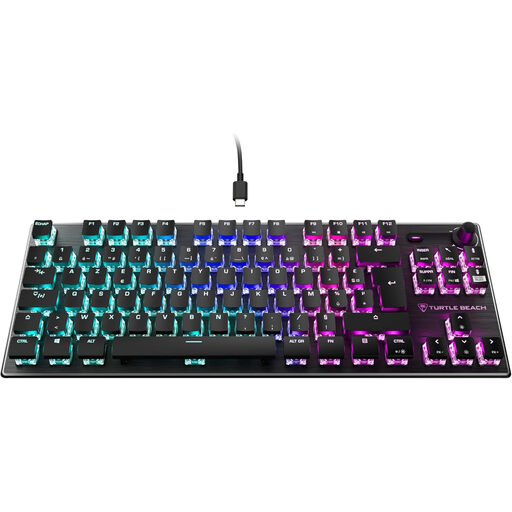 No image available
Suited to anyone looking for a compact, wired keyboard with an AZERTY layout.
The product title lists linear mechanical Titan Switches and a TKL form factor.
 No image available
Suited to a very compact workspace if a wired 60% layout meets your needs.
The product title lists magnetic switches and an adjustable 0.01 mm actuation point.
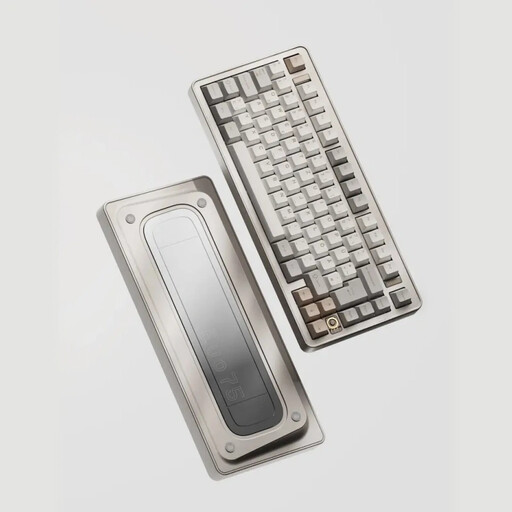 No image available
Suited to anyone looking for a compact mechanical layout with customisable key functions.
The product title lists tri-mode connectivity, including wired USB-C, hot-swappable switches and VIA compatibility.
A TKL keyboard leaves out the number pad; CHERRY describes the STREAM TKL this way. Check that the keys and combinations you use are still within reach: the keyboard doesn’t determine how much screen space DevTools gets.
In Chrome DevTools, open Device Mode by pressing Command+Shift+M on Mac or Control+Shift+M on Windows and Linux, once DevTools is open. Chrome for Developers describes Device Mode as an approximation of a mobile device; test anything you’re unsure about on a real device too.
Compare the physical layout of the exact version with the characters and shortcuts you use in your operating system and editor. A QWERTY label alone doesn’t tell you where all the function keys and characters are.
No. ACM ConsuWijzer states that if a product is faulty, the seller remains responsible for providing an appropriate solution, such as a repair, replacement or refund. Check separately what any additional cover includes.
Arboportaal states that for employees who work with a screen for more than two hours a day, the screen and keyboard must not be attached to each other. When using a laptop, it must be possible to use a separate screen or keyboard; this information is not a universal product specification for every private buyer.