
Developer with a connected test phone
You inspect a mobile page from your computer and want to keep a USB port free for your test device. Chrome for Developers describes a direct USB connection between an Android device and a computer for debugging.


A Bluetooth keyboard keeps a USB port free while your phone is connected to your computer by cable for debugging. A wired USB keyboard doesn’t need batteries or charging, but it uses a computer port of its own. Also check device compatibility, the physical keyboard layout and how the keyboard is powered.
You inspect a mobile page from your computer and want to keep a USB port free for your test device. Chrome for Developers describes a direct USB connection between an Android device and a computer for debugging.
You type on a computer, tablet or phone, and want connection options that suit your devices and operating systems. Logitech, CHERRY and Trust describe models that let you switch between multiple devices.
You don’t want to rely on an extra mains socket, so you’re comparing a USB-powered keyboard with battery-powered or rechargeable models. Power options vary by model.
Start by considering the USB port your test phone needs. Then decide whether switching between devices, the keyboard layout, size or power supply matters most for your work.
| What to consider | What to look for | Who is this important for? |
|---|---|---|
| Keeping a USB port free | Count the available ports once your test phone is connected, and check whether your computer and keyboard support Bluetooth. | If my test phone is connected to my computer via USB, I don’t want to use another port for a keyboard receiver. Around 33% of consumers put port availability first. |
| Switching between devices | Check how many devices each version can pair with, how you switch between them and which operating systems it supports. | If you type on both a computer and a mobile device, it helps to have channels that suit those devices. Around 27% of consumers mainly want to switch between devices. |
| Keyboard layout and desk space | Compare the physical language layout and the position of frequently used characters. Also measure the space available for your keyboard, phone and mouse. | If I code with lots of symbols or have little desk space, I want familiar key positions and enough room for my test device. Around 20% of consumers mainly want a layout and size that work for them. |
| Power and charging | Check how the specific version is powered and whether a rechargeable model can be used while charging. | If you don’t want to stop to recharge, consider a wired model if you have a free USB port. Wireless models need batteries or a way to recharge them. Around 20% of consumers want to avoid charging interruptions. |
A USB receiver still uses a computer port. Google also describes a USB connection between the phone and computer as the usual way to debug Android devices.
Count your available ports with the test phone already connected, and check whether the keyboard can use Bluetooth without a receiver.
A charging cable doesn’t automatically transmit keystrokes. CHERRY describes data transfer over the cable for the KW 9200 MINI; Trust says you can work while the Nado II is charging.
Check the specifications for the exact version to confirm separately whether it supports wired data transfer and typing while charging.
The same name for a layout doesn’t guarantee that characters are on the same physical keys. This can matter if you use symbols frequently when coding.
Compare photos and specifications for the exact version with the key positions and input language you’re used to.
The Pebble Keys 2 K380s is a compact Bluetooth option, while the K120 is designed for a permanent USB setup. These features apply to the models mentioned, not the entire brand range.
The KW 7100 MINI BT is a compact Bluetooth model. According to CHERRY, the rechargeable KW 9200 MINI offers several ways to connect.
The Nado II is a rechargeable Bluetooth model for multiple devices. The Lyra combo is an option if you’re looking for a mouse as well.
The Dutch-layout Magic Keyboard with USB-C is a compact, rechargeable option for the compatible Mac, iPad and iPhone systems listed by Apple.
These keyboards offer Bluetooth connectivity, so you can keep a USB port free for your test phone while debugging. Some models also offer other connection options; check the layout and connections on the version you choose.
 No image available
Bluetooth connectivity can keep a computer port free for your test phone.
The product description lists connections to up to three devices and compatibility with iOS, Android, Windows and HarmonyOS.
As the product name suggests, the keyboard folds and has a magnetic stand.
 No image available
Bluetooth is one of the listed connection options, helping you keep a USB port free for your test phone.
The product name also lists wired USB-C and 2.4G as connection options.
This version has a US QWERTY layout; check that the physical key positions suit the way you type.
 No image available
Bluetooth provides a wireless keyboard connection when you want to keep a computer port free for debugging.
The product name also lists 2.4G and USB-C as connection modes.
The product description lists a hot-swappable design; this version has Reaper Linear Switches.
 No image available
Bluetooth is one of the listed connection modes for a setup where you need your computer’s USB port for the test phone.
The product name also lists 2.4G and USB-C, while the product description specifies an 8000 mAh battery.
This version has a US layout. Check the physical key positions before choosing.
 No image available
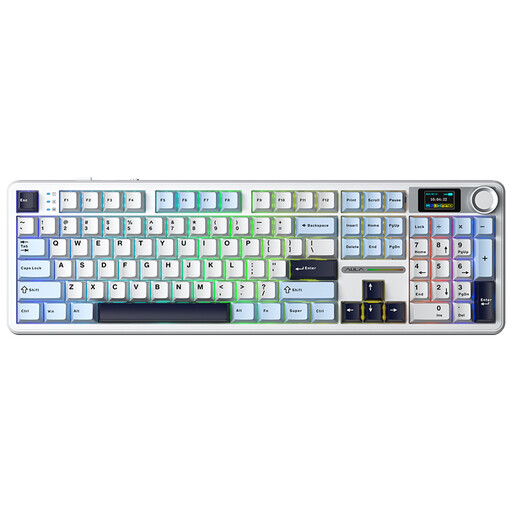
According to the product information, you can use Bluetooth instead of the USB receiver to keep a computer port free.
The product name lists a full-size layout, numeric keypad and scissor keys. The description mentions a rechargeable battery and three Bluetooth channels.
This version has a US QWERTY layout. The USB receiver uses a computer port if you choose to connect that way.
No. For the standard method described by Google, a USB cable connects the Android device directly to the computer. The keyboard can still connect via Bluetooth, keeping a computer port free.
Not according to the first step in Apple’s instructions: enable Web Inspector and connect the device to your Mac with a cable first. Apple says you can then set up a network connection; using a wireless keyboard doesn’t change that first step.
It depends on the model. Trust specifies this for the Nado II. CHERRY describes the KW 9200 MINI as using a USB cable for both data transfer and charging; don’t assume a wired keyboard connection just because it has a USB-C charging port.
According to the Dutch government, when you buy at a distance you generally have a 14-day cooling-off period in many cases. If there’s a fault, the retailer is your point of contact for the statutory guarantee; check any additional guarantee separately.
The Dutch Authority for Digital Infrastructure says that equipment meeting the relevant European requirements carries CE marking; check the marking on the specific version. According to the Dutch government, used household batteries shouldn’t go in the bin. You can return them at shops that sell batteries, among other places.