What should you look for when choosing?
Start by checking the shortcuts and cross-reference features in your writing software: Microsoft Support describes cross-references in Word as a software feature. Then consider the layout, key feel and connectivity in light of your workspace and writing habits.
| What to consider |
What should you check? |
Who is this important for? |
| Shortcuts and references |
Check which shortcuts your writing software supports and whether you can remap keys on the system you plan to use. |
If I insert lots of references, I want to know whether my software already supports that workflow before setting up extra keys. Around 40% of consumers focus mainly on shortcuts and the reference workflow. |
| Typing posture |
See whether the shape suits your workspace and allow time to get used to it; take breaks from screen work. |
During long typing sessions, I want to be able to position my hands and arms to suit my workspace. Around 30% of consumers prioritise typing posture. |
| Key feel and layout |
Check the exact key layout, which keys are included and the type of switches in that version. |
At a shared desk, I want to consider key feel and noise, and type on a layout I’m familiar with. Around 20% of consumers choose mainly based on key feel and layout. |
| Wired or wireless |
Check the connection and, where relevant, which port or receiver you’ll need. |
If I have a particular connection in mind, I want to know in advance how it will work with my setup. Around 10% of consumers focus mainly on their preferred connection; that choice alone says nothing about a document’s security. |
Keyboards on Joybuy
This selection includes keyboards for typing and document work, with wired options as well as compact and mechanical designs. For each model, check that the layout and connection suit your writing software and workspace.
 Image unavailable
Corsair K55 CORE TKL, US QWERTY
Worth considering if you’re looking for a wired keyboard with a TKL layout.
US QWERTY layout.
Joybuy
 Image unavailable
Wired QWERTY keyboard with numeric keypad, full-size
A full-size option to compare if you’d like a numeric keypad for document work too.
QWERTY layout; plug and play according to the product name.
Joybuy
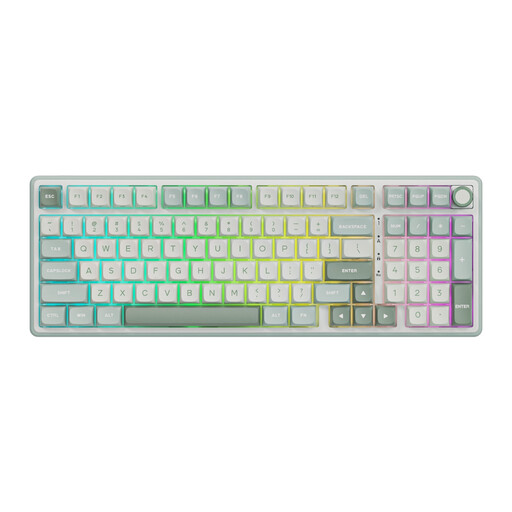 Image unavailable
RK ROYAL KLUDGE R98 Pro Wired Mechanical Keyboard
Consider this version if you’re looking for a wired mechanical keyboard with a numeric keypad.
The product name lists a numeric keypad, volume knob, hot-swappable Cream Switches and Sky Cyan colour.
Joybuy
 Image unavailable
AULA F75 MAX 75%, US QWERTY, Tri-Mode, Reaper Switch
A compact layout to consider if you want to use less space than a full-size keyboard requires.
The product name lists a 75% layout and wired, Bluetooth and 2.4G connections.
Joybuy
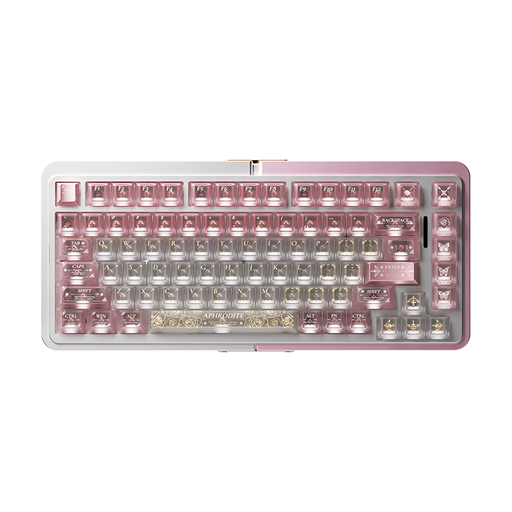 Image unavailable
Royalaxe E75 Custom 75% Hall Effect, wired
A wired option to consider if you’re looking for a mechanical keyboard with a compact layout.
The product name lists TTC Magnetic HE Switches and hot-swappable magnetic switches.
Joybuy
Frequently asked questions
Do you need a special keyboard to create cross-references in Word?
No, Word has a built-in feature for this. Microsoft Support explains how to create a cross-reference to, for example, a heading or image. A programmable key can only trigger an action you’ve set up yourself.
Should you check cross-references after editing your guide?
Yes, check them before publishing. Microsoft Support notes that fields sometimes need to be updated manually, and a reference may not work if its destination no longer exists.
Do keyboard shortcuts in Google Docs work the same way on every keyboard?
Not necessarily. Google Docs Editors Help warns that some keyboard shortcuts don’t work with every language or keyboard, so check the shortcuts on your system before choosing extra keys for this purpose.
What can you do if typing for a long time becomes uncomfortable?
Review your whole workstation and vary your screen work and posture. Arboportaal recommends changing posture and taking short microbreaks; employees who are starting to experience discomfort can contact their occupational physician if needed.
What Dutch rules apply to online purchases and working on a laptop?
According to ACM ConsuWijzer, online consumer purchases generally come with a cooling-off period of up to 14 days after delivery. You’re also entitled to a legal guarantee that the product meets what you could reasonably expect. Separately, Arboportaal describes a workplace requirement for employees who spend more than two hours a day working at a screen: the screen and keyboard must not be attached to each other. This requirement doesn’t automatically apply to every private individual who writes.


