
Level designer who uses lots of shortcuts
You switch between designing, editing code and testing in a 2D editor. You’ll want your regular commands within easy reach. Godot Engine and Unity both document shortcuts for their editors.


The number of physical monitors alone doesn’t determine which keyboard you need. Choose one based on the editor and testing shortcuts you use, and how you want to access them. A compact board can leave more room for your mouse, macro keys can be useful for commands you assign repeatedly, and a split model has a different key layout. Always check the layout and any configuration software.
You switch between designing, editing code and testing in a 2D editor. You’ll want your regular commands within easy reach. Godot Engine and Unity both document shortcuts for their editors.
You often use your mouse to place level elements and want to keep your keyboard and mouse closer together. A layout without a dedicated number pad could be an option if you don’t use that section often.
You pay attention to the position of your hands and arms during longer work sessions. A different keyboard shape may be a personal preference, but it isn’t a medical solution. The Dutch Arboportaal also describes the strain associated with screen-based work.
Suitable if: you often switch between your keyboard and mouse and don’t need a dedicated number pad.
Consider: check where the navigation and function keys are. A 75% layout and a layout without a dedicated number pad aren’t the same thing.
Suitable if: you want to assign recurring commands to their own keys and have room for extra keys.
Consider: macro keys don’t replace Unity or Godot’s shortcut settings. Also check which software you need to configure them.
Suitable if: hand position while typing for long periods matters more to you than having a compact keyboard.
Consider: the key positions differ from those on a straight keyboard and may take some getting used to. The design doesn’t prevent or treat discomfort.
Suitable if: a wired connection and familiar layout matter more to you than a compact size or dedicated macro keys.
Consider: check the switch type and layout variant you choose. Mechanical switches alone don’t mean you’ll design levels faster.
| What to consider | What should you check? | Who is this important for? |
|---|---|---|
| Editor and testing shortcuts | List the commands you use regularly, then check the key positions and combinations on your chosen layout. | If I often switch between editor commands and testing, I want my regular keys within easy reach. Around 36% of consumers put accessible editor and testing keys first. |
| Mouse space | Compare the keyboard’s width with your workspace and decide whether you need a number pad. | When placing level elements, I want to keep my mouse close to the keyboard without giving up a number pad that I use often. Around 29% of consumers prioritise available mouse space. |
| Typing comfort | Look at the shape and key positions; also consider the height and layout of your workspace. | When I work in the editor for long periods, I focus on a hand and arm position that feels comfortable to me. Around 21% of consumers put typing comfort first. |
| Dedicated macro keys | Check whether you can assign the command and which configuration software the keyboard requires. | For commands I repeat regularly, I want to be able to assign a dedicated physical key. Around 14% of consumers choose a keyboard mainly with dedicated macro keys in mind. |
The keys you need depend on the commands you use in your editor and when testing, not directly on the number of physical monitors.
Make a short list of the commands you use and check the corresponding key positions before choosing a layout.
Compact layouts may place navigation, function and number keys differently. A model without a dedicated number pad doesn’t provide that section in the same way as a full-size keyboard.
Check the exact version and consider how often you use the number pad. If you still need one, a separate number pad can be a practical addition.
A manufacturer’s claim about posture doesn’t mean a keyboard will prevent or treat individual discomfort. Screen-based work can also involve other types of strain.
Consider both the key positions and your workspace setup. Where it suits your circumstances, alternate between tasks.
A commercial warranty is separate from your right to receive a product that works properly. If a product is faulty, the retailer remains your point of contact.
Read the warranty terms and, separately, assess any fault in light of your statutory rights.
The V1 is a compact 75% option for anyone who wants to customise keys while working in an editor.
The S-board 840 is designed for a compact workspace without a dedicated number pad.
The ERGO K860 is a split option for anyone who prioritises the typing experience.
The BlackWidow V4 X is worth considering if dedicated macro keys suit your commands.
The MX BOARD 3.0S is a wired mechanical option available in several variants.
This selection focuses on compact keyboards for editor and gaming input, with key layout and mouse space in mind.
 No image available
A compact option if you want to combine editor and gaming input on one keyboard.
75% layout; US QWERTY; wired, Bluetooth or 2.4G; Reaper Switch; Gradient Grey with side-printed keycaps.
 No image available
The compact design could suit you if you want to leave room on your desk for mouse movement.
60% layout; wired; Hall effect magnetic switches; Rapid Trigger; 8K polling rate; adjustable 0.01 mm actuation; RGB.
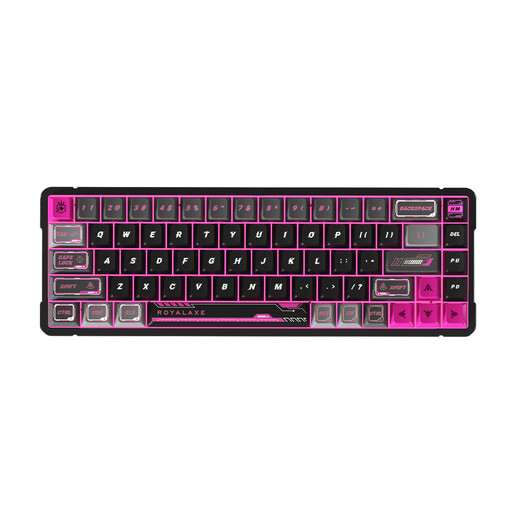 No image available
A compact option for editor and gaming input if you want to leave room for your mouse.
65% layout; 68 keys; US layout; wired; Gateron HE magnetic switches; Rapid Trigger; aluminium case.
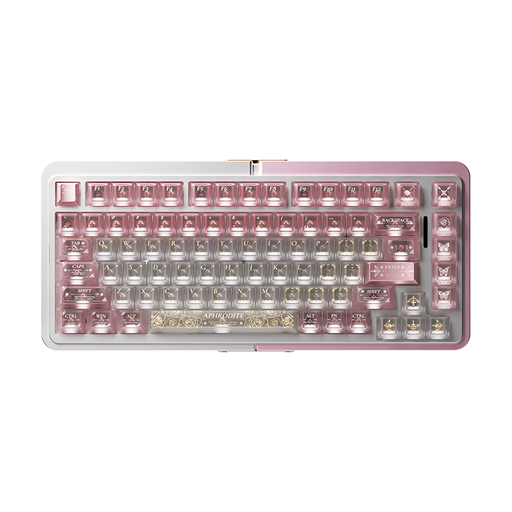 No image available
A compact layout for anyone weighing up keyboard space against easy access to editor and gaming keys.
75% layout; wired; TTC magnetic HE switches; hot-swappable switches; Rapid Trigger.
 No image available
The compact layout could suit you if you want to leave room on your desk for your mouse while designing levels.
68 keys; US layout; magnetic switches; wired; Rapid Trigger; 8000 Hz polling rate; metal top plate.
No, the number of monitors alone doesn’t determine your choice. Consider the commands and key layout you use when designing and testing. If you mean two screens within your prototype, check which keys you need to switch between functions. The Godot Engine and Unity documentation doesn’t specify a particular keyboard model for this.
Start with your editor’s shortcut settings. Godot Engine documents shortcuts in Editor Settings, while Unity offers a Shortcuts Manager. Then check whether you can assign the key or macro you want on your keyboard.
No, a keyboard alone doesn’t determine the strain involved in screen-based work. The Dutch Arboportaal also highlights repetitive actions, static strain and the importance of alternating screen-based tasks. So consider both your workspace setup and the key positions that feel comfortable to you.
As a consumer, you have the right to receive a product that works properly. According to the Dutch government, there is no fixed statutory two-year warranty period in the Netherlands. For distance purchases, a 14-day cooling-off period applies in many cases, with some exceptions. If a product is faulty, the retailer is your point of contact.
Radio equipment sold on the EU market is covered by the Radio Equipment Directive, which includes requirements for matters such as conformity and CE marking. The precise requirements depend on the product. The European Union explains that CE marking is not an independent quality assessment and doesn’t indicate whether a keyboard is suitable for your editor.